Get Full Government Meeting Transcripts, Videos, & Alerts Forever!
Get email alerts on the Property Tax Reform topic
No spam. Unsubscribe anytime.
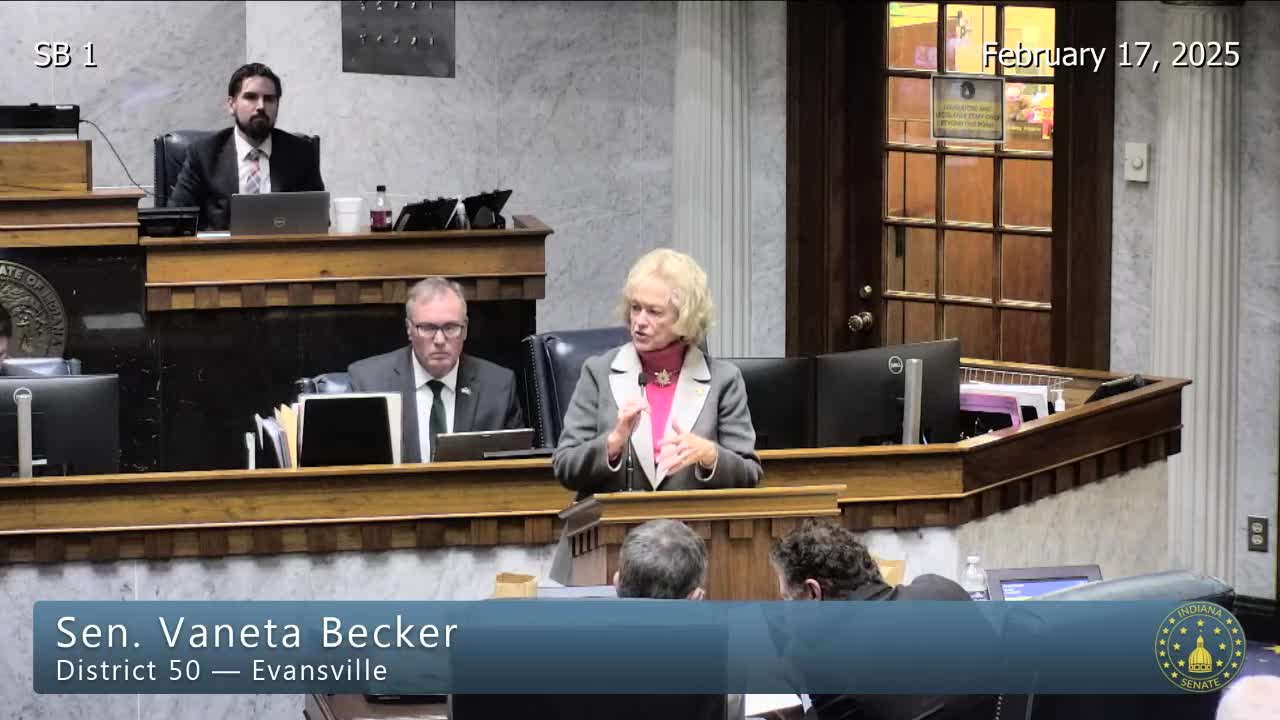
Indiana Senate passes wide-ranging property tax relief bill after heated debate
Summary
The Indiana Senate passed Senate Bill 1 on third reading after extended debate over local fiscal impacts, bond rules and coverage for renters; vote 37-10.
Senator Holman presented Senate Bill 1 as a package intended to provide property tax relief for Hoosiers while continuing negotiations with the governor and the House.
The measure passed the Senate on third reading with 37 ayes and 10 noes. Supporters said the bill is a starting point for tax relief; opponents worried about significant revenue losses for local governments and the absence of a state replacement mechanism for lost local revenue.
Senator Holman told colleagues, “Senate bill 1 has been a thoughtful policy based form in its current form and, admit that perhaps it is imperfect. I ask your support in senate bill 1 as we continue to work with a solution with the house of governor Braun and for the benefit of the taxpayer, such as local government, schools, counties, towns townships.”
Why it matters: Senators emphasized that the bill would reshape local revenue streams and that further negotiations with the House and the governor’s office were expected. Several senators repeatedly raised concerns about the net fiscal effect on counties, public safety and school funding if other tax measures also advance.
Details and debate: Opponents cited potential large losses for local governments. Senator Kidora said, “Marion County is set to lose over $150,000,000 in the next 3 years,” and warned that a separate measure (referred to during debate) could compound local losses by directing additional funds to charter schools. Senator Young said he opposed the bill because the body had not had an opportunity to vote on the governor’s plan and argued local spending increases should be examined before a state-funded replacement is adopted.
The bill contains several provisions that drew technical questions on the floor, including a one-year “cooling off” period for reissuing general obligation (G.O.) bonds after a bond reaches its term so taxpayers can see a temporary change on tax rolls. On that point Senator Taylor and Senator Holman discussed mechanics: "General obligation bonds would continue as they have in the past. However, there's a 1 year cooling off period, for general obligation bonds to allow the taxpayer to see a reduced tax rate..." Holman said the pause is intended to let taxpayers see the tax rate without a renewed G.O. bond in place.
Renters and other groups: Senator Hundley called attention to renters, saying roughly “over 600,000 people in the Hoosier state who are renters” are not covered by the bill’s relief as drafted. Some senators urged additional targeted relief for seniors, veterans and first-time homebuyers; others proposed longer-term structural changes such as 0-levy growth limits and stronger local 0-base budgeting.
Vote and next steps: The chamber approved the bill on third reading, 37-10. The author said she will continue to work with the governor’s office and the House on a final package.
Ending: The Senate sent SB 1 to the House with the Senate’s passage recorded; senators signaled that many elements remain subject to negotiation as the bill moves through the legislative process.