Get Full Government Meeting Transcripts, Videos, & Alerts Forever!
Get email alerts on the Veterans Care Nursing Homes topic
No spam. Unsubscribe anytime.
FDVA says veteran population and benefit claims are growing; plans Collier County nursing home with adult day health care
Summary
Major General James Hartsell, FDVA commandant, told a Senate committee Florida is now the nation’s second‑largest veterans population, reported increases in claims and federal benefit inflows and outlined a Collier County project that will include adult day health care co‑located with a state veterans nursing home.
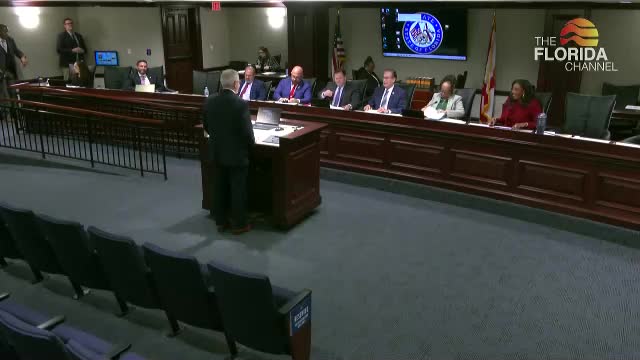
Major General James Hartsell, director of the Florida Department of Veterans Affairs, briefed a Senate committee on FDVA outreach, benefit claims and the status of state veterans nursing homes, telling senators Florida recently became the second‑largest veterans population in the United States.
Hartsell said the state’s veteran demographic is shifting: older World War II, Korean and Vietnam cohorts are shrinking while Gulf War and post‑9/11 era veterans are a growing share of in‑migration to Florida. He said the department is focused on being ‘‘the premier point of entry’’ for veterans seeking benefits, health care or employment services.
Key FDVA figures cited to the committee:
- FDVA employs roughly 75 state veteran service officers who handled about 245,000 claims last year, including about 45,000 new claims; Hartsell said the new claims yielded roughly $260 million in benefit awards. - FDVA reported an estimated return on investment of federal dollars to state spending of about $41 in federal benefits for every $1 of state funding (Hartzell said the current trend was about 53:1). - The department operates multiple state veterans nursing homes and domiciliary facilities and said occupancy is high; Hartsell described two deficiency‑free surveys during the past year.
On long‑term services and supports, Hartsell previewed a Collier County project that will include a 20‑bed skilled nursing unit with memory care and incorporate adult day health care for about 40 veterans, outpatient therapy and a community wellness center. He said local Collier County partners committed about $9.5 million to cover the adult day health care component and raised roughly $30 million toward the project’s local cost share; Hartsell said the state would provide roughly $10 million of the remaining state share for the project as described to the committee.
Hartsell told senators FDVA’s outreach also includes 875 veteran outreach events last year and a statewide network of benefit counselors embedded in VA medical centers and community outpatient clinics to connect patients to claims and benefits. He also highlighted the department’s Hope Navigators — case manager‑style positions tied to the First Lady’s HopeFlorida initiative — and the Florida Veterans Foundation’s role in funding items such as benefit guides and emergency assistance.
Why it matters: FDVA’s figures document growing federal benefit flows tied to in‑migration and suggest demand for non‑institutional services such as adult day health care. Planned Collier County facilities may serve as a model for co‑locating community supports with nursing home care.
What’s next: FDVA will continue outreach and planning; the collier project described to the committee will proceed through conventional procurement and construction approvals and any budget requests for new state funding will be considered in future fiscal cycles.