Get AI Briefings, Transcripts & Alerts on Local & National Government Meetings — Forever.
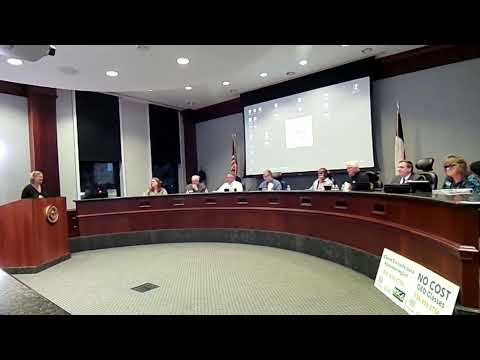
Council postpones decision on county request to authorize Grimes County hotel tax after business objections
Loading...
Summary
The council delayed action on a request from the county for a letter supporting state legislation that would let Grimes County levy a hotel occupancy tax; council voted to postpone indefinitely after hotel operators and members of the public raised concerns.
The council voted to postpone indefinitely consideration of a resolution that would authorize the mayor to sign a letter supporting state legislation to permit Grimes County to levy a hotel occupancy tax.
County representatives had asked the city to send a letter supporting legislation that—if passed by the Legislature and later adopted by county ordinance—would allow the county to tax hotel stays at rates staff described as 7% in unincorporated areas outside municipal extra‑territorial jurisdictions (ETJ) and 2% within incorporated areas and ETJs. Staff clarified the draft legislation would carve out the ETJ so the county’s higher 7% rate would apply only outside city ETJs; in-city/ETJ collections discussed in staff remarks would be 2% in addition to the city’s existing 7% local rate, subject to the state’s 15% cap on combined rates.
Several hotel operators and event organizers in the public‑comment period urged caution. Steve Sheeby, owner of the P.A. Smith Hotel in downtown Navasota, urged council not to sign a supportive letter without more data and said local businesses bear administrative costs of collecting additional taxes. “I would encourage you not to sign that letter,” Sheeby said during public comment, adding that he wants more analysis of likely economic impacts on local businesses.
A county commissioner, speaking to clarify the record, said the county’s request followed passage of a county resolution and that, if the Legislature authorizes a county hotel tax, the county would later adopt any implementing ordinance and could include exemptions for qualifying nonprofits, religious and educational organizations — categories staff said are recognized in state law.
Councilmembers cited limited background information supplied with the county’s request and expressed interest in written analysis of local impacts. One councilmember moved to postpone the item indefinitely; another councilmember seconded, and the motion carried with no opposition.
No ordinance or county tax was adopted by the council at the meeting. Staff and council requested further analysis and recommended outreach to affected businesses before the city would send any formal letter of support to the county or legislators.