Get Full Government Meeting Transcripts, Videos, & Alerts Forever!
Get email alerts on the Ev Charging topic
No spam. Unsubscribe anytime.
Panel approves bill to protect private fast‑charger investments; utilities get defined role
Summary
The committee approved a substitute to HB 20‑87 that sets a July 1, 2027 snapshot protecting existing privately‑owned fast chargers from utility competition and directs the State Corporation Commission to review outcomes in 2029.
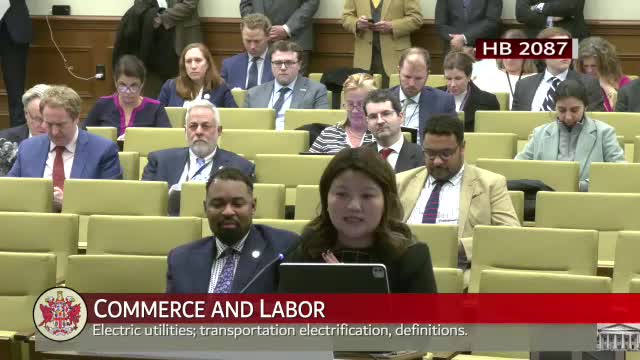
A substitute to House Bill 20‑87 — legislation intended to clarify when utilities may build and operate fast electric vehicle (EV) chargers at retail locations — passed the committee after substitute language and extensive stakeholder negotiations.
Sponsor Delegate Chen said the bill aims to “create a more open, diverse marketplace for Virginia businesses and drivers refilling their tanks with electricity” and to give private fuel retailers confidence to invest in expensive fast chargers without being undercut by utilities using ratepayer funds.
The substitute narrows the scope of utility proposals the State Corporation Commission (SCC) may approve for publicly available fast charging, establishes a 07/01/2027 snapshot date used to determine competitive distances for utilities’ proposals, and directs the SCC to hold a look‑back review in 2029 to study the marketplace and small‑business participation.
Industry supporters said the language balances private‑sector investment and the public interest. Representatives of Sheets (a travel‑center chain), Volvo Trucks, Walmart, Americans for Affordable Clean Energy and other retailers urged the committee to adopt the substitute so private businesses would feel confident committing the multiple‑hundred‑thousand‑dollar investments required for fast chargers. “Private retailers cannot compete with a regulated utility that can open next door and pass all its costs onto customers,” said a representative for convenience retailers.
Opposition came from trade groups representing independent retailers and some environmental groups who said the bill could privilege large chains and truck stops. Critics focused on a carve‑out in the substitute tied to the 07/01/2027 date that they said could shield certain operators from utility competition while leaving others vulnerable.
State Corporation Commission staff told the committee utilities already have authority to provide EV charging as a permitted activity, and the substitute was intended to provide structure, not to grant new authority. SCC staff also said the commission would still review individual petitions and could approve utility proposals it finds prudent.
After debate and a technical amendment, the committee voted to report the substitute. The roll call was 7 in favor, 6 opposed and 2 abstentions. Members said the SCC look‑back and the substitute’s protections for small operators were central to the compromise.