Get Full Government Meeting Transcripts, Videos, & Alerts Forever!
Get email alerts on the Labor Policy topic
No spam. Unsubscribe anytime.
On Black History Month, delegate links historic labor injustice to modern wage gaps and presses for worker protections
Summary
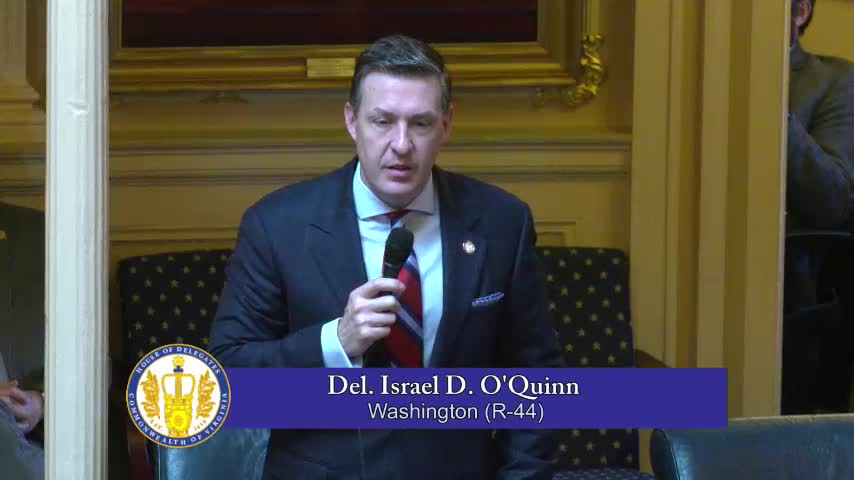
During Black History Month remarks on Feb. 17, Delegate McFloor described historical injustices affecting Black labor in Virginia and argued for legislation to extend fair pay and protections to farmworkers and other excluded workers.
On Feb. 17 during morning remarks in the Virginia House, Delegate McFloor used the Black History Month setting to trace the continuity from slavery and Jim Crow–era labor exclusions to modern wage disparities and urged lawmakers to write laws that restore economic dignity.
McFloor said the legacy of involuntary labor and subsequent discriminatory laws shaped economic outcomes for Black Virginians. He noted that even after emancipation many freed people were pushed into sharecropping, subject to predatory contracts and excluded from labor protections. "The injustices of the past do not simply disappear with time. They echo forward, shaping the present," McFloor said.
He cited a recent statistic, attributing it on the floor to the Commonwealth Institute: "30 percent of Black workers in Virginia make less than $17 an hour," he said, and added that the wage gap for Black Virginians has barely changed since 1979, according to the Institute. McFloor said he is carrying a bill to address exclusions that he described as rooted in Jim Crow-era law; specifically, he referenced a law that excludes many farmworkers from certain labor protections and said he plans to continue carrying legislation to ensure those workers receive fair pay and protections.
Why this matters: McFloor framed the argument as both historical and contemporary, tying policy fixes to moral responsibility. Adding farmworkers and other excluded groups to coverage, or adjusting pay rules, could change labor costs, enforcement responsibilities and agricultural practices.
What McFloor requested: He used a point of personal privilege to press the assembly to enact statutory changes in the future session cycle and to continue consideration of measures he is sponsoring that would expand wage protections to groups currently excluded in state law.
Outcome and next steps: McFloor’s remarks were a floor address; no formal bill vote or committee action is recorded in the transcript excerpt. He said he will continue to carry and press his bill(s) through the legislative process. Additional committee hearings or floor debate would be needed for the legislation he referenced to become law.
Context: McFloor connected present-day policy to historical practices including the poll tax and 1902 Virginia Constitution restrictions referenced earlier in the morning hour by other speakers; his remarks placed the ongoing policy debate about wage parity within that historical frame.
Limitation: The transcript records McFloor’s floor speech and cites a Commonwealth Institute statistic; the article does not assert causation beyond the delegate’s statements nor does it invent details of his bill that are not in the floor remarks.
Ending: McFloor’s comments underline that questions about wages and labor protections remain a live legislative issue in Virginia and signal forthcoming bills and hearings on the topic.