Get Full Government Meeting Transcripts, Videos, & Alerts Forever!
Get email alerts on the Constitutional Amendment topic
No spam. Unsubscribe anytime.
Delegate urges study before amending Virginia Constitution to enshrine ‘reproductive freedom’
Summary
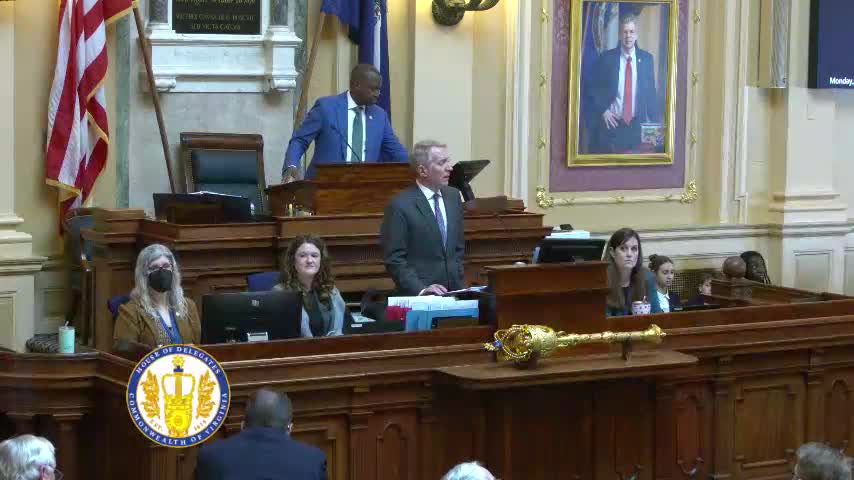
During the Feb. 17 House floor, Delegate Zehr asked for a study panel and detailed concerns about a proposed constitutional amendment described as protecting 'reproductive freedom,' saying key terms lack statutory definition and could have unforeseen consequences.
Delegate Zehr raised concerns on the House floor on Feb. 17 about proposed constitutional language on reproductive rights and asked that the General Assembly create a panel to study the measure before a vote.
Zehr said that for two years he has requested a study on the proposed amendment, which the floor discussion identified as HJ1 (a proposed constitutional amendment concerning reproductive freedom). He argued that the amendment would introduce new constitutional language that currently has no definition in the Code of Virginia, the existing state constitution or in case law.
"What does reproductive freedom mean?" Zehr asked on the floor, adding several specific questions: "Does it mean that a young woman of any age may seek an abortion without parental consent, without any notification?" He also raised hypothetical concerns about parental notification, survivors of failed abortions and whether the language could relate to gender-affirming medical care for minors. "We have no idea what this amendment will do if it takes effect," Zehr said, calling for more legal examination and ‘‘due diligence’’ before altering the constitution.
Why this matters: A constitutional amendment, if ratified by voters, would sit at the highest level of state law and could limit or expand what the legislature and courts later may regulate. Zehr emphasized the absence of legislative or judicial definitions for the phrase "reproductive freedom," arguing that the assembly lacks the legal history to anticipate how courts and agencies would apply the language.
What Zehr asked the chamber to do: He said he had twice requested a study panel and urged the General Assembly to undertake legal analysis, red-team style review and other due diligence before approving an amendment. He compared approving such an amendment without study to "running a file you've downloaded from the Internet without scanning it for viruses."
Outcome: Zehr’s remarks were delivered as a point of personal privilege during the morning hour; the floor transcript does not record further action on the request for a study panel during the session. No vote on HJ1 was held during that floor period.
Context: Zehr referenced broader debates over how constitutional language can affect parental notification, protections for infants who survive attempted abortions and the scope of reproductive or medical decisions for minors. He said the issues merit legal examination before adopting constitutional text.
Where it stands next: Zehr’s request for study is a floor appeal and, according to his remarks, has not been accepted as a binding committee assignment or formal referral in the transcript. Any formal study or panel would need a motion, sponsorship and committee process to be established.