Get Full Government Meeting Transcripts, Videos, & Alerts Forever!
Get email alerts on the Legislation topic
No spam. Unsubscribe anytime.
House advances wide range of bills in largely uncontested session; dozens pass
Summary
The Virginia House of Delegates on Feb. 17 moved dozens of bills across multiple policy areas — from education and agriculture to environmental rules and tax sunsets — largely by voice votes or unanimous consent. Several bills drew roll-call tallies; most passed.
The Virginia House of Delegates passed a broad slate of legislation on Monday, Feb. 17, 2025, approving bills on higher education, environmental rules, agricultural regulation and several tax-sunset extensions during a day of mostly uncontested votes and formal calendar action.
Lawmakers moved through the third-reading calendar and a set of House bills with Senate amendments, approving measures that include updates to dam-safety funding and procedures, changes to school and higher-education reporting requirements, and extensions of several tax and sales-tax sunsets. Debate on most measures was limited; many items were passed as part of an uncontested block or after brief floor remarks by the bill’s sponsor.
Why it matters: The votes clear statutory changes and administrative directives that state agencies will implement during the remainder of the 2025 legislative session and into the next fiscal year. Several provisions involve program sunsets or reporting deadlines that affect state agency review and local practice.
Major points and floor activity - Sponsors from both parties carried the bills on the floor; most measures passed by voice vote or brief roll call totals recorded by the clerk. Committee substitutes and floor substitutes were offered and adopted in several cases to align language with companion measures or committee recommendations. - Leaders reminded members that the committee action deadline fell that day and announced committee meeting schedules and filing deadlines for resolutions.
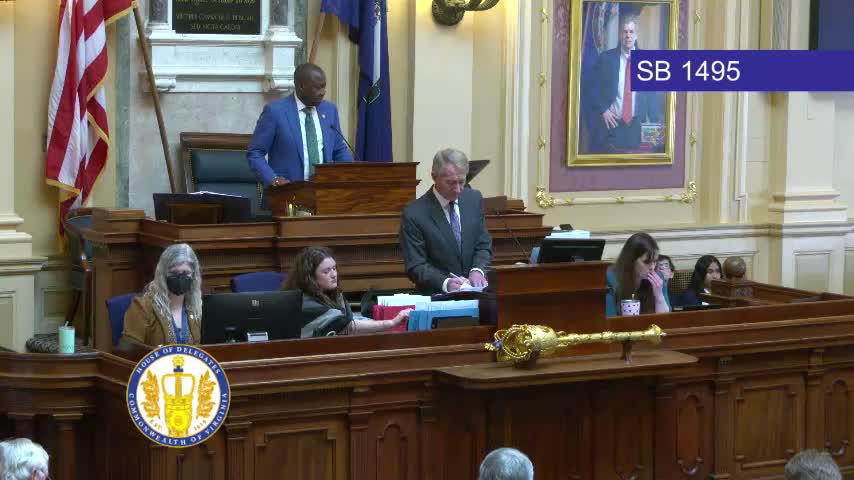
Votes at a glance (bills named on the floor with recorded outcomes) - SB 1495 (amend regulations to include bovine incinerators in permanent exemption for certain animal incinerators): passed 95–0. - SB 871 (sunset/retail sales tax printed materials exemption extension, finance omnibus substitute): passed 92–4. - SB 907 (animal testing facility operated by a state agency: disposition of nonhuman primates to certified sanctuaries): passed 75–21. - SB 955 (DOE textbook-review process changes / high-quality instructional materials; committee substitute): passed 84–11. - SB 1016 (Hunger-Free Campus food pantry grant program codification): passed 69–27. - SB 1051 (boarding-establishment inspections; local authority): passed 63–30–2 (as recorded on the floor). - SB 1093 (Erosion and Stormwater Management Program right-of-entry clarification): passed 87–9. - SB 1125 (narrowed prohibitions on premature separation and propagation of certain mammalian wildlife; committee substitute): passed 55–41. - SB 1166 (retail labeling for certain invasive plant species; stakeholder compromise): passed 62–33. - SB 1204 (hunter education program personnel provisions): passed 92–4. - SB 1230 (public schools: temporary-employed teachers time limit extension; committee amendments): passed 50–46. - SB 1319 (PFAS self-reporting by certain industrial users to publicly owned treatment works; committee amendment): passed 69–27. - SB 1402 (transient occupancy tax administration changes): passed 87–7. - SB 1413 (public-school indoor air quality standards; floor substitute adopted): passed 59–37. - SB 1462 (high-school graduation substitution for African American studies/AP African American studies for certain world-history credits; committee amendments): passed 55–39. - SB 857 (dam-safety revisions, flood prevention assistance, stakeholder consensus changes): passed 89–6. - SB 1229 (public institutions: exchange students tuition/fee waiver alignment; floor substitute adopted): passed 96–0.
House bills with Senate amendments (outcomes) - HB 2120 (seizure of property in financial exploitation of vulnerable adults; senate substitute rejected): Senate substitute rejected (Ayes 2, Nos 94). - HB 2597 (DSS provisional-licensing/corrective action appeal clarifications; senate amendments adopted): Senate amendments adopted (Ayes 95, Nos 0). - HB 1923 (midwives/health-insurance reimbursement; senate substitute rejected): Senate substitute rejected (Ayes 0, Nos 96). - HB 2666 (SCC distribution cost-sharing program for interconnection upgrades; senate substitute adopted): Senate substitute adopted (Ayes 58, Nos 38). - HB 2346 (virtual power plant pilot program; senate substitute adopted): Senate substitute adopted (Ayes 68, Nos 27, Abstentions 1). - HB 2619 (protections for employees when private firms provide certain public transportation services; senate substitute adopted): Senate substitute adopted (Ayes 50, Nos 46).
What lawmakers said Floor sponsors summarized their bills briefly before moving for passage. For example, Delegate Carr said the VCU Health System governance bill implements JLARC recommendations; Delegate Lopez described changes to pet-shop recordkeeping and poultry incinerator exemptions; Delegate Russell summarized the textbook-review/quality-materials bill; Delegate Bloxham described changes to mining and marine resource permitting bills.
Next steps Bills that passed the House will go to the Senate (for House-origin measures) or, for Senate bills that passed the House, move to enrollment and the governor as provided by legislative procedure. Some measures contain delayed effective dates or sunsets that require subsequent review by the General Assembly or state panels.
Session context The morning hour included ceremonial introductions and the invocation. A limited number of substantive floor speeches and points of personal privilege appeared amid the calendar work. Committee schedules and procedural deadlines for the remainder of the week were announced to members at session’s end.