Get Full Government Meeting Transcripts, Videos, & Alerts Forever!
Get email alerts on the State Sovereignty Pardons topic
No spam. Unsubscribe anytime.
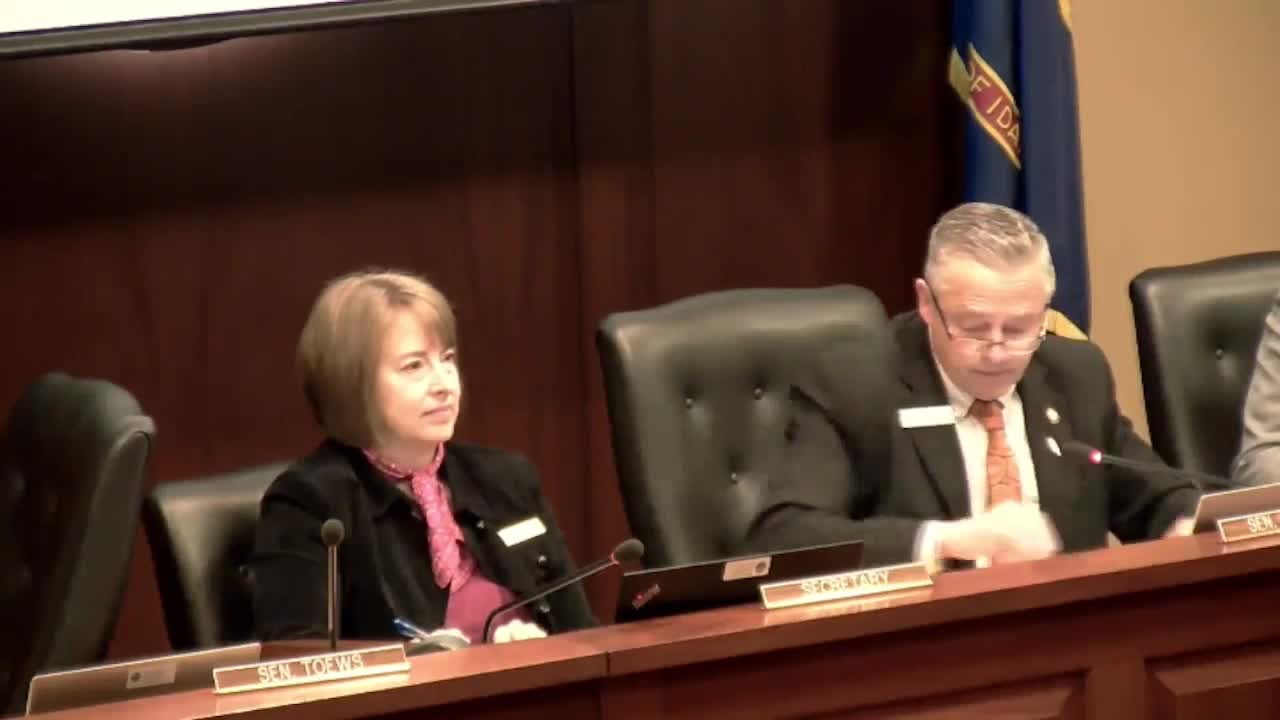
Committee approves resolution asserting Idaho retains power to prosecute despite federal pardons
Summary
The Senate State Affairs Committee voted to send House Concurrent Resolution 5 to the floor with a recommendation that it pass. The resolution states Idaho’s sovereign authority to pursue state criminal charges is unaffected by presidential pardons at the federal level.
The Senate State Affairs Committee voted to send House Concurrent Resolution 5 to the floor with a recommendation that it pass, saying the measure clarifies Idaho’s ability to enforce state law regardless of federal pardons.
Senator Ben Toews introduced the concurrent resolution (HCR 5), saying the primary purpose is “to make it clear that Idaho maintains our State sovereignty and will uphold the rule of law regardless of former President Biden's pardons at the Federal level.” Toews and supporting senators framed the resolution as a statement of legislative opinion rather than a charging document.
Supporters told the committee the resolution addresses public concerns about presidential pardons and federal actions during the COVID-19 pandemic; some speakers referenced former federal public-health officials and federal pardon authority as a motivating factor. Opponents argued the resolution inflames misconceptions about the pandemic response and unfairly targets individual federal officials. Senator Rekke (opposing) said the record shows many scientists were trying to follow best available evidence during an unprecedented pandemic.
A motion to send HCR 5 to the floor with a recommendation that it pass was made and seconded; the committee adopted the motion by voice vote. The transcript records one senator as registering a no vote. The resolution is advisory in effect (a statement of legislative opinion) and does not itself initiate prosecution or change criminal law.