Get Full Government Meeting Transcripts, Videos, & Alerts Forever!
Get email alerts on the Fish And Game Fines topic
No spam. Unsubscribe anytime.
Committee backs bill to bar people with unpaid Fish and Game fines from buying licenses
Summary
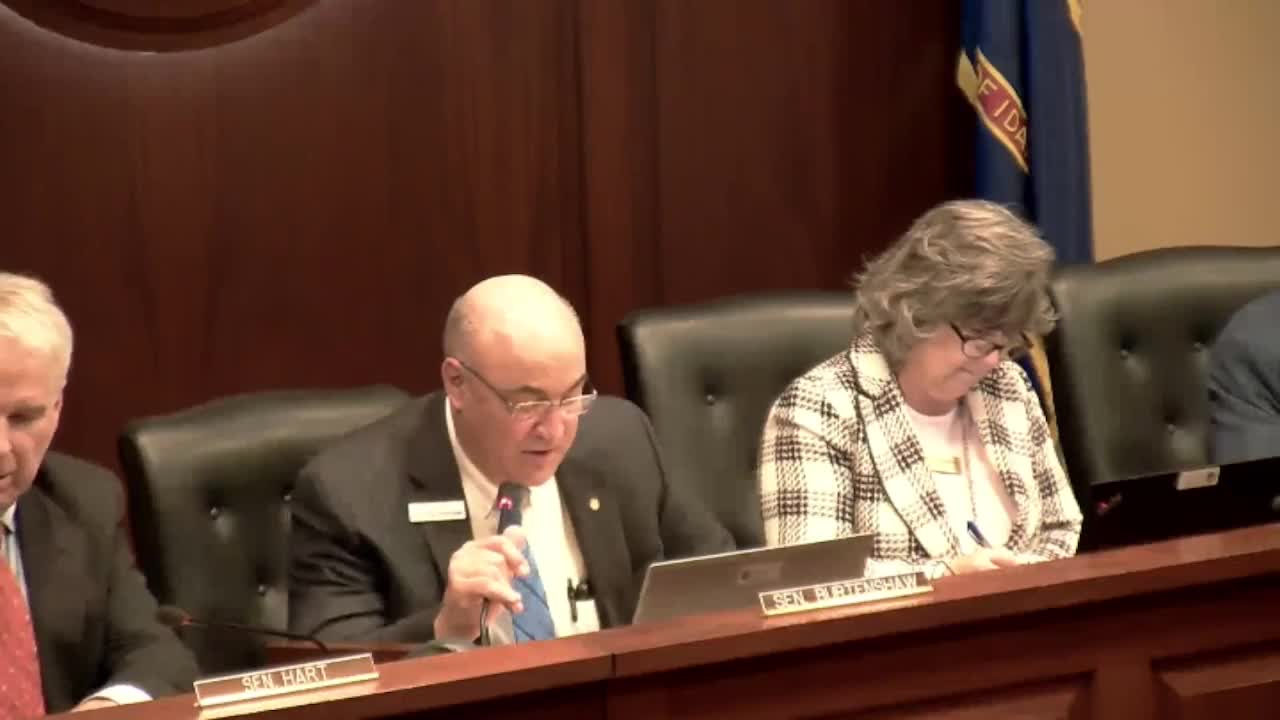
The Senate Resources & Environment Committee voted to send Senate Bill 1003 to the Senate floor with a due-pass recommendation after a hearing in which Idaho Fish and Game officials described how the state would block people with unpaid Fish and Game fines from obtaining hunting, fishing or trapping licenses.
The Senate Resources & Environment Committee voted to send Senate Bill 1003 to the Senate floor with a due-pass recommendation after a hearing in which lawmakers and Idaho Department of Fish and Game officials described how the state would block people with unpaid Fish and Game fines from obtaining hunting, fishing or trapping licenses.
Senator Dan Foreman, who presented the bill, said the proposal would amend Idaho Code to make anyone with outstanding fines for violations of Fish and Game laws ineligible to apply for a hunting, fishing or trapping license, tag or permit until the fines are paid. Foreman asked the committee to send the bill to the floor with a due-pass recommendation.
Greg Wooten, chief of enforcement for the Idaho Department of Fish and Game, told the committee how the change would work in practice. He said lifetime certificate holders must still request a yearly license tied to the certificate, and those annual licenses expire on Dec. 31, meaning the licensing system can flag individuals when they attempt to renew. "The lifetime certificates are only good for a year. The license that they get with the certificate is good for a year. So they expire on December 31 each year," Wooten said.
Wooten also explained how enforcement and collections currently operate. He said courts issue judgments for misdemeanor Fish and Game offenses and citizens have a 45-day appeal window after a judgment; the department typically waits until after any appeal period or final judgment before taking administrative action. Wooten described the department's collection steps: repeated notices, an official letter from the chief of enforcement, then referral to collections and follow-up by the attorney general's office. "We have 3 different notifications that go out ... and then a letter officially from the chief of enforcement saying you have not paid, and that's a notification that they will go be sent to collections," he said.
Senate Bill 1003 would not apply to convicted violators on approved time-payment plans that are not 90 days or more in arrears, Foreman said. Foreman told the committee that, as of his most recent figures, there were $282,622 in Fish and Game fines in arrears and about 85 offenders failing to pay; 97 of those persons held a valid Fish and Game-issued license in 2024.
Nick Fasiano, executive director of the Idaho Wildlife Federation, testified in support and asked only that the bill not cut off eligibility because of timing issues tied to pending court proceedings. "Hunters and anglers take violations of Fish and Game code very seriously and this seems like a good enforcement mechanism," he said (paraphrased).
Committee members asked about technical points: whether controlled-hunt applications require an active license (Wooten confirmed they do), how appeals affect eligibility (Wooten said the department waits for the 45-day appeal window after a judgment), how collection agencies are used and fees charged (Wooten said the collections vendor forwards principal to the department and keeps a contractual fee), and whether misdemeanors are the primary category of violations cited (Wooten said most violations are misdemeanors, while some serious cases can be felonies).
After the hearing, a motion was made to send Senate Bill 1003 to the floor with a due-pass recommendation. The motion was seconded and passed; two senators asked to be recorded as voting nay.
The committee hearing record shows the department and the Fish and Game Commission support the bill and that members emphasized due process protections for people involved in active appeals or payment plans.
The bill will move to the full Senate for further consideration.