Get Full Government Meeting Transcripts, Videos, & Alerts Forever!
Get email alerts on the Marijuana Penalties topic
No spam. Unsubscribe anytime.
Senate committee sends $300 minimum fine for marijuana possession to the floor after hour of testimony
Summary
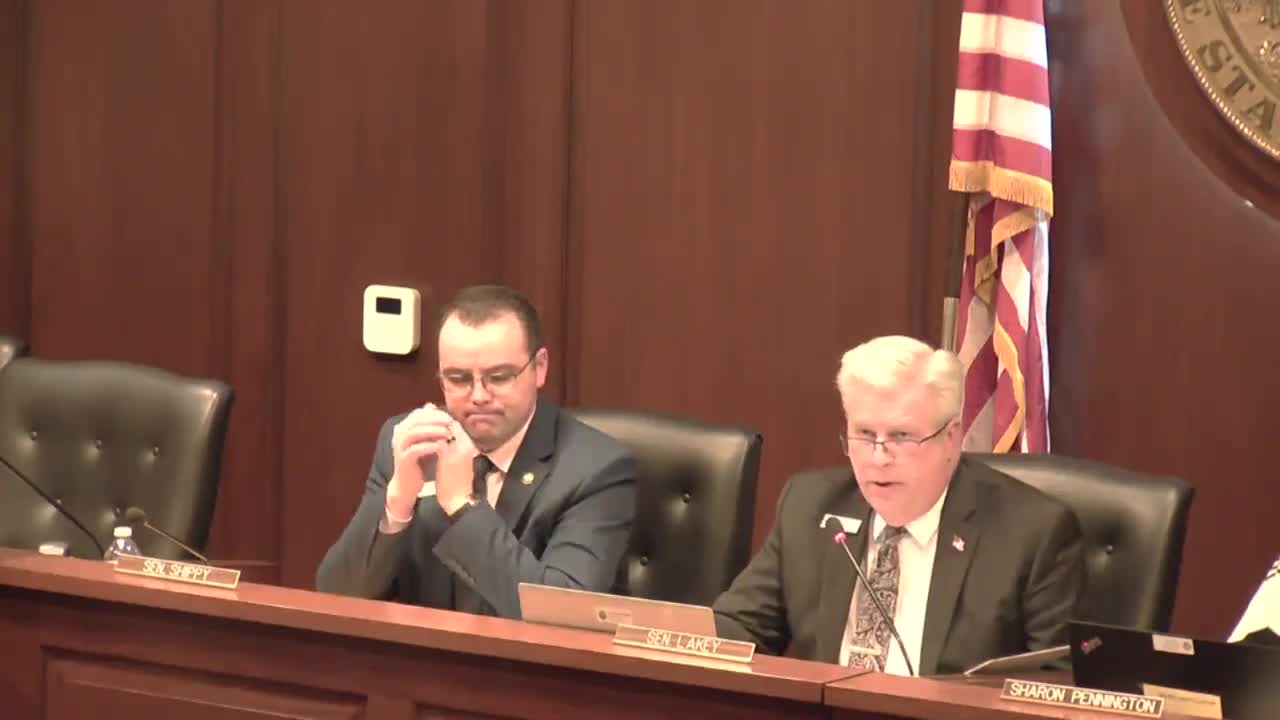
The Idaho Senate Judiciary & Rules Committee voted to send House Bill 7 to the Senate floor with a “do pass” recommendation after roughly an hour of testimony and debate on a proposal that would create a $300 mandatory minimum fine for misdemeanor marijuana possession.
The Idaho Senate Judiciary & Rules Committee voted to send House Bill 7 to the Senate floor with a “do pass” recommendation after roughly an hour of public testimony and floor debate on setting a $300 mandatory minimum fine for misdemeanor marijuana possession.
The bill’s sponsor, Representative Bruce Skaug, told the committee the measure sets “a floor” on fines for possession and said $300 is a compromise figure reached after negotiations. He noted law-enforcement groups back the bill and said the state should be more of a deterrent to possession than neighboring states that have legalized marijuana.
The debate centered on two lines of argument: supporters — including police associations and county sheriffs — said a clear minimum fine would deter cross-border purchases and rising local harms they attribute to greater availability; opponents and several witnesses warned the fine would disproportionately affect low-income people, could harm ill patients who obtain cannabis to manage symptoms, and would remove judicial discretion.
Representative Bruce Skaug, the bill sponsor, told the committee he was asked by a judge to bring the measure and described the proposal as setting “a floor” for misdemeanor possession fines: “We have it right now, it's 0 to a thousand dollars for misdemeanor possession of marijuana…300 is the compromised number. This bill sets that minimum.”
Rex Ingram, president of the Idaho Chiefs of Police Association and chief of police in Caldwell, urged support and linked the bill to public-safety concerns: “I urge you to consider the implementation of a mandatory minimum fine of $300 for marijuana possession as a means not only to deter this behavior but also to maintain the law and order that Idahoans value.” Ingram described patterns he said he had observed in other states and argued Idaho should remain stricter.
Speakers opposing the bill included Joseph Evans, an officer with KIND Idaho, who said the measure would “represent a undue burden” on people who are indigent and that court-ordered supervision and related costs already create large financial burdens. He asked judges to retain discretion: “Give the judges the discretion. Give patients the opportunity.”
Dr. Mark McConnell, a critical-care physician at the Boise VA Medical Center, described veteran patients who use cannabis to manage pain and other conditions and warned the bill would hurt low-income veterans who would still seek cannabis despite legal risk: “If marijuana were legal, I'm sure many of my colleagues would prescribe it over other pain medications … I believe that you will be hurting the wrong people if you pass this legislation.”
Sheriff Matt Clifford, speaking for the Idaho Sheriffs Association, said the bill is not a medical-marijuana measure and argued raising the minimum fine would reinforce Idaho’s stance against illegal drugs and send a message to people traveling from neighboring states: “This is a good way to do that. To have that $300 mandatory minimum reminds people from other states and people in our state that go to those states to purchase marijuana that there are more repercussions here.”
Several advocacy and policy witnesses voiced broader social concerns. Fred Birnbaum of the Idaho Freedom Foundation said the group typically opposes mandatory minimums but supported this $300 fine because, he said, decriminalization elsewhere (he cited Oregon’s Measure 110) had not produced the intended results. Grace Howitt of the Idaho Family Policy Center urged lawmakers to “protect public health and safety” and cited academic studies linking legalization to rises in certain crime and injury rates.
Senators split in committee debate. Senator Ricks moved to send the bill to the floor with a due-pass recommendation; Senator Foreman seconded. Senator Foreman spoke in favor, citing law-enforcement experience and neighboring-state outcomes. Senator Melissa Wintrow said she would vote no, arguing the fine would “not be a deterrent” and would primarily function as punishment that limits judicial discretion.
After a voice vote the chair declared the motion carried and ordered House Bill 7 sent to the Senate floor with a “do pass” recommendation.
Why it matters: House Bill 7 would change the penalty structure for misdemeanor marijuana possession by establishing a mandatory minimum fine. Supporters say the change strengthens deterrence and aligns Idaho’s posture with local law enforcement; opponents say it removes judicial discretion and will disproportionately harm low-income residents and seriously ill patients who use cannabis to manage symptoms.
Next steps: The measure will appear on the Senate floor for consideration. The committee record shows multiple witnesses asked for either a medical exemption or continued judicial discretion; those concerns are likely to surface in floor debate.