Get Full Government Meeting Transcripts, Videos, & Alerts Forever!
Get email alerts on the Renters Fees topic
No spam. Unsubscribe anytime.
Senate committee advances bill to limit rental application fees to two households amid testimony from tenants and landlords
Summary
Senators on the Senate Judiciary & Rules Committee voted to send Senate Bill 10-42 to the fourteenth order for possible amendment after extensive public testimony on limiting rental application fees.
Senators on the Senate Judiciary & Rules Committee voted to send Senate Bill 10-42 to the fourteenth order for possible amendment after extensive public testimony on Feb. (date not specified). The bill, introduced by Sen. Ali Rabe (D–District 16), would restrict landlords from charging nonrefundable rental application fees to more than two households for the same advertised unit at a time, require disclosure of prioritized tenant criteria, and allow tenants to seek recovery of improperly charged fees in small-claims court.
Supporters said the bill addresses what they called predatory practices that add financial strain to renters in a tight market. “Application fees on top of that puts a significant financial strain on families who are already struggling to get by,” said Evan Stewart, program director at Jesse Tree, an eviction-prevention agency, citing clients who paid hundreds of dollars for applications and holding fees that were not refunded when listings proved unavailable or inaccessible.
Sen. Rabe described the measure as narrowly targeted and industry-supported. “This bill will not change anything about how most landlords are already operating,” he told the committee, and said he had worked with landlords and nonprofit groups while drafting the measure. Several landlords and managers testified in favor, including Tyler Walters of the Idaho Apartment Association and Spencer Henderson of the National Association of Residential Property Managers Southwest Idaho Chapter, saying most of their members already follow similar practices.
Opponents warned of unintended consequences for small landlords and for communities where landlords must advertise well in advance, such as college towns. Dan Schoenberg, a property manager in Latah County, said the bill’s 60-day advertising rule could hurt owners who reserve units far ahead of semester starts. Realtor Lynn Bridal said the bill would add administrative burdens and could push some owners out of the market.
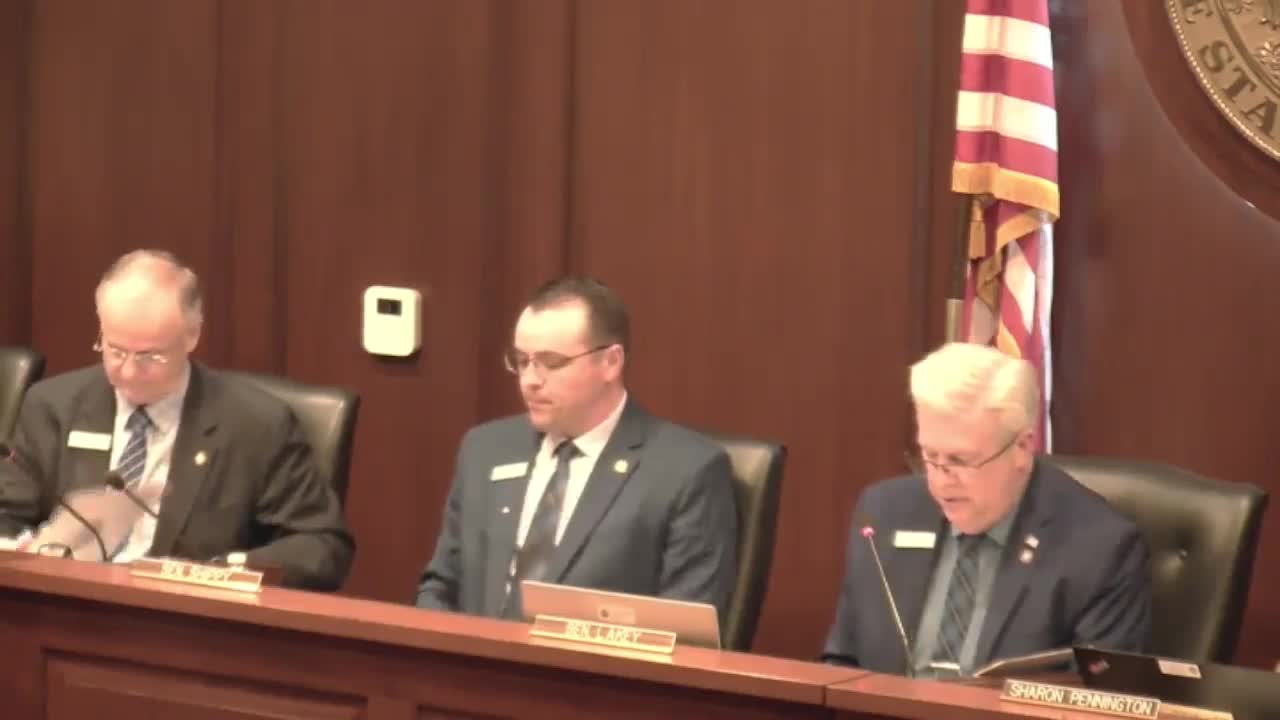
Committee members debated enforcement and scope. Sen. Shippey asked how violations would be handled; Sen. Rabe said enforcement would be through small-claims court and by tenants seeking to recoup fees. A substitute motion to hold the bill in committee failed on a 7–3 roll call; the committee then approved sending the measure to the fourteenth order for possible amendment.
The bill’s proponents said the measure aims for consumer protection rather than broad regulation, and that amendments are expected to clarify the 60-day advertising language and the limited scope for small, fee-free landlords. The committee did not adopt final statutory language; the measure will return to committee consideration in amending order.