Get Full Government Meeting Transcripts, Videos, & Alerts Forever!
Get email alerts on the Education topic
No spam. Unsubscribe anytime.
Idaho School Boards Association urges stronger legislative partnership to defend public education
Summary
Brian Piper, president of the Idaho School Boards Association, told the Senate Education Committee that local school boards provide essential governance and urged the legislature to partner with public schools to improve student outcomes and equity.
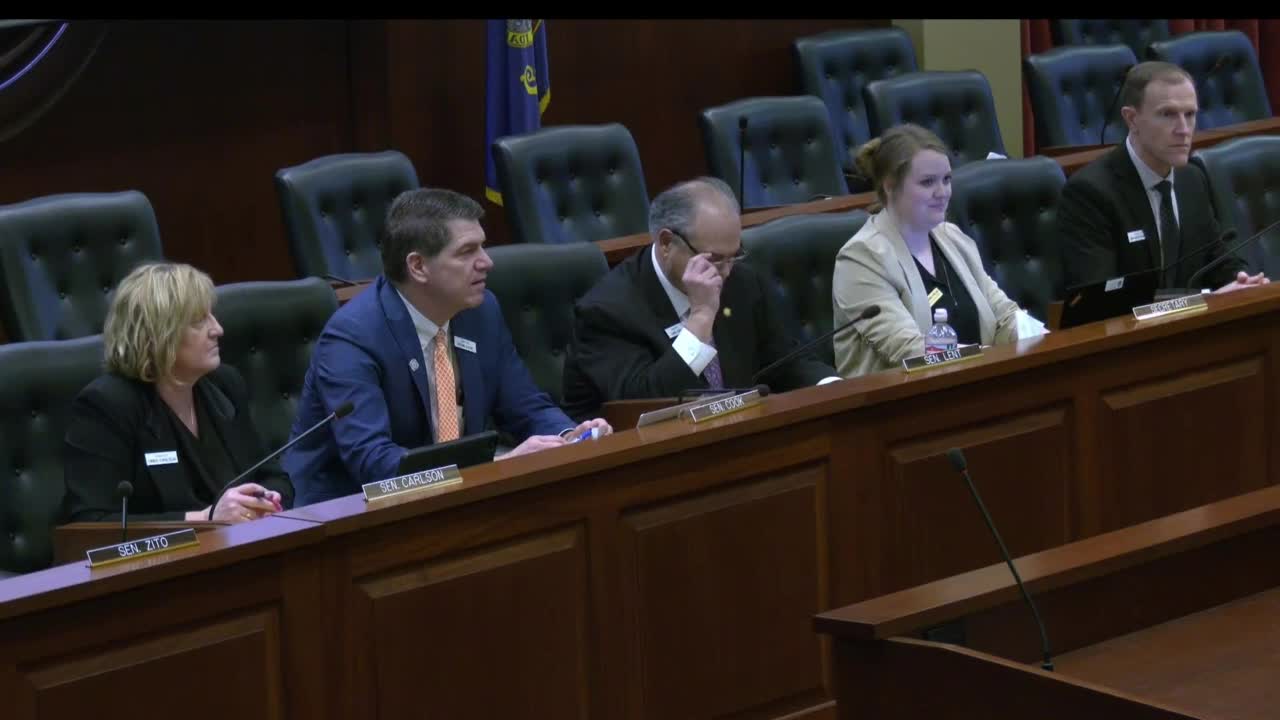
Brian Piper, president of the Idaho School Boards Association and chair of the Madison School District Board of Trustees, told the Idaho Senate Education Committee that local school boards are essential to governance and oversight of public schools and urged lawmakers to partner with districts to support students statewide.
Piper, who identified himself as a physics professor at BYU–Idaho and a long-serving school board member, said the ISBA brought roughly 200 school board members, administrators and guests to the Capitol to promote a shared agenda of support for public schools. He described local boards as a “sacred trust” that engage communities around a vision for their schools and hold superintendents accountable for student success.
Piper outlined four reasons he said justify a robust defense of public education: schools help sustain civic culture; professional educators apply the latest research on learning; inclusive classrooms benefit all students; and schools produce daily, local successes that communities value. He urged legislators to consider partnership opportunities and to meet ISBA members at a planned lunch the following day.
The remarks mixed broad advocacy and personal reflections on governance. Piper emphasized research-based instruction and criticized approaches that treat education as a consumer transaction measured solely by test scores. He also said districts should integrate students of varied learning needs in the same classrooms, noting current educational law already limits segregation of students with differing needs.
No formal action was taken on Piper’s remarks; they were presented as part of the committee’s scheduled set of school-district and charter presentations.