Get Full Government Meeting Transcripts, Videos, & Alerts Forever!
Get email alerts on the Right To Farm Amendments topic
No spam. Unsubscribe anytime.
Committee advances bill to add penalties, fee-shifting to Right to Farm Act to deter meritless complaints
Summary
Senate Bill 10 33, proposing attorney-fee recovery for prevailing agricultural operators and graduated penalties for repeated meritless complaints, was advanced to the Senate floor after testimony from multiple producer groups and agricultural stakeholders.
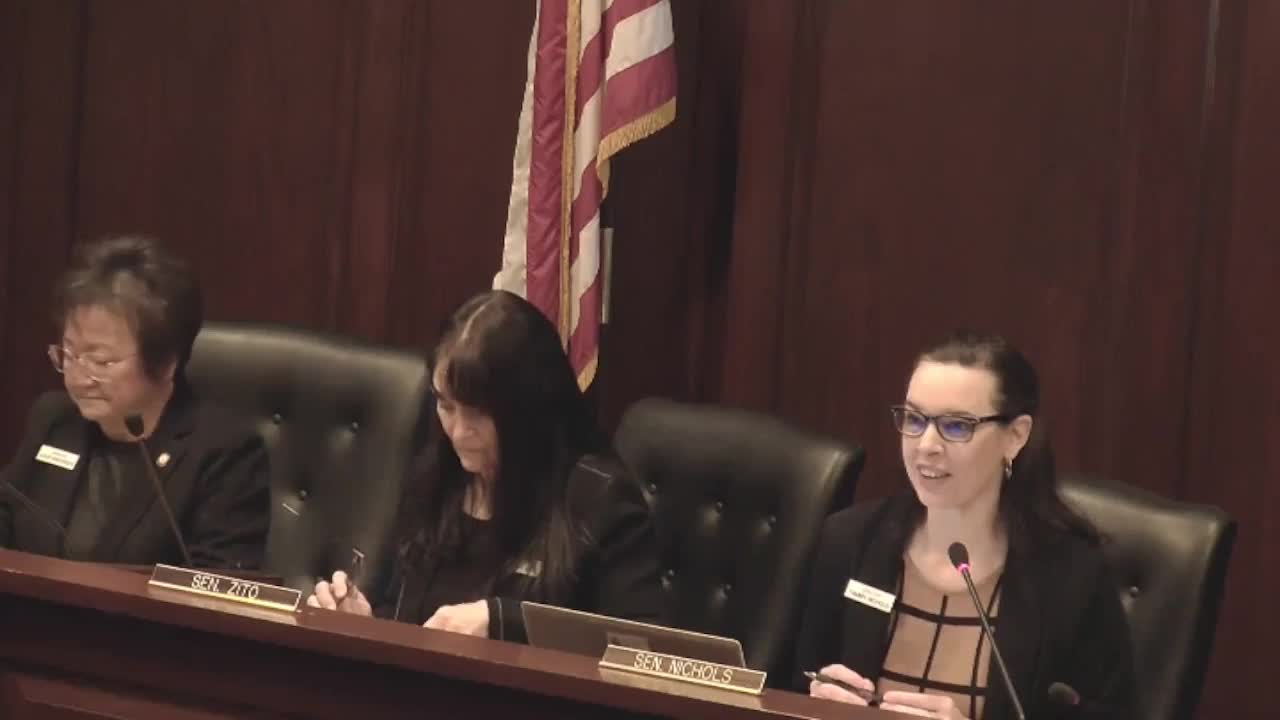
Senate Bill 10 33, which would add fee-shifting and a graduated penalty scheme to Idaho's Right to Farm Act, was advanced to the Senate floor with a do-pass recommendation by the Agricultural Affairs Committee.
Sponsor’s rationale and main provisions
"The Right to Farm Act protects lawfully conducted agricultural operations from nuisance lawsuits and complaints, but operators can still be forced to respond to meritless claims," said State Senator Todd Lakey, sponsor of SB 1033. The bill would allow an agricultural operator who prevails in a nuisance lawsuit to recover reasonable attorney's fees and costs, Lakey said. The bill also creates a graduated set of consequences for repeated meritless complaints filed with state agencies or local law enforcement: a first instance would be educative, a second within two years would be an infraction carrying a $150 fine, a third within two years would be an infraction carrying a $300 fine, and a fourth within two years would be a misdemeanor.
Why sponsors say the bill is needed
Lakey said Idaho has a Right to Farm Act in statute (Idaho Code Title 22, Chapter 45) that dates to the 1980s and was amended in 2011 with additions related to nuisance actions. He told the committee that growth and new residents moving into formerly rural areas have increased complaints about normal agricultural impacts — noise, dust and odors — and that meritless complaints impose time and expense on producers, agencies and sheriffs.
Support from producer groups and education plans
Numerous industry witnesses urged support. Samantha Parrott, executive director of the Snake River Sugar Beet Growers Association, said the association represents 400 growers in 16 counties and that producers need the additional protections. "We still need these protections in place for our ag producers," Parrott said, adding that her group is part of an "ag communicators" effort that works with local media to explain routine farming practices to new residents.
Roger Batt, representing the Idaho Mint Growers Association and the Idaho Eastern Oregon Seed Association, and Cassidy Plum of the Idaho Honey Industry Association also testified in support, echoing concerns about increasing confrontations as population grows near production areas. Plum told the committee Idaho has roughly 24,000 registered bee colonies and that pollination services are essential to many crops.
David Lehman, representing the Idaho Agricultural Aviation Association, described repeated nuisance complaints against aerial applicators as both a business and safety concern. He said prior bills to address false reports and applicator access have reduced some claims, but that repeat complainants — often the same individuals — remain a problem at the sheriff's office level.
Questions and clarifications
Committee members asked how the bill would be enforced and how education would accompany the penalties. Witnesses described ongoing outreach efforts: the ag communicators group organizes monthly communications with media, county farm bureaus and chambers of commerce to inform newcomers about customary agricultural operations and safety when farming activities occur near residential areas.
Final action
A senator moved to send SB 1033 to the floor with a do-pass recommendation; the motion was seconded and carried on a committee voice vote. The committee recorded the bill as advanced to the Senate floor with a do-pass recommendation.
Ending
Supporters described SB 1033 as a measured way to defend lawful agriculture against frivolous complaints while preserving opportunities to educate new residents. The committee advanced the bill to the floor with a do-pass recommendation.