Lifetime Citizen Portal Access — AI Briefings, Alerts & Unlimited Follows
Montana Senate moves dozens of House bills to committees after heated floor debate over procedure
Loading...
Summary
Senators voted repeatedly to refer a large set of House bills to standing committees. The floor maneuver prompted extended debate over whether leadership or the full chamber should control referral timing and process.
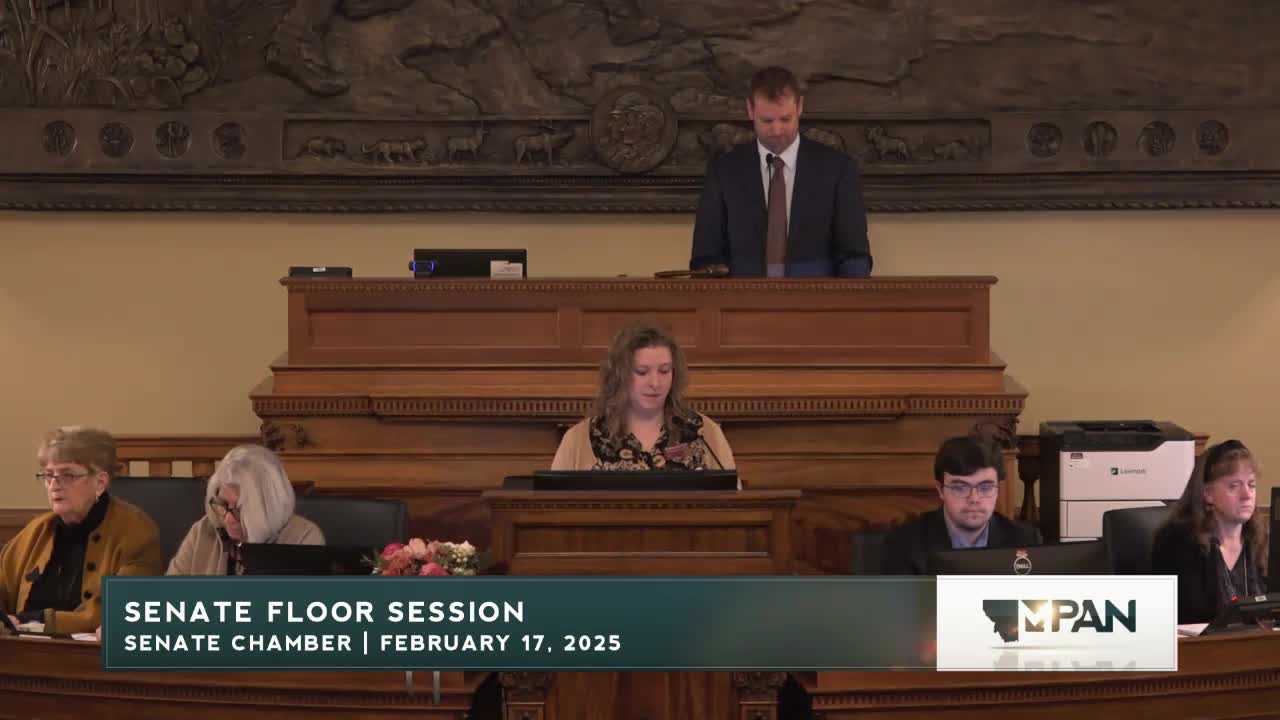
The Montana State Senate referred a volley of House bills to standing committees during an extended floor session, prompting repeated debate about whether the chamber should handle referrals en masse or leave scheduling and assignment to leadership and committee chairs.
Senator Cashmyer led the sequence of motions, reading a list of House bills and asking the Senate to refer each to the committee he named. The bills covered a variety of topics — kindergarten law changes, water well contractor regulation, alcohol regulation, professional licensing errata and more — and sponsors often included the date the bill was transmitted to the Senate.
Why it matters: referrals determine where bills will be considered and who will schedule hearings. Multiple senators opposed the floor-driven approach, arguing it short-circuited consultation with committee chairs and risked assigning bills to committees without appropriate subject-matter expertise.
During debate, Senator Zelnickoff urged patience and said many committees had already scheduled Senate bills: “I don't really see the point of this,” he said when motions were first offered. Senator Trevis and others said the bills were House-originating and could be heard after transmittal, while supporters said referring now would allow chairs to begin scheduling and avoid late-session congestion.
Senator Zolnikoff (floor speaker on several bill titles) read executive summaries and titles for several bills so the chamber could hear what it was voting on. Many committee referrals were adopted by the recorded margin used repeatedly during the evening: 27 senators voting yes and 23 voting no.
Votes at a glance (formal referrals recorded on the floor): - House Bill 24 (kindergarten law revisions) — referred to Education Committee; motion carried (27 yes, 23 no). HB24 was transmitted to the Senate on Jan. 21. - House Bill 38 (disability parking) — originally referred to Transportation Committee; floor record shows motion later withdrawn because HB38 was already in Transportation. - House Bill 40 (public water supply fee accounts) — referred to Natural Resources Committee; motion carried (27 yes, 23 no). Transmitted Jan. 30. - House Bill 53 (allowing troop labor to execute projects) — referred to State Administration Committee; motion carried (27 yes, 23 no). Transmitted Jan. 21. - House Bill 59 (board of water well contractor laws) — referred to Natural Resources Committee; motion carried (27 yes, 23 no). Transmitted Jan. 29. - House Bill 67 (administration of TERF) — referred to State Administration Committee after debate about appropriate placement; motion carried (27 yes, 23 no). - House Bill 70 (study of wildland firefighting) — referred to Natural Resources Committee; motion carried (27 yes, 23 no). Title and appropriation of $50,000 discussed on floor. - House Bill 85 (reinstating former employer contributions to several retirement systems) — referred to State Administration Committee; motion carried (27 yes, 23 no). - House Bill 86 (beer wholesaler and table wine laws) — referred to Business and Labor Committee; motion carried (26–24 recorded in subsequent vote sequences where noted or 27–23 as recorded repeatedly in the sequence). - House Bill 91 (electronic correspondence election from Dept. of Revenue) — referred to Tax Committee; motion carried (27 yes, 23 no). Transmitted Jan. 22. - House Bill 92 (alcohol regulation) — referred to Business and Labor Committee (substitute motion grouped similar bills into Business and Labor); substitute motion passed 34–16 when amended to combine items. - House Bill 94 (sharing tax records for securities and insurance fraud investigations) — originally listed but noted as already in State Administration; sponsor withdrew duplicate referral. - House Bill 108 (personal property farm manual removal for property tax) — referred to Tax Committee; motion carried (27 yes, 23 no). - House Bill 109 (professional licensing errata) — referred to Business and Labor Committee; motion carried (27 yes, 23 no). - House Bill 114 (consumer protection / unfair financial planning practices) — referred to Business and Labor Committee; motion carried (34 yes, 16 no on substitute grouping vote). - House Bill 116 (attorneys appearing remotely) — referred to Judiciary Committee; motion carried (27 yes, 23 no).
During the sequence, senators repeatedly debated whether the body’s rules permitted initial referrals from the floor. Senator Emmerich warned those motions could be “deleterious” and argued that referring bills without rule suspension risked legal challenge; he urged colleagues to consider whether the judiciary could later invalidate bills passed under improper procedure. Others, including Senator Shane Morjell and Senator Logie, argued the referrals would keep work moving and give committee chairs time to schedule hearings.
Several senators urged chairs to work with bill sponsors on scheduling; sponsors emphasized that referring a bill does not automatically set a hearing date, but puts the bill within a committee’s jurisdiction so the chair and sponsor can coordinate.
Ending: The Senate concluded the referral sequence after adopting the motions recorded on the floor. The debate highlighted a recurring tension between using floor motions to move many items quickly and relying on leadership-to-chair referral processes intended to match bills with committee expertise.