Get Full Government Meeting Transcripts, Videos, & Alerts Forever!
Get email alerts on the Public Records Transparency topic
No spam. Unsubscribe anytime.
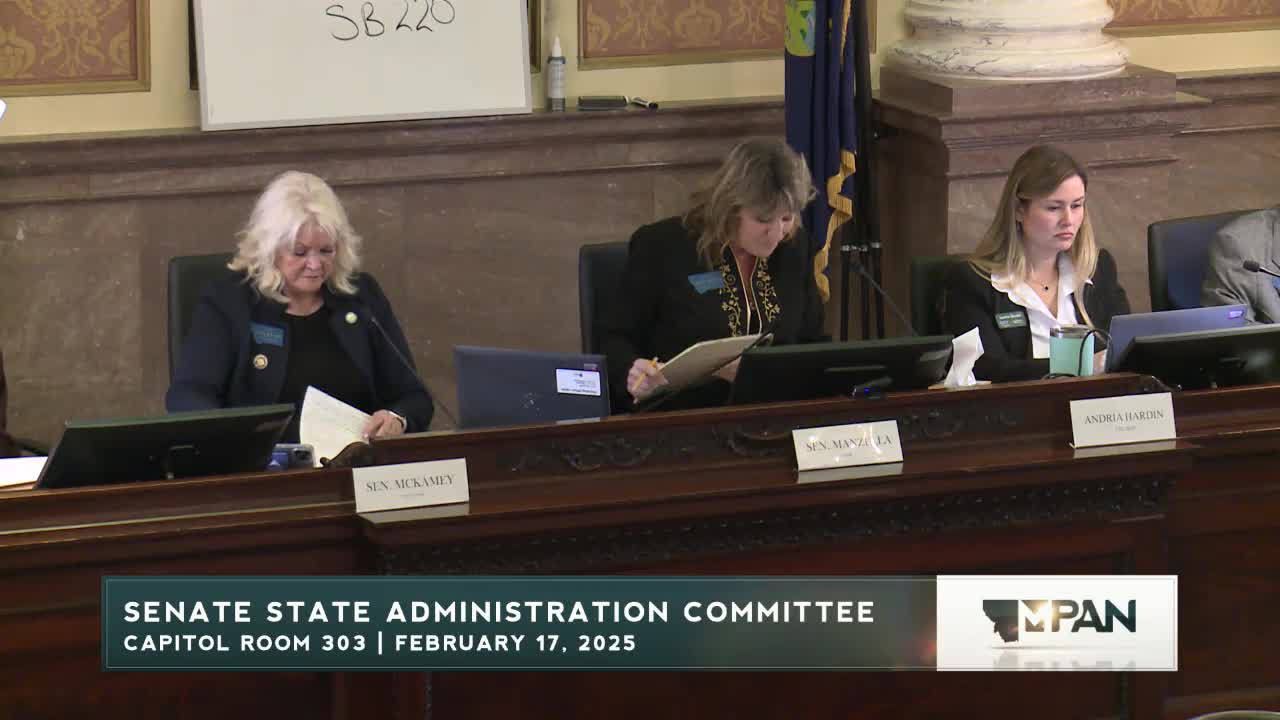
Senate committee hears debate on HB100 to standardize public records fees, including $25 hourly cap and $20 filing fee
Summary
A Senate State Administration Committee hearing on House Bill 100 drew agency support for standardized public records processing and concern from broadcasters, cities and the Department of Justice over proposed fees and scope.
Representative Bill Mercer, sponsor of House Bill 100, told the Senate State Administration Committee that the bill would standardize how executive-branch agencies charge for fulfilling public information requests and discourage overly broad requests that impose heavy staff costs. “We don't wanna do anything to burden the right to know,” Mercer said, but added that the bill seeks consistency in how costs are shared between requesters and agencies.
Officials from the Department of Administration and executive-branch agencies testified in support, describing a centralized intake and review process the administration has set up since 2021. “When we came into office in 2021, there was no standard process,” Director Misty Ann Giles said, describing a small centralized team and a new portal intended to make it easier for requesters to locate records. Don Harris, chief legal counsel for the Department of Administration, explained the intake workflow: the office acknowledges requests within five business days, develops a time-and-cost estimate, coordinates with the agency that holds the records, conducts legal review for confidential material, and then provides the records to the requester and posts requests and responses to the central portal.
Under the bill as discussed, an agency could charge up to $25 per hour for labor to gather, review and produce records, with the first hour of work free; in addition, the proposal creates a $20 filing fee for broad or non‑readily available requests, which would be credited to the requester if the request proceeds. Department witnesses said the proposal also would allow the state to post request/response entries online for two years rather than indefinitely to lower hosting costs. Rebecca Harbage of the Department of Environmental Quality said DEQ handled more than 1,100 requests in fiscal 2024 and closed requests in about 21 days last year; the administration said the statewide average is now roughly 12 days.
Opponents included a representative of the Montana Broadcasters Association, who urged removal of the $20 filing fee, arguing it would be an unusual charge nationwide and could limit press access; lawyers for cities and towns and the Department of Justice urged language changes so fees can reflect the actual staff doing the work. Alex Sturhan, speaking for the Department of Justice, warned that attorneys and paralegals often must perform records reviews and that a flat $25 cap could under‑recover real costs for some agencies. Thomas Joden, legal services director for the Montana League of Cities and Towns, said local governments vary widely in practice and that the bill applies the term “public agency” to local governments under the cited statutory definition, which he said could shift costs to taxpayers in some municipalities.
Committee members asked detailed questions about how the filing fee would be collected and refunded, whether requesters must use the portal, how counties and cities currently bill for work, and whether 25 dollars per hour is sufficient for higher‑paid staff who sometimes must review records. Administration witnesses said they already accept checks and plan to add card payments, that the filing fee would not be applied to simple in‑office inspection or clearly identifiable readily available records, and that the portal’s tools should reduce review time for large email searches over time.
No formal committee vote occurred at the hearing; sponsors signaled willingness to accept drafting changes to address concerns about litigation‑related work and local government costs.
Ending: Proponents urged the committee to pass HB100 as a standardizing measure that builds on 2023 reforms; opponents asked for amendments to ensure fees are “commensurate to costs” in situations requiring higher‑paid staff. The committee closed the hearing and moved on to other bills.