Get Full Government Meeting Transcripts, Videos, & Alerts Forever!
Get email alerts on the Child Family Ombudsman topic
No spam. Unsubscribe anytime.
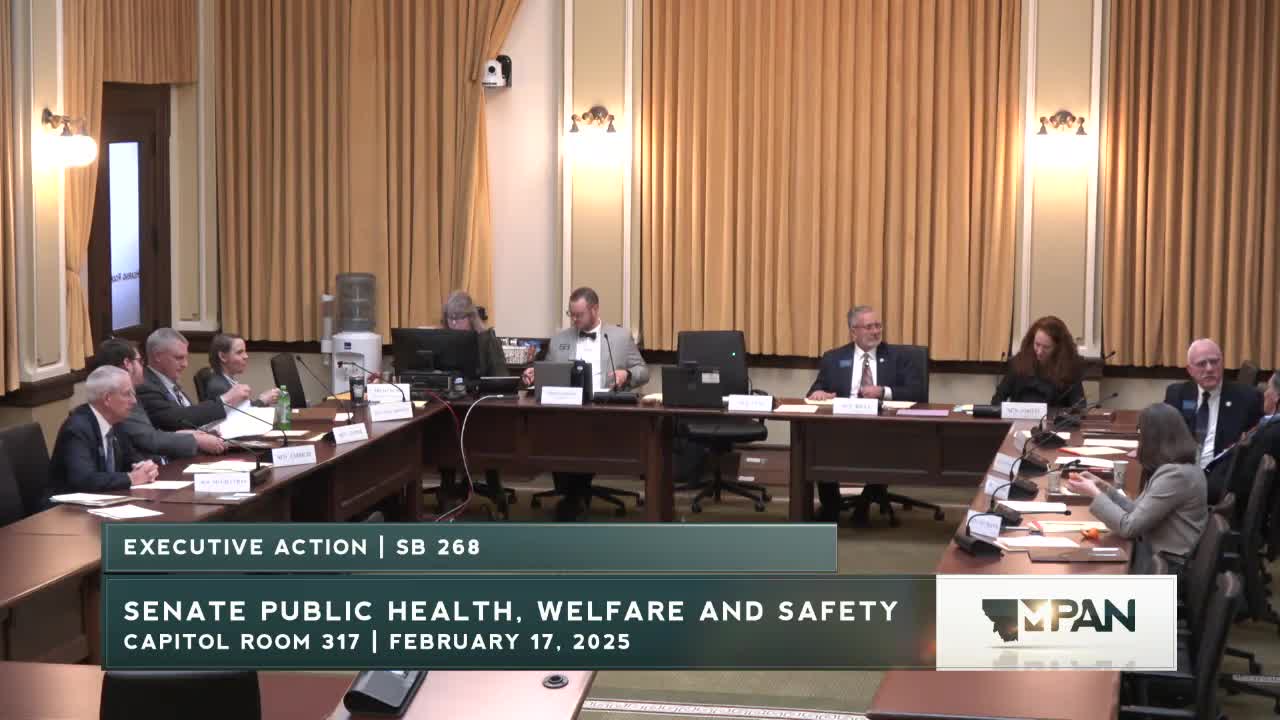
Senate panel hears bills to expand child-and-family ombudsman office and preserve confidentiality
Summary
The Senate Public Health Committee heard companion bills from Senator Lenz to add staff and investigative authority to Montana's Child and Family Ombudsman and to codify confidentiality protections for callers. Advocates and the Department of Justice urged passage; no committee vote was recorded on either bill during the hearing.
Senator Michael Lenz on Monday introduced two companion bills to strengthen Montana’s Child and Family Ombudsman office, proposing new staff positions, investigative capacity and a statutory mechanism to preserve caller confidentiality.
The measures — carried as Senate Bill 250 to expand the office and Senate Bill 251 to protect confidentiality — drew support from the Department of Justice and family-advocacy groups who said the ombudsman provides an independent review for families involved with child and family services.
Dana Toole of the Department of Justice told the committee, “We are an independent, impartial place in the state for anyone concerned about a child protection issue to call.” She said the department has supervised the ombudsman office since the legislature dedicated it to DOJ in 2013 and that the office opens roughly 130 investigations or case reviews per year.
Casey Gaub-Bruno, the state’s Child and Family Ombudsman, described current capacity limits and a backlog. “I am the only full time employee for the entire state,” Gaub-Bruno said. “At this time, we have a queue, with roughly about 34 families waiting for us to investigate and review their cases.” She supported the expansion in SB 250, which the sponsor said would add intake/outreach specialists, associate ombudsmen and research and data analysts and would give the office clearer authority to initiate investigations when warranted.
Proponents including Matt Kuntz of NAMI Montana and Beth Brenneman of the Montana Coalition Against Domestic and Sexual Violence spoke in favor of expanding staff and investigative reach. Denise Johnson, a board member of the Montana Child Protection Alliance who testified online, urged that new positions be office-based rather than remote and include legal expertise. She also cautioned against hiring staff directly from Child and Family Services to preserve the ombudsman’s impartiality.
Committee members asked several procedural and substantive questions. Senator Kirk Carpenter asked about a repealer in the bill; Gaub-Bruno said the change would remove the office’s current evidence privilege so the ombudsman’s reports could be used in dependent-neglect court. Members also asked about training and the relationship between the ombudsman and other DOJ units; Gaub-Bruno and Toole described a firewall within the Division of Criminal Investigation and training resources available from other states’ ombudsman offices.
SB 251, the companion bill, was presented as a statutory means to maintain confidentiality for callers; DOJ representatives said 90–95% of people who call request confidentiality and the bill would strengthen current practice by putting the protection into statute. Supporters said the two bills work together and should pass in tandem.
No opponents appeared in the room, and committee staff recorded no formal committee vote on either SB 250 or SB 251 during the hearing. The sponsor closed by urging committee approval and saying the changes would make the ombudsman office “stronger” and more effective.