Get Full Government Meeting Transcripts, Videos, & Alerts Forever!
Get email alerts on the Colstrip Water Security topic
No spam. Unsubscribe anytime.
Representative Perry proposes bill to secure Colstrips long-term water supply; owners and industry ask for more time to negotiate
Summary
Rep. Gary Perry presented House Bill 368 to require a long-term assurance of potable water for the town of Colstrip after plant closure; mayor and local groups supported the measure, owners and industry opposed or urged delay citing legal and property-right concerns; sponsor suggested funding options including a coal-severance set-aside.
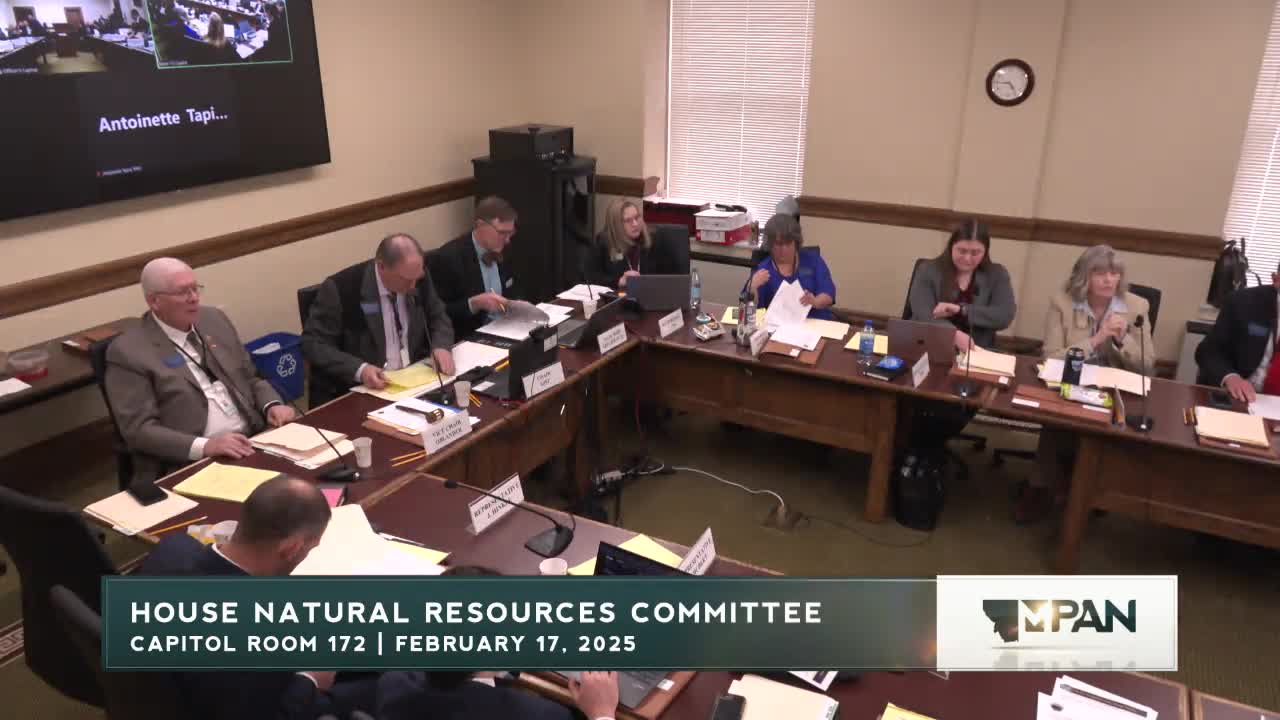
Representative Gary Perry opened a hearing on a bill filed to address long-standing water-supply concerns in Colstrip and to require a mechanism assuring the town retains potable water after coal-plant and mine closures.
Perry said Colstrips municipal water depends on two long transmission lines from the Yellowstone River (about 30 miles long), built to serve the power plants and the town. He said one pipeline is roughly 28 inches and roughly 50 years old and the other is 34 inches and about 40 years old; replacement of a 30-mile line was described in testimony as costing approximately $80 million (2022 dollars). Perry said the town currently holds approximately 2.5 cubic feet per second (cfs) of water rights while plant owners hold roughly 62.5 cfs and that the community needs assurances so residents are not left without potable water after industrial operations end.
Mayor John Williams testified in support, reviewed the unusual ownership history (Rosebud County and then plant owners originally operated system; the city later took ownership and now pays for raw-water transportation under agreement) and urged a legislative solution. Local economic-development leaders (Jim Acheson, Southeastern Montana Development) and the Montana League of Cities and Towns (Kelly Lynch) also supported the bill as a step toward stability for Colstrip.
Representatives of owners and industry opposed the bill as drafted. Talen Generation (identified in testimony as the operator) and Puget (testimony: Puget) representatives said the bill raises legal issues about property rights, eminent-domain implications and the appropriateness of using statute to transfer or require transfer of private water rights; they urged continued negotiation and said industry and owners were willing to engage in a collaborative solution. The Senior Water Rights Coalition and the Montana Chamber of Commerce likewise warned about precedent and compensation if water rights are taken.
Sponsor Perry said he has held ongoing discussions with industry and county officials and proposed potential funding approaches, including carving out a modest annual set-aside from the coal-severance tax trust fund to build a fund over time (example discussed informally: $2 million per year to accumulate over decades). He described the bill as a framework to guarantee water to Colstrip residents for an extended period after plant remediation and closure and said he preferred a negotiated solution but would advance the bill to produce action.
Informational witnesses included Amy Steinmetz (DEQ Waste Management & Remediation Division) and others. Questions from committee members focused on ownership of lines, who pays for operations and maintenance, whether existing water rights could be conveyed, and the timeline and costs for replacing or relining long transmission lines.
The hearing record shows active stakeholder engagement and an intent to continue negotiations; the transcript did not record any committee action or final vote on the bill in the excerpt provided.