Get Full Government Meeting Transcripts, Videos, & Alerts Forever!
Get email alerts on the Electric Transmission topic
No spam. Unsubscribe anytime.
Montana lawmakers hear bipartisan push to expand electric transmission capacity
Summary
Lawmakers heard bipartisan testimony supporting House Joint Resolution 15 calling for increased electric transmission capacity to lower costs, enable new generation and reduce reliability risks; industry groups, labor and regulators urged action and described technical and permitting hurdles.
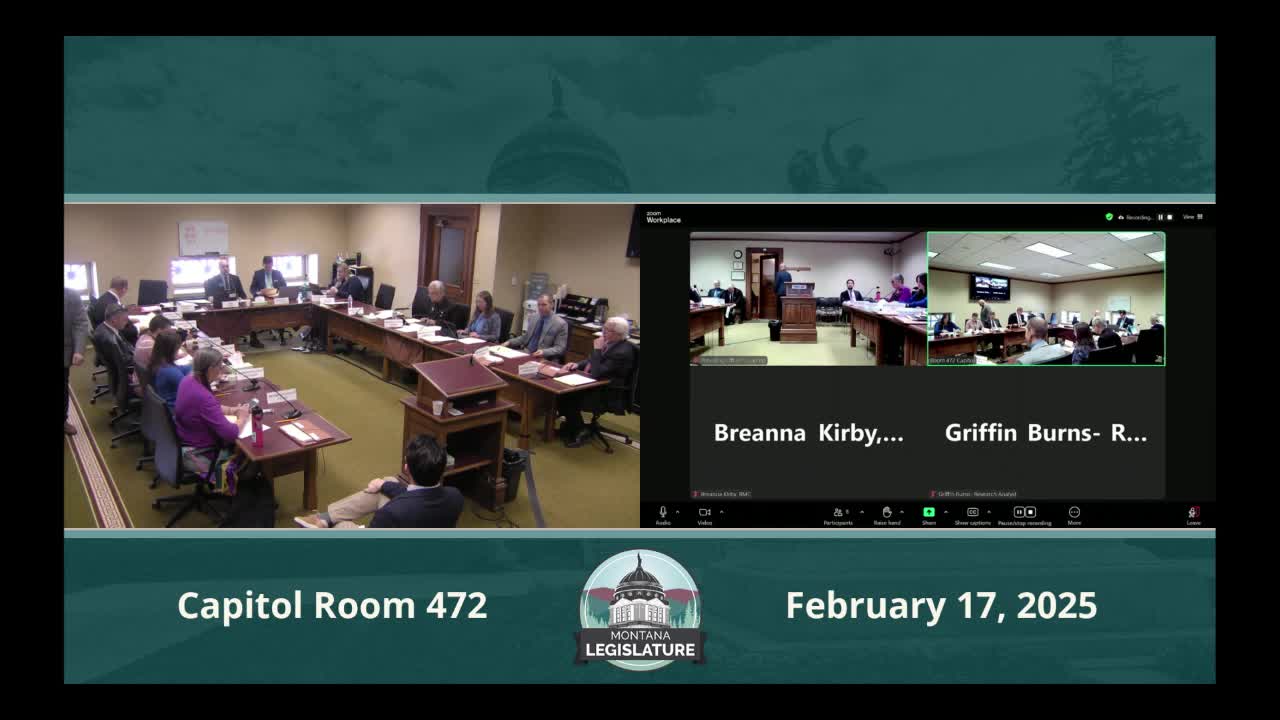
Representative Greg Kametz, sponsor of House Joint Resolution 15, opened a committee hearing urging the Legislature to endorse a state-wide push for greater electric transmission capacity to keep electricity affordable and reliable for Montana residents and businesses.
Kametz said Montana’s economy depends on “access to affordable and reliable electricity service,” and argued that existing transmission constraints prevent new generation from reaching consumers and are causing high costs that risk driving employers out of the state.
Supporters who testified in favor of HJ 15 included labor, utilities, environmental groups and economic development representatives. Jay Reardon of the Montana State Building Construction Trades Council said, “Electrical transmission is critical to the state,” and urged favorable action. Jan Rousc of Northwestern Energy told the committee the company supports exploring transmission capacity to lower customer costs and to preserve Montana’s role as an energy exporter. Nick Fitzmaurice, energy transition engineer at the Montana Environmental Information Center, said transmission constraints “inhibit the ability to tap into some of the energy resources available to us in the state.”
Speakers pressed two categories of needs: new high‑capacity lines to carry additional wind and other generation, and upgrades to existing lines to improve reliability and maintenance access. Al Ekblad of Operating Engineers Local 400 said improvements to existing infrastructure “should be part of the conversation.” A lineman who identified himself as Mr. Schuman described reconductoring and maintenance practices used in other states to increase capacity without entirely replacing routes.
Randy Pinocchio, Public Service Commissioner District 1, offered technical and safety suggestions including use of newer conductor technology. Pinocchio recommended considering carbon‑fiber core conductors, saying they are stronger than steel and “would reduce fire risk by more than half.” He also pointed to national studies showing interregional transmission benefits and offered to supply the committee with reports referenced during testimony.
Regional economic development testimony noted that transmission limits are already affecting private investment decisions. Brett Downey said his region can serve limited projects today but is losing competitiveness for large manufacturing operations because of anticipated future power needs. Derek Goldman of the Northwest Energy Coalition and other national/regional advocates urged the committee to pass the resolution to signal state interest in attracting transmission investment.
There were no opponents on record during the hearing and no formal vote on the resolution during the session. Kametz closed by thanking the committee and saying the hearing had achieved its goal of beginning a broader conversation about transmission capacity.
The hearing record shows broad, cross‑sector support for examining permitting, technical standards and possible regulatory steps to attract transmission investment; no statutory changes were voted on at this session and the committee did not take final action on HJ 15.