Get Full Government Meeting Transcripts, Videos, & Alerts Forever!
Get email alerts on the Landlord Tenant topic
No spam. Unsubscribe anytime.
Committee hears bill to allow electronic notices and deposit returns for Montana renters
Summary
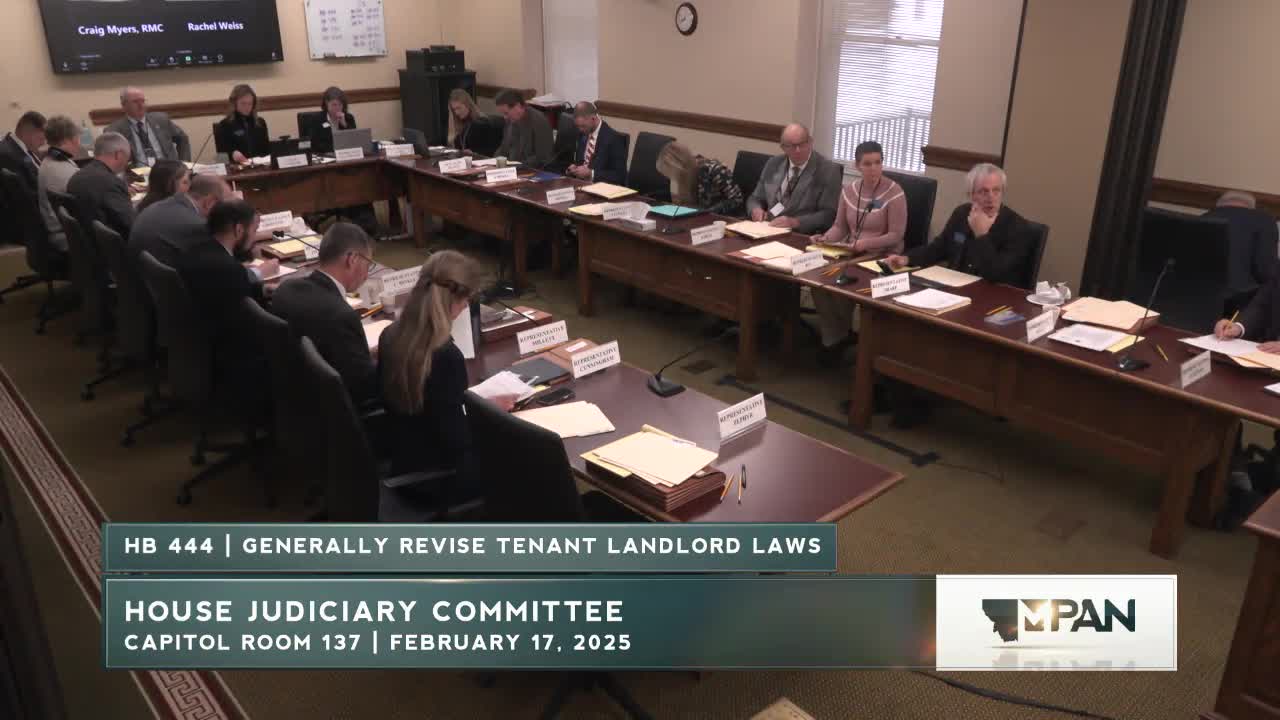
Representative Paul Tuss, sponsor of House Bill 4‑44, told the House Judiciary Committee he is seeking a narrow update to state law so landlords and tenants may use electronic mail and electronic funds transfer for required notices and the return of security deposits.
Representative Paul Tuss, sponsor of House Bill 4‑44, told the House Judiciary Committee he is seeking a narrow update to state law so landlords and tenants may use electronic mail and electronic funds transfer for required notices and the return of security deposits.
The bill “simply modernizes Montana law to allow communication between landlords and tenants to include electronic mail,” Rep. Tuss said during the hearing. He urged the committee to approve the change so tenants receive deposits more promptly when a forwarding address is not provided.
Why it matters: Supporters said the change removes an administrative friction point that can leave a tenant’s security deposit in limbo when mail is returned to a former address. Opponents did not appear, but landlords raised limited drafting and implementation questions about which statutory chapter should contain the new notice language.
What proponents said Daniel Cox of the Montana Association of Realtors testified he supports the bill as a “fairly simple fix” that permits electronic funds transfer to return security deposits and can speed remittance when a tenant has not given a forwarding address.
John Sinnerud of the Montana Landlord Association said his group generally supports electronic transfers but urged clearer drafting about where notice definitions belong in statute — pointing out the Tenant‑Landlord Act and the Security Deposit Act are codified in separate chapters, and that the bill should avoid creating ambiguity about which chapter controls notice requirements.
Charles Lapp, testifying from the Flathead Valley, told the committee the bill “updates things tenants and society are already expecting” and called the option to return deposits by electronic transfer a useful improvement.
Questions and clarifications Committee members asked how landlords would be notified if a tenant’s bank account or payment method changed after the tenant left. Witnesses and the sponsor said the provision presumes communication between the parties and does not create a new mechanism for third‑party notification. Sinnerud reiterated there is currently no statutory period saying how long a landlord must “sit on” a deposit if it cannot be delivered.
Next steps The hearing closed without a recorded committee vote on the bill. The sponsor said he was willing to work on drafting clarifications the committee or stakeholders requested.
Ending note: The bill as presented would add electronic mail and electronic fund transfer to the existing statutory options for sending required notices and returning security deposits; the hearing record shows support from real‑estate and landlord groups and limited drafting questions rather than opposition.