Get Full Government Meeting Transcripts, Videos, & Alerts Forever!
Get email alerts on the Education High Cost Disabilities topic
No spam. Unsubscribe anytime.
Committee considers law to increase high-cost disabilities reimbursement; dash-1 would add $200 million
Summary
House Bill 2,448 would raise annual transfers to the High Cost Disabilities Account and appropriate additional general-fund dollars; witnesses described a roughly 40% reimbursement rate and district examples of large gaps between eligible costs and payments.
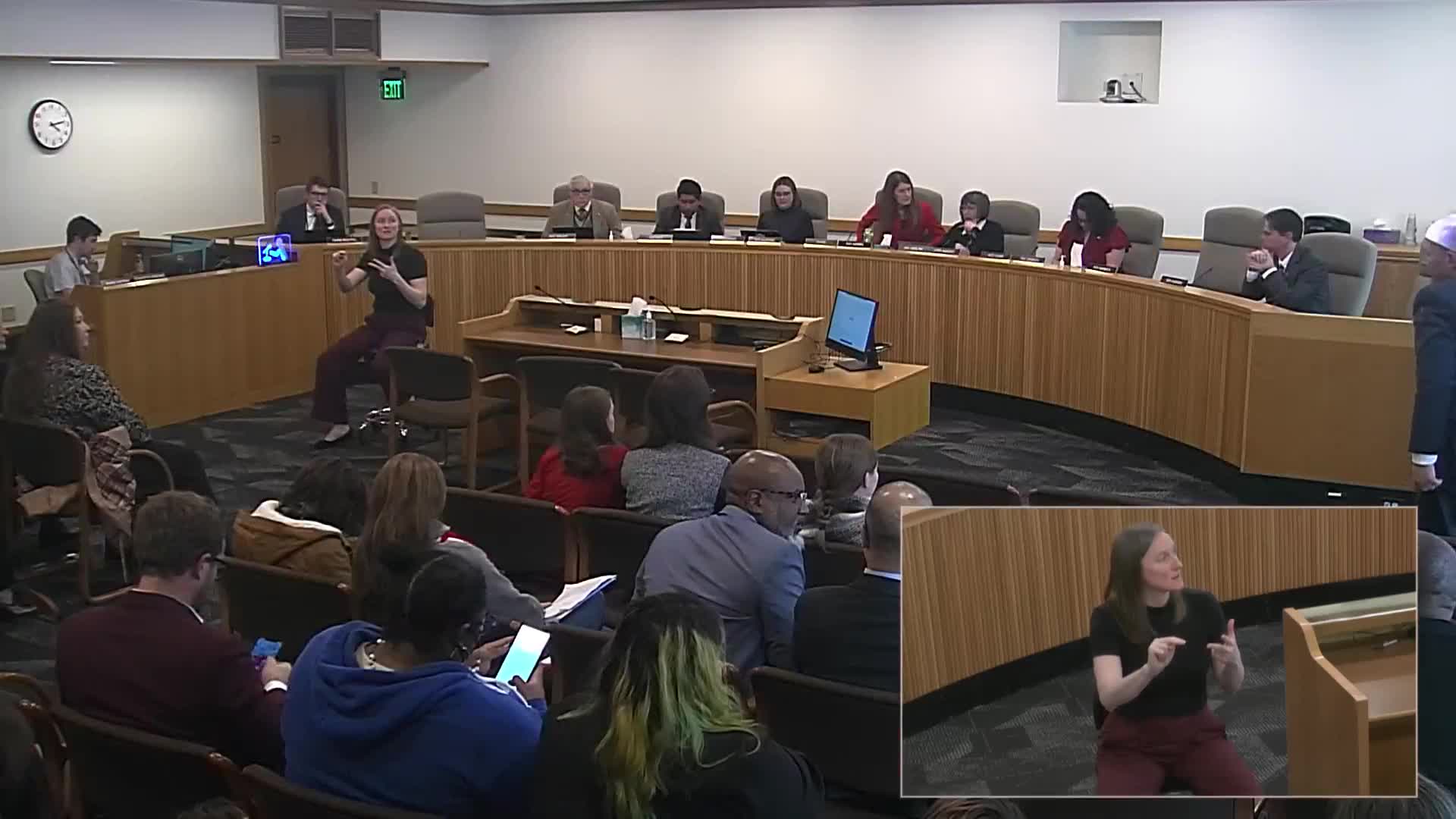
House Bill 2,448, a bill to increase state transfers to the High Cost Disabilities Account, drew testimony Feb. 17 before the Oregon House Education Committee. The staff summary said the bill would raise annual transfers from the state school fund to the account and includes a dash-1 amendment that increases the recommended amounts and a related general-fund appropriation.
Supporters told the committee the current account does not cover actual district costs for students with exceptionally high needs. Adrienne Anderson, government-relations counsel for the Oregon School Boards Association, said the account’s appropriation for the 2023–25 biennium was roughly $110 million total (about $55 million per year), but demand for reimbursements outstrips available funds. As a result, Anderson said, the projected reimbursement rate for the current school year is about 40 cents on the dollar.
Morgan Allen described how the shortfall plays out locally. She relayed data from Parkrose School District showing 36 students with high-cost eligibility generated $2,360,000 in eligible expenditures in 2023–24. Because districts are responsible for the first $30,000 per student, and because the account is oversubscribed, Parkrose received about $521,000 in reimbursement — leaving a gap exceeding $757,000, or roughly $21,000 per eligible student. Allen said the dash-1 amendment would allocate a larger per-fiscal-year amount to the High Cost Disabilities Account and appropriate $200 million from the general fund for the 2025–27 biennium.
Other witnesses described life-and-safety and access concerns. Callie Ross, a parent from Sherwood, told the committee her son cannot access public education because the district lacks resources to provide necessary nursing, adaptive equipment and transportation. Christy Reese of FASD Oregon and Lisa Ledson of Advocates for Disability Supports argued the additional funds would reimburse actual costs and prevent students from being excluded from school.
School districts and associations urged the committee to adopt the dash-1 amendment. Adrienne Anderson said roughly 5,500 students in Oregon currently meet the high-cost threshold that can trigger direct reimbursement; the current account and appropriation do not cover total requests. The committee did not vote on the bill during the hearing and closed testimony at the end of the scheduled public comment period.
Proponents asked lawmakers to add the larger appropriation and to pair increases with broader work on special-education funding to ensure districts can provide inclusive services and retain specialized staff.