Get Full Government Meeting Transcripts, Videos, & Alerts Forever!
Get email alerts on the Juvenile Detention topic
No spam. Unsubscribe anytime.
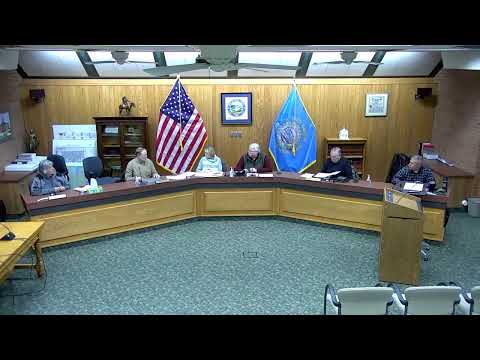
Yankton County approves feasibility study with TEGRA for local juvenile detention options
Summary
The Yankton County Board of Commissioners voted to hire consultant TEGRA to complete a feasibility study and preliminary design for adding juvenile detention capacity to the county jail, a step commissioners said is needed to determine whether a local facility is financially and operationally feasible.
The Yankton County Board of Commissioners voted to hire consultant TEGRA to complete a feasibility study and preliminary design for adding juvenile detention capacity to the county jail, a step commissioners said is needed to determine whether a local facility is financially and operationally feasible.
Commissioners approved the consultant engagement after discussion about scope, cost and timing. The study was described as a two-step process: an initial phase (about $25,000) and a second phase (about $25,000); commissioners and staff also referenced a commonly cited total of roughly $55,000 once travel and phase‑2 expenses are included. Commissioner Dan moved to approve the engagement; Commissioner Don seconded the motion, and the board voted in favor.
Why it matters: County leaders said sending juveniles to facilities outside Yankton has become increasingly costly and disruptive — both in dollars and in access to local services. Sheriff’s Office staff and other local officials told the board the county now pays substantially more per juvenile than it did several years ago and that local handling could reduce transport time, staff hours and related costs.
Key details and discussion - Scope and timeline: TEGRA’s proposal, as presented to the board, includes on‑site visits and a 90‑day schedule of meetings and deliverables that would run roughly from late February to early June if the work begins on the timeline in the packet. The firm said the engagement would examine siting, layout, how many juveniles could be accommodated, and how any addition would integrate with adult jail space and long‑term county planning. - Cost and phases: Commissioners and staff discussed that the work is not a single $25,000 item. TEGRA’s proposal lists a two‑step fee schedule (step 1 and step 2) and the board was told that travel and accessorial charges could be billed under step 2. County staff estimated the combined cost of steps 1 and 2 and incidental expenses at about $55,000. - Alternatives and existing practice: Board members said juveniles currently are transported to Sioux Falls and, in times of capacity strain, may be placed with contracted providers at lower security levels. County officials said such placements can entangle additional transport, officer overtime and court scheduling costs and that local detention capacity could allow courts to hold more youths in‑county when appropriate. - Input from other jurisdictions and partners: Commissioners noted conversations with Clay County and other nearby jurisdictions and referenced TEGRA’s recent work on correctional projects in the region. County staff identified juvenile probation and JDAI coordinator Alec Martin as program partners who would use on‑site space for programming if a local facility were added.
What the vote does and next steps The vote authorizes contracting with TEGRA to proceed with the feasibility study and initial design work laid out in the proposal. The board did not approve construction or commit to building; members emphasized the study will provide the cost estimates and cash‑flow analysis needed before any decision about bond financing or construction is made. County finance review and a separate analysis of the county’s fiscal position were discussed as prerequisites for any later construction decision.
The consultant engagement also will include meetings with local law enforcement, courts and school officials to collect operational input. The board expects to review TEGRA’s findings in mid‑year before deciding whether to advance to final design or pursue funding options.