Get Full Government Meeting Transcripts, Videos, & Alerts Forever!
Get email alerts on the Social Services Domestic Violence topic
No spam. Unsubscribe anytime.
Lutheran Social Services says domestic-violence program sees demand, long wait list in Sioux Falls
Summary
Representatives from Lutheran Social Services presented data to the Minnehaha County Commission showing high demand for assessment and intervention services for domestic violence: 174 assessments in 2024, 130 groups completed, and a 55-person wait list for group services in Sioux Falls.
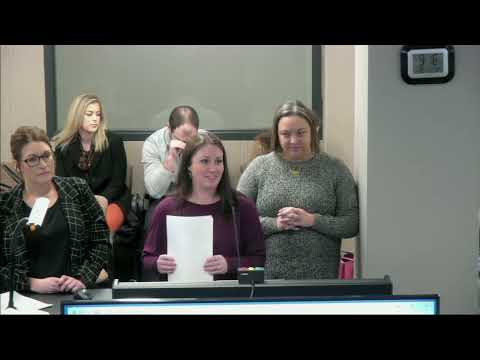
Lutheran Social Services (LSS) told the Minnehaha County Commission on Jan. 28 that its Family Violence Project is meeting strong demand for court-ordered assessments, partner intervention groups and case management in the Sioux Falls area, and that staffing limits leave a persistent wait list.
Stacy Johnson, vice president of program operations at LSS, said the program conducted 174 assessments in fiscal 2024, completed 130 intervention groups and provided case management to 174 individuals over the year. Johnson said each individual assessed is eligible for case management services, and that LSS uses those services to address barriers — such as transportation and housing — that can affect program success.
“We understand that domestic violence doesn't happen in a vacuum,” Johnson said. She told commissioners that LSS runs 10 group sessions currently, including one Spanish-speaking group, with about 110 individuals enrolled and about 55 people waiting for group placement in the Sioux Falls area.
Allison Pratt, associate director of reentry services, described LSS’s screening and referral process. Most participants are court-ordered for assessment; LSS requires documentation such as a police report to complete its validated assessment. For community members who seek help without a criminal charge, staff may offer enrollment in group programming after a basic screening.
Johnson said the program tracks outcomes and follow-up arrests for up to two years after completion, checking records at 6, 12, 18 and 24 months. She and other LSS staff said follow-up and accountability — including monitoring compliance with court orders — are part of the program.
Commissioners asked about self-referrals and the program’s capacity; LSS representatives said additional staff would reduce the wait list and allow the program to complete more assessments and group enrollments.
The commissioners heard no public comment opposing the program. LSS asked the county to continue its support to help reduce wait times and expand available interventions.