Get Full Government Meeting Transcripts, Videos, & Alerts Forever!
Get email alerts on the Municipal Aggregation topic
No spam. Unsubscribe anytime.
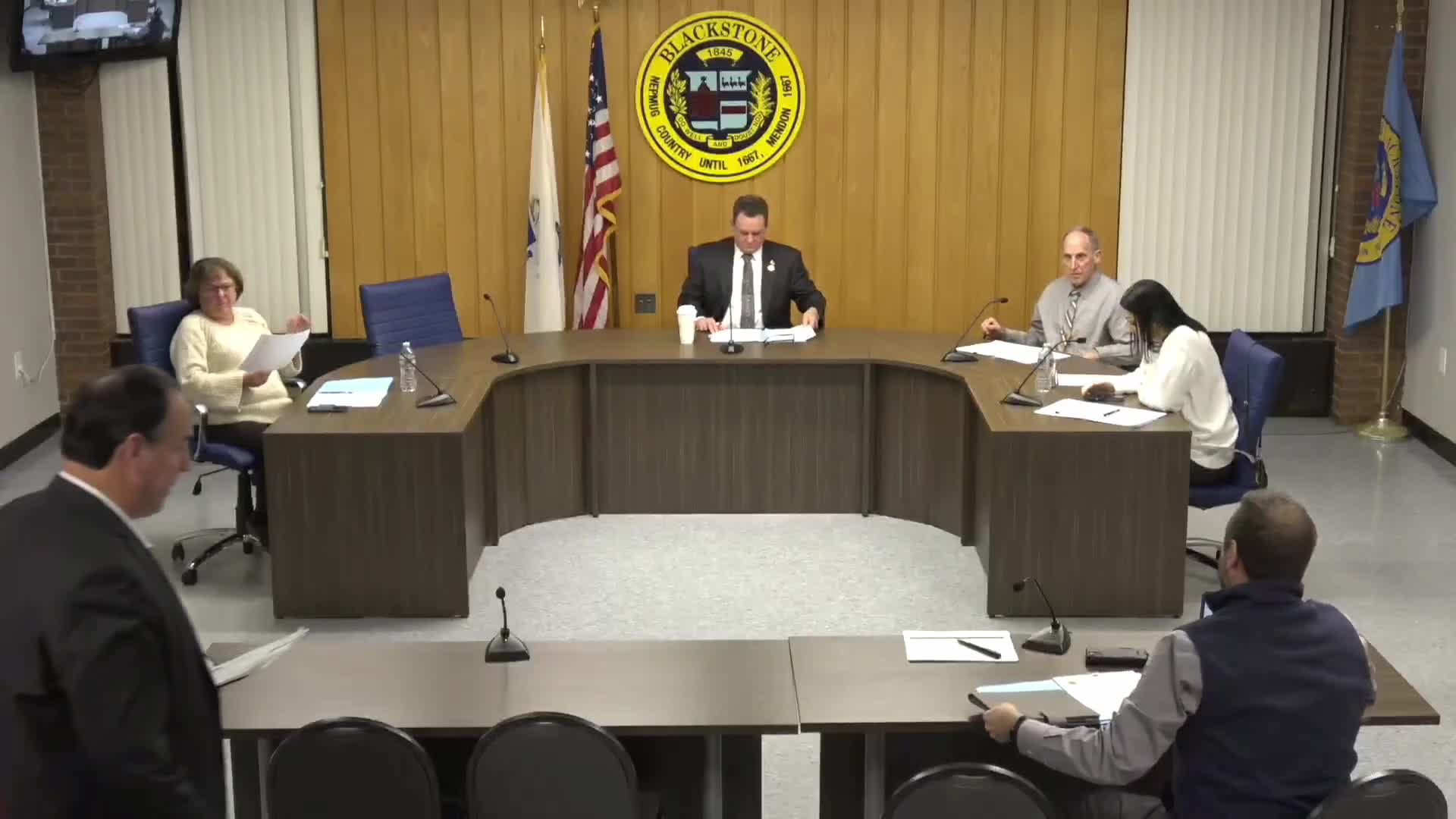
Blackstone selectmen authorize town administrator to finalize municipal aggregation electricity contract
Summary
The Board of Selectmen voted Jan. 14 to allow the town administrator to execute a municipal aggregation electricity contract, approving an 18‑month opt‑out product and directing broad resident notification ahead of an April start tied to meter reads.
The Town of Blackstone Board of Selectmen on Jan. 14 authorized the town administrator to negotiate and execute a municipal aggregation electricity contract aimed at offering residents an opt‑out alternative to National Grid basic service.
The authorization, made during a presentation by Colonial Power representatives, directs the administrator to lock in the lowest available price for an 18‑month term within the pricing ranges provided to the board and to ensure wide public notification ahead of enrollment. The board voted unanimously to approve the motion.
Municipal aggregation allows the town to solicit electricity supply on behalf of residents and small businesses; residents on National Grid basic service would be automatically enrolled unless they opt out. Colonial Power provided sample pricing for multiple term lengths and product mixes; the board focused on an 18‑month term that showed the lowest sample price on the packet shown to the board. Colonial Power estimated the average household saving at roughly $9 per month under the sample 12‑ or 18‑month pricing compared with projected basic service rates at the program start.
Under the plan discussed, the town will mail an enrollment packet to eligible customers in February that includes rates, terms and a postage‑paid opt‑out card. Customers will have a 30‑day opt‑out window after that mailing; the program would begin with April meter reads. Residents already on third‑party supply would receive a postcard with the town offer but would not be automatically enrolled; they were advised to check their current supplier contract for early termination fees before switching.
Board members and staff emphasized outreach because opt‑out enrollment can surprise some residents. Selectmen asked for an extensive notification campaign using town social channels, press releases, senior‑center outreach and public sessions. Colonial Power staff offered to provide electronic copies of the mailers and collateral so the town can pre‑post samples to reduce confusion.
The board’s motion authorized the town administrator to execute the contract with a cap tied to the prices presented to the board and to select the 18‑month product if it offered the best price within that range. Selectmen noted that market pricing changes daily and that the administrator may decline to sign if day‑of pricing is unacceptable.
Next steps: after a winning supplier is confirmed, the town will mail enrollment materials in February and begin service with April meter readings if sufficient pricing and outreach conditions are met.