Get Full Government Meeting Transcripts, Videos, & Alerts Forever!
Get email alerts on the Homestead Exemption topic
No spam. Unsubscribe anytime.
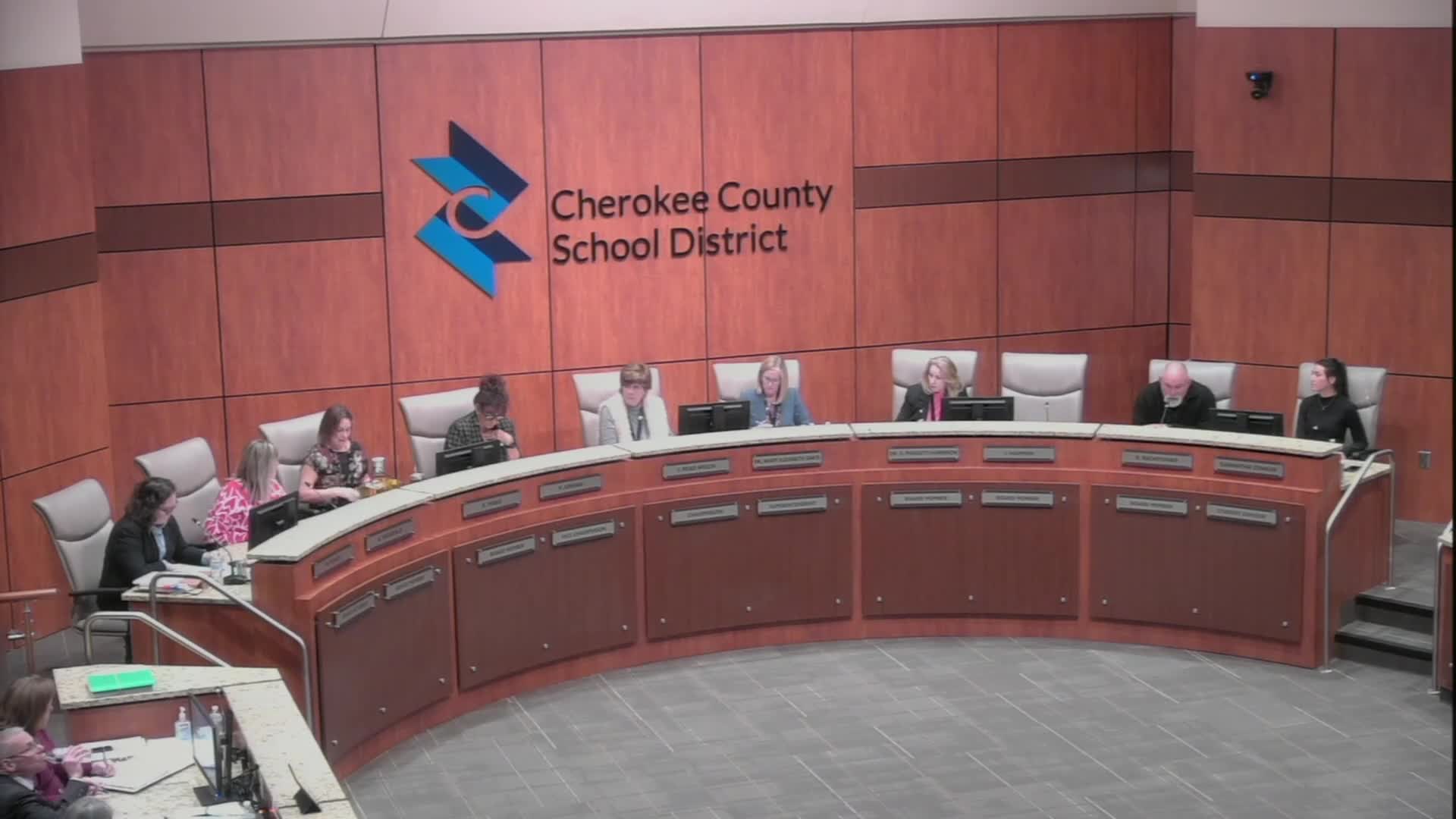
Cherokee County School Board votes to opt out of statewide floating homestead exemption
Summary
At its Feb. 13 meeting the Cherokee County School Board adopted a resolution to opt out of the Statewide Floating Homestead Exemption, a move board members said is intended to protect school funding; a resident urged the board not to opt out, saying homeowners would be disproportionately affected.
The Cherokee County School Board voted Feb. 13 to adopt a resolution opting the district out of the Statewide Floating Homestead Exemption.
Board members said the opt-out is intended to protect funding for teachers, student services and instructional days. A resident who spoke during public participation urged the board not to opt out, saying the change would shift a larger tax burden onto homeowners.
Board discussion and public comment focused on the exemption’s potential effect on the school district’s revenue and on homeowners. Brent Heron, introduced at the meeting as a 20-year resident of Cherokee County and taxpayer, said he had spoken earlier at a hearing and urged the board “to not opt out and to provide homeowners relief.” He also argued that the analysis presented to the board assumed no new home sales or additional homesteads and said that, in his view, opting out would impose higher taxes mainly on homeowners.
A board member who moved the resolution (identified in the transcript as "Board Member (speaker 7)") made the motion to opt out of the floating homestead exemption; a second was recorded but not identified by name in the meeting transcript. Multiple board members described the choice as one made to protect students and staff. One member (identified in the transcript as "Chair (speaker 1)") said: "I would like to make a comment. I know this is a tough decision ... I was elected to do what's best for kids." Another board member (identified in the transcript as "Board Member (speaker 9)") described the exemption’s effect on district funding and said the decision was driven by concern over possible furlough days and other cuts to instructional time if revenues declined.
The transcript records that some board members placed responsibility for the situation with the state legislature. One board member (identified in the transcript as "Board Member (speaker 7)") told residents: "You should be ashamed of your legislative body who wrote this law. They wrote a bad law. They put every district, every county, every city in the state in a bad position." The board also referenced guidance from the Georgia School Boards Association (GSBA) about members’ fiduciary responsibilities to prioritize students.
When the board called the roll on the motion to adopt the "Statewide Floating Homestead Exemption Resolution," the chair announced, "The motion carries." The transcript does not include a numerical vote tally or the names of individual members as yes/no on the record.
Background discussion earlier in the meeting and during the public hearing referenced a projected revenue impact that board staff and the district CFO had presented; the transcript records references to a $50,000,000 figure as part of that earlier analysis but does not provide the CFO’s full presentation text in the meeting record. The resident commenter also cited a voter-approval figure and a personal estimated tax change: he said "70% of the voters of Cherokee County voted for this homestead exemption" and that, in his case, the exemption would have saved about $2,500 in taxes if it had been in place since 2020.
The board adopted the resolution to opt out; the meeting record does not include further immediate budgetary actions tied to the vote. Staff and board members indicated budget and staffing impacts—such as furlough days and teacher retention—were factors in their decision. The board did not supply a detailed, itemized fiscal plan tied directly to the opt-out vote during the meeting.
The district’s next steps on budget adjustments or public communications related to the opt-out were not specified at the meeting.