Get Full Government Meeting Transcripts, Videos, & Alerts Forever!
Get email alerts on the House Bill 581 Opt Out topic
No spam. Unsubscribe anytime.
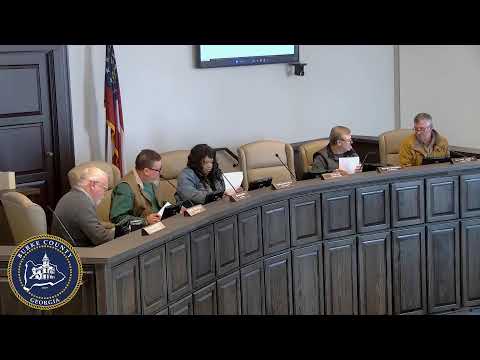
Burke County commissioners vote to opt out of House Bill 581
Summary
After a public hearing on an opt‑in law for property tax treatment, the Burke County Board of Commissioners voted to opt out of House Bill 581 and directed staff to file a resolution with the Georgia Department of Revenue. Commissioners cited unresolved implementation questions, a March 1 deadline and local revenue uncertainties.
The Burke County Board of Commissioners voted to opt out of House Bill 581 during a public hearing, and directed staff to file a signed resolution with the Georgia Department of Revenue.
The action follows extended public comment and staff explanation of the law’s requirements and local effects. Commissioners and residents urged caution because, as County staff said during the hearing, "As of the current language of the bill, March 1 is your deadline to either opt in or out, and there is no changing that at this point." A motion to opt out was made by Chairman Kelly and seconded by Commissioner Lively; the board then approved the resolution and arranged for the chairman and the commissioner who seconded the motion to sign and forward it to the Department of Revenue. The transcript does not include a detailed roll‑call vote tally.
Why it matters: House Bill 581 would change how homesteaded property values are capped and how counties set millage rates. County staff and several speakers said key details remain unresolved at the state level, creating uncertainty about long‑term effects on the county digest, school revenue and individual tax bills. One citizen said most people they spoke with "didn't understand" the ballot language and thought the measure eliminated the homestead exemption, illustrating public confusion around the law.
During the hearing staff explained several practical implications: the present statutory language requires a March 1 decision to opt in or out unless the Legislature amends the deadline; a bill had been introduced to extend the deadline to May 1 but had not left committee. Staff also warned that if the county opts in under current law it may not be able to change course later. "There's a bill introduced that might let you opt in or out later, but that hadn't even made it out of committee," a staff speaker said.
County staff described how local valuation and exemptions work. The standard homestead exemption in Burke County is the $2,000 amount often referred to in discussion; staff illustrated how that translates to tax dollars by example: the exemption reduces the assessed taxable value and, at current millage rates, the combined effect on a typical homestead amounts to about $34.50 in total tax relief across school, county and fire taxes, with roughly $11 coming off the county portion. Staff emphasized that assessed value is 40 percent of fair market value and that valuations change as sales data and specific local factors (the transcript cited "Plant Bogle" and discussions of depreciation at larger plants) alter the digest.
Residents and county staff repeatedly described uncertainty about how the state will apply the consumer price index or other caps and how the Department of Revenue and the State Revenue Commission will manage valuations. One staff speaker described the county’s current approach to valuations: they rely on multiple sales and cost tables rather than applying a flat percentage increase. Another concern raised by multiple speakers was that the law, as written, appeared designed for a narrow set of counties "north of Atlanta" and might not fit Burke County’s circumstances.
Board context and next steps: Commissioners noted the board has reduced the millage rate four years in a row and framed the opt‑out vote as a decision to remain with the existing local valuation process. After the motion passed, the board authorized the chairman and the commissioner who seconded the motion to sign the opt‑out resolution for transmittal to the Department of Revenue.
Votes at a glance: Motion to opt out of House Bill 581 — mover: Chairman Kelly; second: Commissioner Lively; outcome: approved; vote tally: not specified in the meeting transcript. Resolution to be signed and sent to the Georgia Department of Revenue.