Get Full Government Meeting Transcripts, Videos, & Alerts Forever!
Get email alerts on the Governance topic
No spam. Unsubscribe anytime.
Board approves agenda and executive‑session settlements; holds major items for further discussion
Summary
At the Feb. 11 work session the board approved the meeting agenda and two executive‑session motions — a workers’ compensation settlement and approval of other land, legal and student personnel matters — all carried without recorded opposition. Several items, including two proposed school closures, were held for additional discussion.
The Fulton County Board of Education approved procedural motions and executive‑session actions on Feb. 11 and left high‑profile agenda items on the discussion calendar for follow‑up.
The board first approved the meeting agenda; Miss Gregory moved and Miss Dove seconded the motion, and the agenda “passes unanimously,” the chair said.
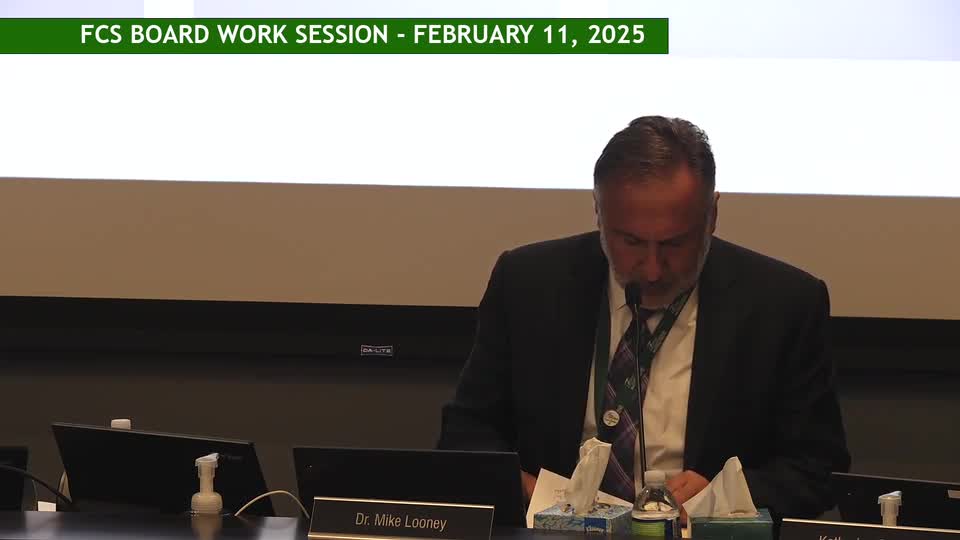
Later the superintendent read an executive‑session motion related to a workers’ compensation settlement: “I move that the Fulton County Board of Education approve the settlement agreement between the workers compensation claimant and the district for the principal terms agreed upon,” Dr. Looney said. Miss Gillespie moved the settlement and Miss Posadick seconded; the board again voted to carry the motion unanimously.
Dr. Looney also moved that the board “approve all other land, legal, and student personnel matters as discussed in Executive Session on 02/11/2025.” Miss Stoth moved that item and Dr. Marantzi seconded; the motion carried unanimously.
Several substantive items — notably the Zone 2 and Zone 4 elementary closure, consolidation and redistricting plans — remained on discussion for the next meeting and did not receive final votes at this session.
Ending: The board scheduled additional discussion and follow‑up for items kept off the consent calendar and will reconvene to consider the closure/redistricting recommendations after staff provides the requested commute, student‑count and fiscal analyses.