Get Full Government Meeting Transcripts, Videos, & Alerts Forever!
Get email alerts on the Development Process topic
No spam. Unsubscribe anytime.
Kalamazoo staff outline new three-stage development process, promise faster, clearer reviews
Summary
City planning staff described a three-stage development workflow — predevelopment, site plan review, and permitting/occupancy — and several operational changes intended to reduce delays, add a single point of contact, and expand engineering capacity in 2025.
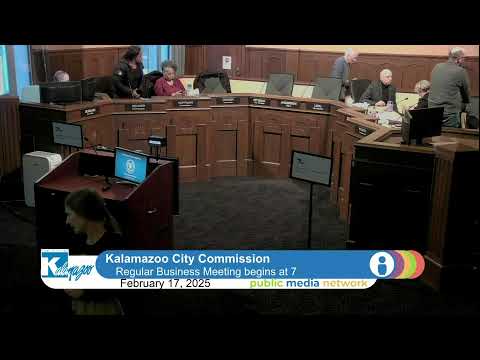
Kalamazoo City staff presented a package of changes to the local development review process at the Committee of the Whole meeting on Feb. 17, 2025, telling commissioners the updates are intended to make reviews clearer and quicker for applicants while preserving required code checks.
City staff said the update creates three defined stages — predevelopment, site plan review, and permitting/occupancy — each with identified staff leads, an intake form and a new checklist meeting meant to reduce confusion about ordinance requirements.
Jamie McCarthy, sustainable development coordinator for the Community Planning and Economic Development (CPED) department, opened the presentation and described the scope: “This is really, a comprehensive process,” McCarthy said, adding the changes clarify who applicants should contact at each stage and walk applicants toward a certificate of occupancy.
PJ Thuringer, economic development supervisor, listed recurring problems the changes address: projects often “start with one staff for one question [and] go to another staff for a different question,” he said, and those inefficient channels can delay timelines. To reduce that friction, the city has designated a single predevelopment point of contact to funnel projects into the right review path and to organize a tailored project-review meeting with only the essential reviewers.
Bobby Durkee, assistant city planner, described a new site-plan checklist meeting introduced in early 2025. The checklist meeting is intended to ensure applicants and reviewers are working from the same list of required materials before full site-plan submission; Durkee said the city completes about 35 to 55 site-plan reviews annually. He said the new meeting produces a checklist that highlights what is missing and what is included so applicants can revise with clearer direction.
Roger Iveson, the city’s building official, said permitting and inspection remain a separate technical step governed largely by state building codes and other external standards. Iveson said staff will encourage preconstruction meetings after site-plan approval to avoid overlooked steps, and noted the city is hiring additional inspectors and expects the new site-plan review engineer to reduce review bottlenecks.
Staff described additional process changes that are already rolling out: an online intake form for predevelopment, a recorded webinar and an in-person session offered to local developers, updated application paperwork and online posting of full site-plan applications, and follow-up 1-on-1 meetings with development partners to gather ongoing feedback. The city also said it has contracted some inspections work in the past with SafeBuilt to cover temporary capacity gaps.
Several commissioners pressed staff on timing and staffing. Commissioner Hoffman asked whether the changes will reduce total project timelines; staff said improvements on the city side likely will, but developers’ response times for revisions remain a major determinant of overall schedule. Durkee said the city will follow up with applicants who do not return revisions, and Roger Iveson noted that if a permit application is stagnant for 180 days the city removes it from active review.
Commissioner Pragle and others emphasized the economic stakes for smaller developers and nonprofit housing sponsors, noting that extended review times can significantly increase project costs and threaten feasibility. Staff said the predevelopment point of contact and checklist meeting aim to reduce surprises for smaller or less experienced applicants.
Vice Mayor Hess asked where development activity is concentrated. Staff said projects are occurring across the city but include a higher volume downtown and pockets of infill housing, senior housing in Millwood and Westwood, and mixed-use or adaptive reuse projects on Stadium Drive and along riverfront areas.
PJ Thuringer said the city has posted a job opening for a site-plan review engineer within Public Services and emphasized CPED’s plan to continue one-on-one developer meetings and an annual developer convening to gather feedback. “If someone needs some more information, we're always attempting to follow-up so something isn't just sitting out there, to be forgotten,” Roger Iveson said.
Kurt Artema, a local developer with ABB, used his public comment to express support for the changes and for an ongoing open dialogue between developers and city staff. He cited the 400 Rose project downtown as an example of recent local development work.
No formal policy or ordinance changes were voted on during the session. Staff said zoning code amendments remain a separate, ongoing effort: the city is completing the consolidation of recent zoning updates into chapter 50 and expects additional administrative zoning amendments later in 2025.