Get Full Government Meeting Transcripts, Videos, & Alerts Forever!
Get email alerts on the Homelessness topic
No spam. Unsubscribe anytime.
Residents urge immediate action on cold-weather homelessness as commission opens consolidated-plan comment period
Summary
Dozens of residents urged Kalamazoo City Commission to expand low‑barrier sheltering, warming sites and public restrooms after a recent death among the unhoused. The commission voted to release the draft 2025–2029 Consolidated Plan for a 30‑day public comment period beginning March 3.
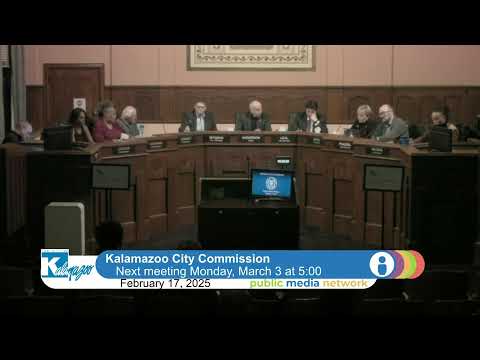
Dozens of Kalamazoo residents urged the Kalamazoo City Commission on Feb. 17 to expand emergency sheltering, low‑barrier services and public restrooms after the recent death of a houseless resident who froze to death.
The commission voted to release the draft 2025–2029 Consolidated Plan, which includes the program year 2025 action plan, for a 30‑day public comment period from March 3 to April 1. Commissioner Bridal abstained; other commissioners approved the release.
Why it matters: Speakers said immediate measures — more hotel placements, 24/7 low‑barrier shelter beds, warming centers, and public restrooms downtown — are needed to prevent more deaths in the current cold spell. The Consolidated Plan guides how the city would allocate federal HUD funds (CDBG/HOME) that can be used for affordable housing, shelters and related services.
Public commenters from neighborhoods across the city testified for expanded short‑term housing and wraparound services. “I’m just here to call some urgency to our unhoused population,” said Rom Ryan Smith, who urged more funding for hotel programs and for transitional housing providers that use a low‑barrier approach. Several speakers echoed that request and urged coordination with churches and nonprofits to open daytime warming spaces.
Multiple speakers referenced the recent death of Tammy Christie and said it illustrates gaps in the system. “Tammy Christie died in this city. She died alone, houseless, in a city with plenty of resources,” said Jeremy Herman, who called for city and county collaboration and more low‑barrier shelter capacity.
Some speakers criticized how privately run placement efforts operate. Angela Manning, who spoke “for the locally unhoused,” said a program often called “Heads for Beds” has inconsistent outreach and selective placement and asked the city to provide an itemized accounting of public funds and in‑kind donations used for hotel placements. “I would like an itemized list of every single penny that she spends,” Manning said.
Volunteers and residents described day‑to‑day support: handing out socks and cash, connecting families to hotel rooms and checking on people in encampments. “Every morning when we walk out into the mall we don’t just pass the dozens of homeless people. We say hello and some days we bring socks,” said a downtown resident who identified herself as Amanda Charbonneau and described distributing supplies.
City staff and commissioners described near‑term steps tied to the Consolidated Plan and other measures. Julie Johnston of Community Planning and Economic Development said the plan will be posted in the Kalamazoo Gazette and MLive, will include a public notice with a QR code and contact information, and will be presented to the local Housing Matters forum. She said citizens may submit comments by phone, email or letter; the city will include received comments in the plan submitted to HUD.
CFO Steve said the city expects about $5 million for HUD CDBG/HOME programs in 2025 but cautioned that many other federal and state grants the city uses are awarded or carried forward from prior years and are added to the budget after agreements are finalized. Johnston said the city’s HUD office advised staff to proceed with the plan so HUD can review it despite federal budget uncertainty.
Commissioners and staff committed to more outreach. Commissioner Decker and Vice Mayor Hess pressed staff to include the plan’s QR code in the city newsletter and use social media; Johnston said she would coordinate with communications and the March newsletter. Commissioner Hoffman urged bolder action and said the city should use municipal properties and partnerships more aggressively to secure shelter and services immediately.
Votes at a glance: On the motion to release the draft Consolidated Plan for the 30‑day comment period (H4), the roll call recorded: Vice Mayor Jean Hess — yes; Mayor David F. Anderson — yes; Commissioner Andrew Cooney — yes; Commissioner Decker — yes; Commissioner Hoffman — yes; Commissioner Bridal — abstain; Commissioner Wilson — yes. Outcome: approved.
What’s next: The public comment period runs March 3–April 1; staff said they will accept comments by email and phone and will include submitted comments in the consolidated plan packet submitted to HUD.
Ending: Speakers and commissioners ended the discussion urging continued urgency as freezing weather persisted and outlining plans for outreach and follow‑up on the Consolidated Plan and immediate shelter needs.