Get Full Government Meeting Transcripts, Videos, & Alerts Forever!
Get email alerts on the Public Participation topic
No spam. Unsubscribe anytime.
Gwinnett board keeps public-comment streaming, narrows up-front speaking to students in updated policy BCBI
Summary
After public criticism and a work-session review, the Gwinnett County Board of Education approved revisions to policy BCBI that preserve audio/video streaming of public comments and set a student-first speaking order while keeping total public-comment time limits.
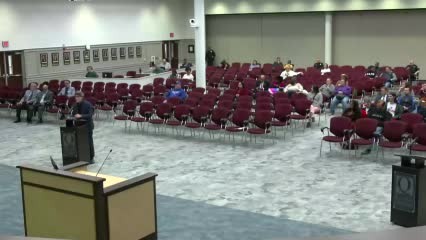
The Gwinnett County Board of Education on Jan. 16 approved revisions to policy BCBI, the district's rule on public participation in board meetings, preserving audio and video streaming of public comments while clarifying the order and allocation of speaker time.
The board voted unanimously to adopt the changes after receiving public comment and discussion during a morning work session. The revised policy continues the board's practice of streaming meetings and retains a 60-minute maximum for public comment; the policy specifies a maximum of 10 student speakers at the start of business meetings with remaining comment time reserved for other speakers later in the meeting.
Community speakers had urged the board not to limit access or end recordings. Grace Gooch, who identified herself as a union member, taxpayer and frequent public speaker, told the board she opposed proposed elements that would limit nonstudent speakers and end broadcast recordings: “I urge you to vote against the proposed changes to policy BCBI,” she said, citing concerns that limiting recordings would reduce transparency for people unable to attend in person.
Board members and legal counsel discussed legal limits on content-based restrictions. Chair Dr. Adrian Simmons explained the reason for the student-first front-loading: “We have changed the beginning comments to students only because, based upon the eleventh Circuit Court, we can't tell people what they can and cannot say in terms of content.” The board clarified that if fewer than 10 students use the early slots, the unused time remains available later in the meeting for other speakers.
Vice Chair Dr. Therese Johnson Morgan moved to continue streaming (audio and video) and to approve the revised policy; Ms. Rachel Stone seconded. The motion passed unanimously.
The board said it received substantial constituent feedback on this policy and would continue to offer multiple ways for people to engage with the board, including written comments and meetings outside the public-comment period.
Why it matters: The policy balances court-identified legal limits on content regulation with the board's stated interest in centering student voices and maintaining transparency through recorded streams.
What's next: The board directed staff to post the revised policy and reiterated that community members who do not want to appear on camera may still contact board members by email or meet privately with trustees.