Get Full Government Meeting Transcripts, Videos, & Alerts Forever!
Get email alerts on the Home Energy Rebates topic
No spam. Unsubscribe anytime.
Ann Arbor expands and simplifies Home Energy Rebate Program; e-bike funds exhausted for 2024 program year
Summary
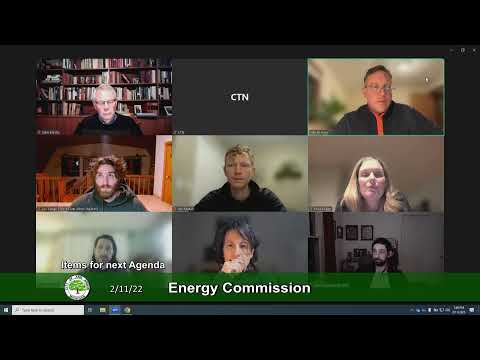
The Ann Arbor Energy Commission on Feb. 11 heard a presentation from program contractors and city staff on updates to the Home Energy Rebate Program, a city-funded initiative to support home electrification and weatherization that has a first-year budget of $1.9 million.
The Ann Arbor Energy Commission on Feb. 11 heard a presentation from program contractors and city staff on updates to the Home Energy Rebate Program, a city-funded initiative to support home electrification and weatherization that has a first-year budget of $1.9 million. Jamie Simmons of Elevate and Brandon Kwalek of Michigan Energy Options detailed program structure, new measures, application changes and participation to date.
Program partners said the changes are meant to simplify access and boost uptake. "We moved to a full reservation system where we no longer have separate budgets for reserved and unreserved funds," Brandon Kwalek said, describing a change designed to remove uncertainty for residents who want to reserve incentives before completing projects. Jamie Simmons said the program aims to push the market toward full electrification and energy efficiency within Ann Arbor.
The Home Energy Rebate Program offers two tiers of incentives: market-rate rebates open to anyone 18 or older living in Ann Arbor and higher income-qualified rebates for households at or below the program's area median income thresholds. Eligibility was expanded to include all residential property types, removing the earlier restriction that limited some rebates to 1–4 unit properties.
Program design and amounts: the presenters outlined measures and typical rebate amounts. Weatherization measures (attic, wall, rim/band joist, basement/crawlspace insulation and air sealing) carry market rebates of $500 per measure and income-qualified rebates of $1,000 per measure; completing two or more insulation measures plus air sealing triggers a bonus (market: $1,500; income-qualified: $2,000). Electrification measures include cold-climate central air-source heat pumps, heat-pump water heaters and electric-panel upgrades; market-rate electrification rebates were described as roughly $1,000–$4,000 depending on the measure, with income-qualified ranges generally higher (up to roughly $5,500 for some measures). Battery storage rebates are $2,000 (market) and $3,500 (income-qualified). New appliance measures to be added in 2025 include Energy Star heat-pump washer/dryers (market $300; income $500) and induction cooktops (market $500; income $750); induction rebates apply to built-in cooktops or ranges with four burners (portable units are excluded).
E-bikes were a prominent part of the discussion. The program offers a one-per-household rebate (UL 2849 certification required; no retrofit kits), at 50% of cost up to $500 for market-rate and up to $1,000 for income-qualified applicants. Simmons and Kwalek said the e-bike allotment for the 2024 program year is exhausted and applications will reopen in July 2025.
Application process and administration: applicants may be prequalified for income eligibility (valid for 12 months), then submit an online reservation. Once a reservation is approved, residents have 90 days to complete the project and submit final documentation; staff said they will allow extensions where projects are actively moving forward. Contractors may claim rebates on behalf of residents and apply the rebate at point of sale. Kwalek said roughly 58% of paid rebates were processed via the reservation pathway.
Participation and fiscal status: presenters reported 222 total rebates paid to 173 households through January, with about $324,000 disbursed so far. About 44% of participating households were income-qualified; 37 of the installed measures were in income-qualified homes. Program staff said there were about 40 reservations in the system with a potential rebate value of about $84,000 (those reserved amounts were not included in the paid total). Simmons and Kwalek said the program is funded by the city's Climate Millage and is not contingent on federal funds for these local incentives.
Questions from commissioners and council members addressed several operational details. Council Member Briggs asked how a household is defined for the one-per-household e-bike limit; Kwalek said the program treats a household as a single address (so each apartment unit generally counts as a separate household). Commissioners asked about carbon-accounting for e-bikes and storage; presenters said e-bike emissions calculations would require follow-up and that storage and electrical-panel upgrades do not themselves generate direct carbon savings but support electrification and resilience.
Other implementation notes raised during Q&A: the program removed the separate reserved/unreserved budgets and simplified measure categories (for example, collapsing multiple heat-pump measure types into one rebate measure) to reduce applicant confusion; the completion deadline was extended from 60 to 90 days with flexibility for active projects; multifamily eligibility was expanded to include buildings of five or more units; and staff are working with OSI and partners (including Pearl Edison) to improve outreach, contractor engagement, and a redesigned program website and interactive funding graphs.
Commissioners and council members offered suggestions and requests: increase cross-promotion with other city programs (Solarize, Home Energy Advisor, Green Rental Housing), consider Energy Star requirements where applicable, evaluate how battery incentives align with vehicle-to-grid developments, and improve the reservation/workflow for oversubscription (several commissioners recommended a more streamlined waiting/reservation list for measures that reach program caps). Presenters said they are collecting more detailed cost and installation data to refine incentive levels and are continuing contractor engagement.
The presenters and staff encouraged residents and landlords to use the reservation system and to seek multiple bids. Kwalek noted the program is designed to be stackable with other rebates such as utility incentives and federal tax credits and said staff are working to show stacking options more clearly to applicants. Simmons and Kwalek welcomed additional input from the commission on outreach and equity approaches.
The commission did not take a formal vote on program changes during the meeting; the presenters asked for and received feedback and said they will return with further updates as the program evolves.
Ending: City staff and program contractors said they will incorporate the commission's feedback on outreach, multifamily rules and contractor engagement, and will provide follow-up data on e-bike carbon calculations and updated impact tables that reflect corrected estimates. "Thanks for your input; we'll be taking a lot of this back," Jamie Simmons said at the end of the presentation.