Get Full Government Meeting Transcripts, Videos, & Alerts Forever!
Get email alerts on the City Finance Audit topic
No spam. Unsubscribe anytime.
Bay City audit: unmodified opinion; taxes and state revenue drive general fund gains, public safety accounts for 61% of spending
Summary
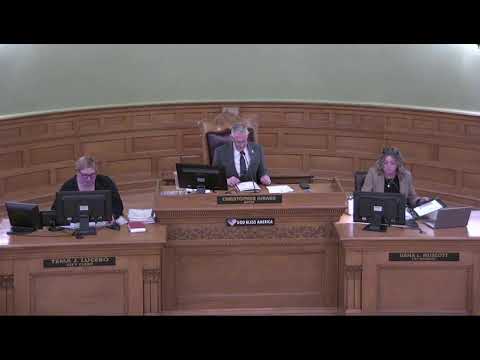
An independent auditor told the Bay City City Commission the city received an unmodified (clean) opinion for fiscal year ending June 30, 2024, with roughly $1.8 million net revenue and no material weaknesses identified. Commissioners asked for earlier distribution of audit materials and clarifications on actuarial adjustments to utility funds.
Mr. Martini, the lead auditor for the city’s independent audit engagement, told the Bay City City Commission the audit for the year ended June 30, 2024, resulted in an unmodified opinion — the highest level of assurance under generally accepted accounting principles.
He said the city’s general fund recorded about $25,600,000 in revenue for the year, with taxes comprising roughly 52% of that total (including about $9,500,000 in property taxes and $2,600,000 in payments in lieu of taxes). Total general fund expenditures were about $23,800,000; roughly 61% of those expenditures were for public safety (police, fire and community policing). For the fiscal year, revenues exceeded expenditures by about $1,800,000.
The auditor also discussed the city’s enterprise funds. He said the electric fund produced operating income of roughly $5,700,000. The water fund showed an operating loss of about $1,700,000, driven in part by an actuarial adjustment recorded for pension and OPEB liabilities; the sewer fund reported operating income of about $547,000. The auditor noted actuarial valuations and discount-rate assumptions can cause large year-to-year swings in those actuarial entries.
The single-audit (federal grants) review covered the city’s American Rescue Plan Act (ARPA) coronavirus state and local fiscal recovery expenditures and accounted for roughly 85% of the city’s federal dollars; the auditor reported no findings in the single-audit compliance testing.
Mr. Martini said auditors did not identify any material weaknesses or significant deficiencies in internal control over financial reporting. He noted one past journal entry of non-material consequence and flagged a relatively small accounting adjustment under the new subscription-based IT arrangements standard; the amount was immaterial and the auditor accepted management’s passed adjustment. He also provided verbal recommendations including completion of city annual conflict-of-interest forms.
Commissioners asked for earlier distribution of audit materials before meetings so they can prepare questions. Commissioner Coakley asked whether the audit PowerPoint could be distributed with the board packet; the auditor agreed to provide the audit materials a few days before future meetings. Commissioner DeWitt asked whether actuarial adjustments are a recurring annual item; the auditor said they are performed each year and can vary widely. City staff clarified that some operating transfers (for example, ARPA reimbursements for lead-line replacement work) affect the net transfer figures in utility fund reporting.
The auditor also pointed out the city received a Certificate of Achievement for Excellence in Financial Reporting from the Government Finance Officers Association for the prior year’s annual comprehensive financial report.
The audit report and single-audit binders will be posted to the finance department section of the city website, the auditor confirmed. He thanked City Manager George and staff for their cooperation in preparing the reports.
Ending: The commission’s discussion focused on timing and availability of materials and clarifying actuarial impacts on enterprise funds; commissioners requested earlier circulation of the PowerPoint and the audit packet ahead of future meetings so questions can be prepared.