Get Full Government Meeting Transcripts, Videos, & Alerts Forever!
Get email alerts on the Tuscaloosa Heights Right Of Way topic
No spam. Unsubscribe anytime.
Commission approves Tuscaloosa Heights resurvey with conditional handling of Thirteenth Street right‑of‑way
Summary
The Planning and Zoning Commission approved a three‑lot resurvey of Tuscaloosa Heights (S16‑25) but added a condition that redevelopment of Lots 2A and 3A must address right‑of‑way dedication and coordinate with the city engineer during land‑development permitting.
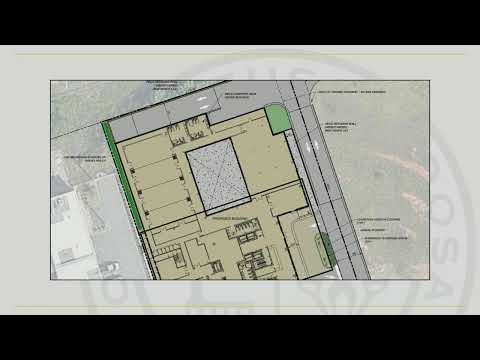
The Tuscaloosa Planning and Zoning Commission on Feb. 17 approved S16‑25, a resurvey of Tuscaloosa Heights that creates three lots on approximately 2.56 acres at 1241 McFarland Boulevard East and the 900–914 block of Thirteenth Street East, with a specific condition tied to right‑of‑way for future redevelopment.
Why it matters: The plat affects the arterial Thirteenth Street East corridor where turn lanes and sidewalks are already tight against existing curb lines and utilities. Staff and the petitioner debated whether to require full right‑of‑way dedication for Lots 2A and 3A now, or to accept a partial dedication and require right‑of‑way dedication later if and when those lots seek development that triggers additional improvements.
Jason Walker, the petitioner’s engineer, told the commission the developer will construct a proposed sidewalk and asked the commission to allow the recorded right‑of‑way line to fall two feet behind that proposed sidewalk (a partial dedication). “What we’re requesting is to provide right‑of‑way to a line that is 2 foot behind that proposed sidewalk line,” Walker said, adding the approach preserves developable area for future building footprints in a tight urban parcel.
City staff and legal counsel warned of the tradeoffs. Deputy City Attorney Jimbo Woodson noted the authority to require dedication is strongest when the subdivision itself causes the need for immediate right‑of‑way; preserving right‑of‑way for a future, undefined widening can raise issues and, in some cases, be argued as a taking if the property is reserved without a present public project. Woodson described the practical tension between protecting future corridor needs and allowing compact redevelopment of small urban lots.
The commission’s compromise: Approve the resurvey but include an explicit condition requiring the applicant to work with the city engineer, legal and planning staff at the time of any redevelopment of Lots 2A and 3A to resolve right‑of‑way dedication and any necessary improvements. Commissioners discussed the possibility that proposed improvements tied to Lot 1A could prompt a right turn lane extension; they directed staff and the petitioner to resolve LDP (land‑development permit) requirements when a formal scope is submitted.
Details cited at the meeting: The petition shows Lot 1A with the immediate right‑of‑way dedication needed to align with existing turn lane engineering. Lots 2A and 3A, the petitioner said, are proposed with a partial or deferred dedication to preserve developable area for future structures. The petitioner indicated the present work will include sidewalk construction per city standards; staff said if a future widening occurs, additional right‑of‑way dedication may be requested via the LDP process.
Vote: The commission approved S16‑25 with the stated condition. Staff and the petitioner will address right‑of‑way and sidewalk alignment during subsequent LDP and final engineering review should Lots 2A or 3A pursue development.
Speakers included Planning staff and the petitioner’s engineer (Jason Walker), and the commission debated engineering, easements and timing but recorded a motion to approve with the condition.