Get Full Government Meeting Transcripts, Videos, & Alerts Forever!
Get email alerts on the School‑finance topic
No spam. Unsubscribe anytime.
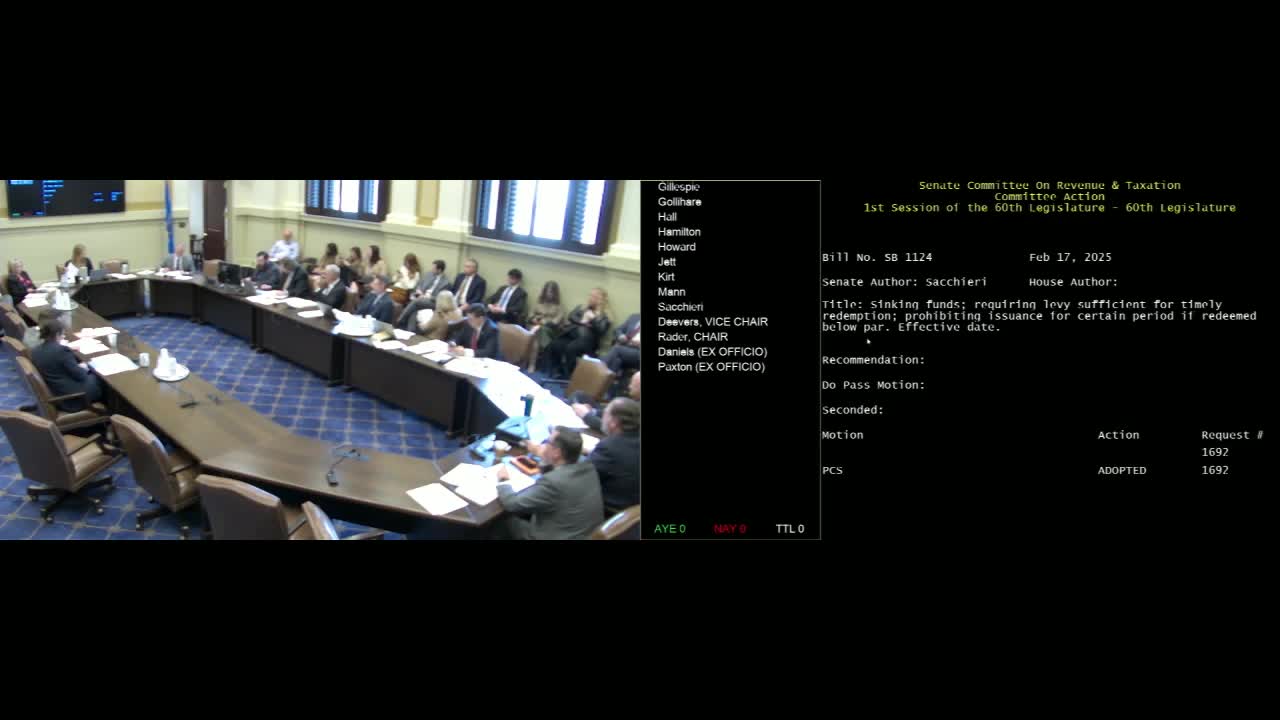
Panel approves bill to return excess school sinking‑fund balances to taxpayers; debate focuses on incentives and bond timing
Summary
The Revenue and Taxation Committee approved Senate Bill 11‑24, a measure that would require excess sinking‑fund balances related to school bond debt be returned to taxpayers; senators debated series bonds, incentives to pay off debt early, and a proposed 5% state‑aid penalty for noncompliance before advancing the bill 6–5.
The Revenue and Taxation Committee advanced Senate Bill 11‑24 after extended debate about how school sinking funds should be handled when they exceed what is needed to redeem outstanding bond debt. The committee recorded a 6‑5 vote to pass the bill as amended.
Senator Zachary, the bill’s author, told the committee the bill would require that once a school district has “met sufficient funds for the year to pay their existing bond debt, the rest must be returned to the taxpayer annually like agreed upon in their original bond proposal.” Zachary said the measure is intended to increase transparency for taxpayers and to honor the original bond promises voters approved.
Committee members raised multiple concerns during the discussion. Senators asked whether the measure would discourage districts from paying off bonds early (there was disagreement among members about whether the bill forces early redemption), how series bonds and multi‑year financing would be affected, and whether the bill could leave districts exposed to judgments or sudden decreases in assessed value after a disaster. Senator Gillespie and others asked what incentive districts would have to redeem bonds early if redemption could trigger a delay before they could seek a new bond; Zachary replied that paying off debt early is not prohibited and that he viewed the measure as promoting transparency rather than imposing a moratorium.
Senator Kurt noted the bill’s proposed penalty for noncompliance: a 5% reduction in state aid to districts that misused excess sinking funds. Committee members debated whether that penalty is proportionate — Kurt said for large systems, the impact could be millions of dollars — and Zachary said he was open to further discussion on penalty design.
Other technical questions addressed sinking‑fund uses (the author said sinking funds are designated for debt and capital improvements and cannot be used for salaries), whether sinking funds can cover judgments if insurance is insufficient (yes, the author said), and how the bill would interact with series bonds and periodic revenue volatility from growth, judgments settled after litigation, or oil and gas valuations.
After debate, the clerk recorded the roll call with 6 ayes and 5 nays. The committee chair declared Senate Bill 11‑24 passed as amended and the bill will move forward for further consideration.