Get Full Government Meeting Transcripts, Videos, & Alerts Forever!
Get email alerts on the Short Term Rentals topic
No spam. Unsubscribe anytime.
Columbia council advances zoning changes that limit short‑term rentals to mixed‑use districts
Summary
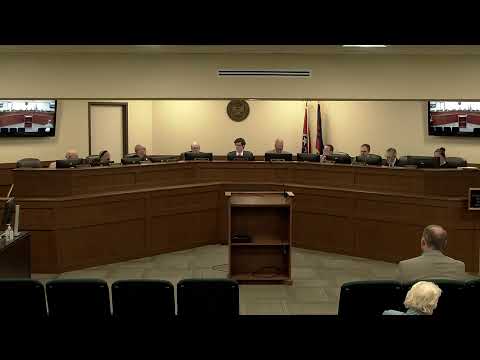
Columbia — After public comment from more than a dozen residents and property owners on both sides of the issue, the City Council gave first consideration Thursday to Ordinance 4,541, which would amend the city zoning code to restrict non‑owner‑occupied short‑term rentals to the four mixed‑use character districts (CD‑4, CD‑4C, CD‑5 and CD‑5C).
Columbia — After public comment from more than a dozen residents and property owners on both sides of the issue, the City Council gave first consideration Thursday to Ordinance 4,541, which would amend the city zoning code to restrict non‑owner‑occupied short‑term rentals to the four mixed‑use character districts (CD‑4, CD‑4C, CD‑5 and CD‑5C).
Supporters of tighter limits — including long‑time residents and neighborhood homeowners — told the council they worry about noise, property values and public safety when single‑family houses operate as transient rentals. Opponents and several short‑term‑rental owners said the rentals spur investment, bring visitors to local businesses and generate lodging tax revenue the city collects.
The planning commission’s recommendation, adopted at a meeting the night before, would allow short‑term rentals without an owner‑occupancy requirement in the four mixed‑use districts and would not permit them in the city’s CD‑2, CD‑3 or CD‑3L residential character districts. The council voted, on first consideration, to accept that recommendation.
Why it matters: The ordinance would change where and how short‑term rentals may operate inside Columbia city limits, potentially reducing the number of houses available for short‑term rental in established residential neighborhoods. That change is intended to preserve neighborhood character and limit the “revolving door” of transient guests that many residents said has produced repeated calls for police service.
What speakers said Bruce Paden, a local zoning attorney, told the council that short‑term rentals have produced tax revenues for the city and urged that any grandfathering language avoid punishing owners who had acted lawfully prior to the new rules. He identified two clients whose properties produced more than $20,000 and $30,000 in city lodging taxes, respectively.
Several residents (Bobbi Richardson, John Kurtley, Brenda Kirtley and others) described safety and quality‑of‑life concerns, saying they bought homes expecting stable neighborhoods and now face nearby houses that turn over frequently. Lawrence Reeves and other owner‑occupant hosts said they vet guests, contribute local business referrals and rely on that income; they asked council to preserve owner‑occupied exemptions.
Dylan Kerr, a U.S. Army veteran, and other speakers referenced academic studies and national reporting about crime and short‑term rentals, urging the council to consider public‑safety risks. County Commissioner Eric Prevetti warned the council to weigh potential revenue impacts if the lodging tax base were reduced.
Planning staff summary and legal context Paul Keltner, planning staff, told the council the city’s zoning ordinance historically treated transient uses under categories such as “transient habitation,” and that short‑term rentals first appeared explicitly in the 2022 zoning code (Ordinance 4,400). He said planning commission deliberations focused on where to allow short‑term rentals and on safeguards such as spacing and permitting for similar commercial‑type uses. Keltner said existing legally permitted short‑term rentals would remain legal nonconforming (often called “grandfathered”) if they met the legal test for prior lawful operation.
City Attorney (counsel) said state law and prior zoning history affect which properties qualify for grandfathering, and noted that some operators who have been remitting lodging tax through hosting platforms like Airbnb or VRBO remitted lump‑sum payments through those platforms, so the city’s records may show receipts but not always identify individual properties.
Council action and next steps On first consideration the council approved the planning commission’s recommendation limiting non‑owner‑occupied short‑term rentals to CD‑4, CD‑4C, CD‑5 and CD‑5C and disallowing them in CD‑2, CD‑3 and CD‑3L. Council members said the ordinance is a first consideration and may be amended before or at second consideration; they noted the planning commission’s vote and the lengthy public comment record.
Grandfathering and enforcement Planning staff said properties that were operating legally prior to adoption of a regulating ordinance generally retain a legal nonconforming status; the city attorney added that state law provides protections for operators who (1) were operating lawfully before the city enacted short‑term rental rules and (2) remitted lodging taxes in the relevant prior period. Properties that never secured the proper land‑use classification or permits — even if they remitted lodging tax through a hosting platform — may not qualify for grandfathering, a fact planning staff said complicates enforcement.
Votes at a glance (formal actions recorded at the meeting) - Ordinance 4,541 (first consideration): Amend zoning ordinance to allow non‑owner‑occupied short‑term rentals only in CD‑4, CD‑4C, CD‑5, CD‑5C; disallow in CD‑2, CD‑3, CD‑3L. Outcome: Approved on first consideration by recorded roll call (votes recorded in favor by council members Huffman, Marshall, McKelvey, Seacrest, Vice Mayor McBroom and Mayor Mulder). (Final action pending second consideration/public hearing.) - Ordinance 4,539 (second consideration): Classification and compensation plan amendment for FY 2024‑25. Outcome: Approved. - Ordinance 4,536 (first consideration): Replace Article 4 (building, lot and site standards). Outcome: Approved on first consideration. - Ordinance 4,537 (first consideration): Development services filing fee schedule. Outcome: Approved on first consideration. - Ordinance 4,538 (first consideration): Replace Article 9 (definitions). Outcome: Approved on first consideration. - Ordinance 4,540 (first consideration): Fiscal year 2024‑25 budget amendment (revisions to capital, grants, wastewater funds); set public hearing for 03/13/2025. Outcome: Approved on first consideration. - Consent and administrative items (selected): Appointments, contracts and purchases (consent agenda items 7.1–7.19, including contract awards, insurance renewals, permits and construction contracts). Outcome: Approved (7.3, purchase of 2025 Firemaster tanker for $468,100, taken up and approved separately; funding from general fund reserves). See minutes for itemized list and dollar amounts. - Resolutions: 25‑09 (Honey Farms Phase 3 sewer ownership/maintenance), 25‑11 (McClure Farms Phase 1A), 25‑12 (tax corrections), 25‑13 (Hampshire Hills sewer), 25‑14 (MOU with Murray County 911 on addressing), acceptance of traffic signal/roadway improvements on Nashville Highway/Greensville Road. Outcome: All approved by roll call. - Personnel/boards: Swearing in of Ward 5 Councilmember Brian McKelvey; appointment of Wesley MacBrien as city prosecutor; appointment of Randy McBroom to Municipal Planning Commission; reappointments to Industrial Development Board and Arts Council. Outcome: Approved.
What remains uncertain Council’s vote on 10.6 was first consideration; the ordinance may be amended before second consideration. The precise list of properties that would retain legal nonconforming status (grandfathered) depends on whether they were operating lawfully before the city’s zoning changes and on the city’s records of tax remittance. Council members noted possible legal questions and said staff and the city attorney will advise if challenges arise.
Next steps and timeline The ordinance will return for second consideration at the council’s next regular meeting. Council members and staff said they expect continued public interest during the interim and may receive additional amendments based on legal review and public input.