Get Full Government Meeting Transcripts, Videos, & Alerts Forever!
Get email alerts on the School Safety Spectator Conduct topic
No spam. Unsubscribe anytime.
Brunswick County Schools to adopt formal spectator conduct matrix for athletic events
Summary
District staff presented a new ‘‘if‑this‑then‑this’’ spectator conduct procedure tying existing policies together and setting stepped consequences — from verbal warnings to bans — for misconduct at athletic events; board members asked about scope and implementation.
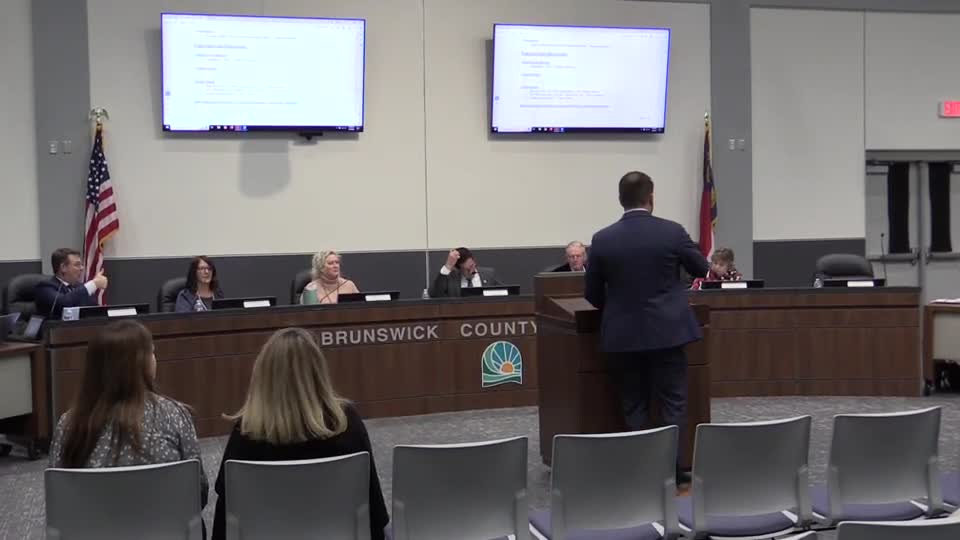
Brunswick County Schools staff presented a new spectator conduct matrix to the Brunswick County Board of Education on Jan. 7, 2025, laying out a stepped set of responses — from verbal warnings to event bans — for adults and students who violate expected behavior at athletic events.
The plan, presented by Mr. Paschal (staff member), consolidates existing district policies (policy 50‑20 and school safety 15‑10, as cited by staff) and the North Carolina High School Athletic Association’s expectations into a clearer ‘‘if‑this, then‑this’’ matrix designers say will make responses more consistent across schools. Mr. Paschal said the matrix was created with input from principals and athletic directors and will be implemented after additional meetings with principals and ADs next week.
District staff described four escalation levels in the matrix. At lower levels, an athletic director or principal designee can issue verbal warnings; a higher level calls for immediate removal from an event and possible suspension from the next event; repeated or aggressive incidents can prompt longer bans that only the superintendent can authorize. Staff told the board that illegal conduct would result in ejection and likely longer-term bans.
Board members pressed staff on how bans would apply beyond a home campus. District staff said a ban can extend to all district events and campuses and described a common enforcement practice: the administrator at an away game notifies the hosting principal and asks that the banned person be escorted out. Staff also said some incidents at athletic events can lead to campus bans when the conduct is an extension of the school day.
Board members raised concerns about collateral impacts. One board member noted that long bans could exclude a parent from graduation; district staff said the policy language intentionally preserves flexibility so principals can recommend and the superintendent can tailor responses.
Mr. Paschal said the district will revise a few terms (for example, using the word “ban” for long‑term exclusions) and that a live version of the document already reflects those edits. The district plans a phased rollout: training principals and student‑services staff, then communicating procedures to coaches, students and families; staff also said opt‑in/out mechanics were not part of this procedure and that announcements at game openings will continue to include sportsmanship reminders.
Why this matters: school officials said the matrix is aimed at protecting students, coaches and officials and creating consistent, predictable responses when incidents occur. Superintendent Cole and staff framed the change as clarifying existing authority rather than creating new disciplinary categories.
District staff said they will present the finalized matrix to principals and athletic directors over the next week, finish train‑the‑trainer sessions on Jan. 21, 2025, and then coordinate school‑level rollouts over the following months.