Get Full Government Meeting Transcripts, Videos, & Alerts Forever!
Get email alerts on the Homelessness Services topic
No spam. Unsubscribe anytime.
Residents urge Chillicothe council to avoid criminalizing homelessness, call for services and housing
Summary
Multiple residents and local faith leaders told the Chillicothe City Council on Jan. 27 that homelessness should be addressed through housing and services rather than enforcement; speakers cited mental health needs and urged funding of local nonprofit services, while several pending nonprofit appropriations were noted on the agenda.
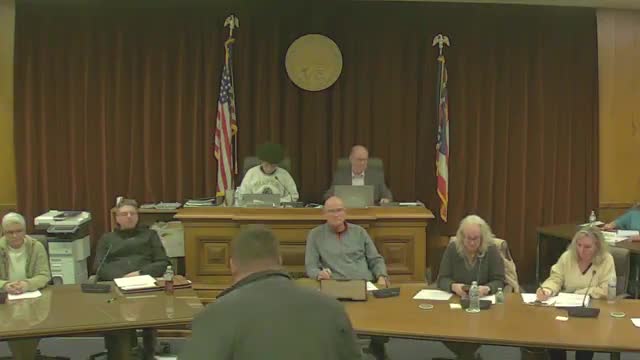
At the Chillicothe City Council meeting on Jan. 27, 2025, a string of public commenters urged the council to avoid criminalizing homeless people and to prioritize housing, behavioral health and service investments.
Jason Link of 17 Meade Drive asked the council for an estimated 2024 carryover figure and criticized what he described as a proposal to raise the city income tax rate by 0.2 percentage points while the city considers nonessential expenditures. “I would still be interested. I have not received yet, what the estimated carryover for 2024 will be for the city,” Link said, and urged greater public notice about council business.
Jamie Brown, who works with WIOA workforce programs and substance-use-peer mentoring, told the council that studies show a large share of people experiencing chronic homelessness have untreated mental illness and that homelessness has risen nationally and in Ohio in recent years. Brown cited ranges he attributed to research—“between 57 and 70 percent” for the share with untreated mental illness—and said targeted investments in housing, behavioral health and job-readiness have reduced veteran homelessness in recent years.
Faith leaders and volunteers added local detail. Trinity United Methodist Pastor Wes Souders and volunteer Ethel Flugy described church-based shelter and laundry services and opposed criminalization. Stephanie Renner, a Head Start teacher, also urged investments in mental health and cautioned against enforcement-based responses.
Council members and staff noted the council’s Community Affairs Committee had three nonprofit awards on the agenda that evening—$50,000 to the Ross County Humane Society, $40,000 to the Hope Partnership Project (opioid-settlement funds referenced), and $50,000 to the Ross County Community Action Commission—but committee chair Bennett said language for three items was still being finalized. The items tied to opioid-settlement funds and the Community Action award were advanced only to the next agenda or are at second reading; the meeting record shows those items were not adopted that night.
No formal council action to change enforcement policy for homelessness was taken at the meeting. Councilmembers amended the language of a separate resolution (item 4) by motion of Councilmember Preston, seconded by Councilmember DeMint; the amendment passed unanimously by roll call. The meeting transcript does not include the text of that amended resolution or link it to enforcement policy.
Speakers emphasized services, housing and treatment rather than criminal penalties and asked the council to improve public notice about agenda posting and city financials.