Get Full Government Meeting Transcripts, Videos, & Alerts Forever!
Get email alerts on the Snap Employment Training topic
No spam. Unsubscribe anytime.
Senate workforce committee advances bill to expand SNAP employment-and-training requirements to age 59
Summary
Senate Bill 249, which would expand mandatory SNAP employment-and-training participation and add reporting requirements, was reported to the full Senate with a recommendation that it pass and will be referred to the Finance Committee for fiscal review.
Committee counsel explained Senate Bill 249 to the Senate Workforce Committee on Feb. 13, describing it as legislation that creates two new code sections (9-8-2a and 9-8-2b) to expand mandatory employment-and-training (E&T) services tied to SNAP benefits and to add state reporting requirements.
The counsel summarized key elements: the bill would expand the mandatory age range so more adult SNAP recipients are required to participate in E&T programs; incorporate several exemptions (including for those caring for incapacitated persons, part-time students, those in substance use treatment, individuals employed a minimum number of hours, youth 16–18 with specific school or enrollment conditions, and all federal SNAP exemptions referenced by statute); authorize the department to add additional exemptions based on registrant challenges; and require the department to provide registrants a comprehensive list of available E&T services in their county or neighboring counties.
The bill requires the state department to submit annual reports to LACRA for three years on referrals and outcomes, and it also includes a funding-safety provision: if the department determines it lacks sufficient funding to provide E&T supports, individuals otherwise required to enroll are deemed exempt and the department must submit a report within 14 days outlining use of federal funds, recommended additional funding streams and a six-month plan to address the shortfall.
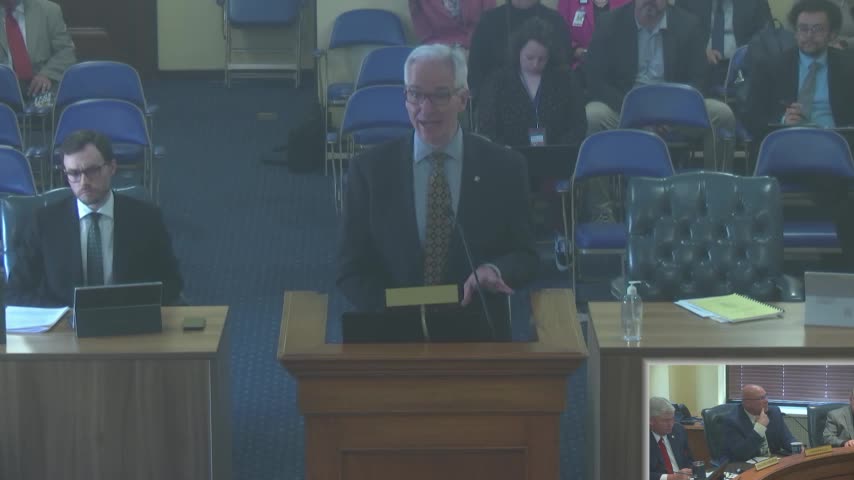
Registered lobbyist Jeremiah Samples, representing the Opportunity Solution Project and Foundation for Government Accountability partner organizations, testified the legislation converts a voluntary program into a mandatory E&T program and emphasized the policy aim of encouraging workforce participation. Samples said the department is authorized to exempt up to 20% of the additional population and described provisions that protect clients from being penalized when required supports are not funded. He told the committee the department was working on a fiscal note.
Senators asked clarifying questions about the scope of the expansion. Counsel and witnesses clarified that the bill would expand the maximum age subject to the requirement from the existing federal cap (described at the hearing as 54) to 59, and that the employment-hour exemption that keeps a person from having to participate in E&T would be 30 hours per week under the bill (different from the 20-hour threshold that applies to a separate three-month receipt exemption under current federal rules). Counsel also confirmed the bill’s language cross-references federal exemptions.
After brief discussion and an offer to work with the department on fiscal questions, the vice chair moved that Senate Bill 249 be reported to the full Senate with the recommendation that it do pass, under its original double committee reference to the Finance Committee. The motion carried by voice vote; the committee chair declared the motion adopted and the bill will be referred to Finance for further review.