West Virginia hospitals warn of persistent staffing gaps despite recent pipeline gains
Loading...
Summary
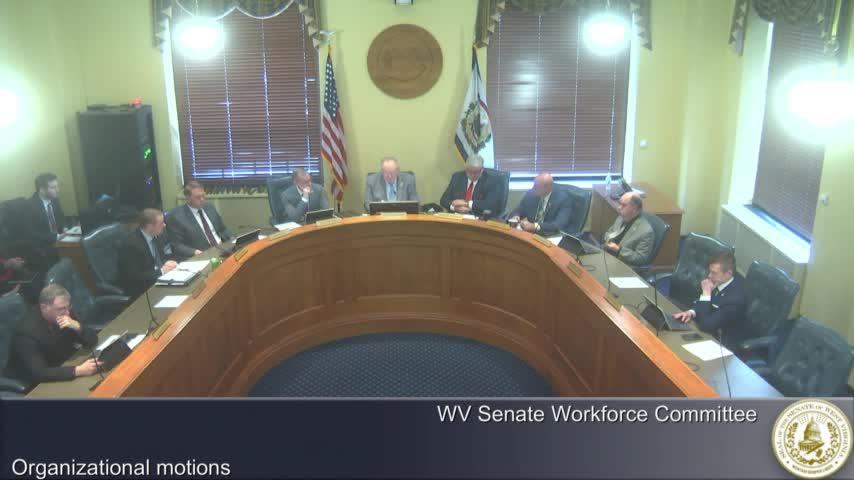
Jim Kaufman, president and CEO of the West Virginia Hospital Association, told the Senate Workforce Committee on Feb. 13 that hospitals across West Virginia are facing persistent workforce shortages that affect both clinical and nonclinical roles.
Jim Kaufman, president and CEO of the West Virginia Hospital Association, told the Senate Workforce Committee on Feb. 13 that hospitals across West Virginia are facing persistent workforce shortages that affect both clinical and nonclinical roles.
The association represents 72 hospitals across the state, Kaufman said, and hospitals directly employ about 53,000 people. He told the committee that hospitals are currently staffing roughly 75% of their licensed inpatient beds because of staffing shortages rather than lack of demand. "It's literally a staffing challenge," Kaufman said.
Kaufman said the shortage is broad, not limited to nurses, and includes environmental services, respiratory therapists, laboratory and radiology staff and many other roles. He cited association-collected, twice-yearly data showing vacancy rates for key hospital positions in the 10%–15% range and nursing vacancy rates that fell from about 19% in 2022 to about 15% today. Turnover rates, Kaufman said, have improved from roughly 24% to about 10%–15%.
Kaufman attributed part of the pay problem to West Virginia’s payer mix: he said roughly 75% of hospital patients are covered by government programs such as Medicare, Medicaid and PEIA. He said Medicare and Medicaid reimbursements have not kept pace with hospital cost increases—Kaufman cited a 17.5% increase in hospital costs over four years versus a 7.5% increase in Medicare reimbursements—making it harder for hospitals to offer competitive salaries. "Compensation ... is a huge challenge for us," Kaufman said.
Kaufman outlined pipeline limits that constrain training capacity: insufficient faculty and preceptors, tuition and other financial barriers for students, dropout rates and insufficient academic preparedness among potential students. He praised a Higher Education Policy Commission pathway program that aligns high-school coursework to health-profession entry requirements and thanked the Legislature for prior investments in the nursing pipeline, which the association said produced a 15% increase in associate-degree nursing graduates from that investment.
To address staffing and retention, Kaufman described association and hospital efforts including a year-long Leadership Academy (about 100 graduates) and a new LEAD program for new managers, plus scholarships, sign-on bonuses and recruitment campaigns. He said hospitals are also investing in telehealth and technology to increase efficiency and cited a statewide telestroke linkage in emergency departments that was supported by prior legislative grants.
Kaufman asked lawmakers to consider measures that preserve hospitals’ financial viability—such as maximizing federal dollars for Medicaid and supporting technologies like telehealth—and to explore adjustments to loan-forgiveness programs, faculty recruitment and daycare availability for shift workers. He also said an aging nursing workforce (about one-third of nurses are older than 50) and workplace violence and burnout are significant retention challenges.
Senators asked follow-up questions about certificate-of-need rules and the composition of hospital staffing. On certificate-of-need, Kaufman warned that removing CON without addressing staffing could produce more facilities that the state could not staff and might let new entrants "cherry-pick" commercially insured patients, undermining hospitals’ financial stability and services in smaller communities. He said the department and hospitals have already modernized aspects of CON in recent years.
Kaufman and the association offered several specific recommendations for the committee to consider: continued investments in the workforce pipeline and in faculty/preceptors, measures to improve hospitals’ payer mix and financial stability, sustained telehealth funding and parity, exploring compact and expedited licensing where appropriate, and addressing daycare gaps caused by hospital shift schedules.
The presentation closed with lawmakers thanking Kaufman and noting the committee may request further data on staffing breakdowns between professional and support positions.