Get Full Government Meeting Transcripts, Videos, & Alerts Forever!
Get email alerts on the Elections And Government topic
No spam. Unsubscribe anytime.
Committee approves residency requirement and party-selection amendment for legislative vacancies
Summary
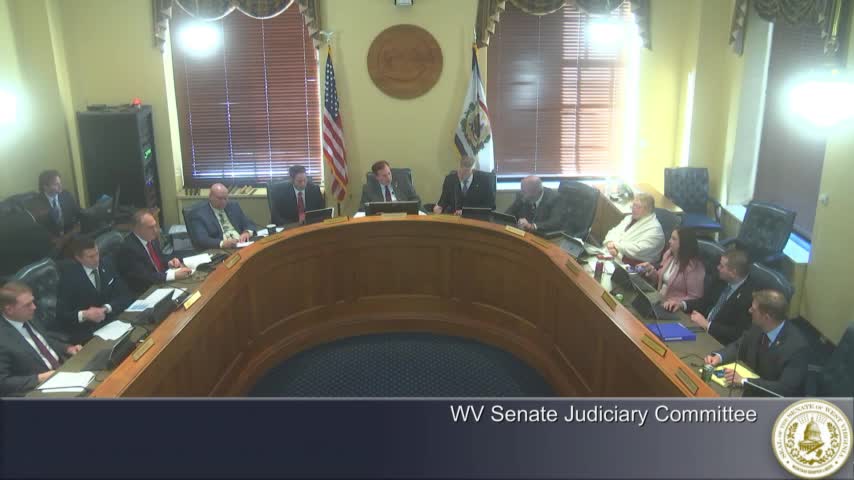
The committee reported Senate Bill 139, which would require appointees to legislative vacancies to have lived within the district they would represent for one year before appointment; the committee also adopted a conceptual amendment requiring the party’s state executive committee rules to govern how local lists are composed and submitted.
The committee reported Senate Bill 139, as conceptually amended, to the full Senate with a recommendation that it do pass. The bill would require that a person appointed to a vacancy in the office of state senator or as a member of the House of Delegates have been a resident of the district they would represent for one year immediately preceding the appointment.
Counsel explained the bill’s principal language and read the new residency provision to the committee: "No person shall be appointed to fill a vacancy in the office of state senator or as a member of the House of Delegates who has not for 1 year preceding the appointment been a resident within the district he or she will represent," the counsel said. Committee members discussed placement and scope of additional cleanup that might be needed elsewhere in the code.
The senior senator from the fourth offered a conceptual amendment to address how political parties compose and submit lists to the governor when vacancies occur. The amendment would add language stating that the process by which a party composes and submits a list of nominees shall be governed by the rules of the state executive committee of that political party. The amendment’s sponsor said the change was intended to provide consistent statewide rules for local executive committees that currently operate with varying procedures.
Members debated technical placement of the amendment's language within the statute. The senator from Jefferson suggested the language might fit earlier in the paragraph that already describes the governor’s appointment from a list submitted by the party executive committee. Counsel and members discussed whether subsection language addressing multi-county or multi-county-delegate districts required further cleanup; counsel noted subsection b relates to multi-county delegate districts and recommended specific review rather than immediate deletion. David Cove, general counsel for the Secretary of State’s Office, told the committee he was not aware of any conflicting code sections and said he would look further if needed.
On the amendment, the vice chair moved to approve the conceptual amendment and the committee adopted it by voice vote. The vice chair then moved that Senate Bill 139, as conceptually amended, be reported to the full Senate with the recommendation that it do pass; the motion carried by voice vote and the bill will be reported.
Committee members asked counsel to convert the conceptual language into formal committee-substitute text so the bill’s amended language can be prepared for the record and for the full Senate report.