Get Full Government Meeting Transcripts, Videos, & Alerts Forever!
Get email alerts on the Sanitation Trash topic
No spam. Unsubscribe anytime.
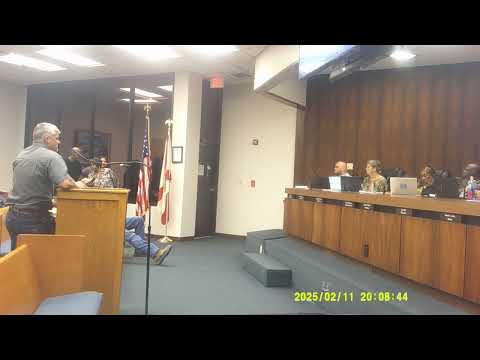
Live Oak residents raise cost, capacity concerns at city public hearing on new trash-can system
Summary
At a City of Live Oak public hearing, residents questioned a proposal to issue one 96-gallon curbside trash can per household and charge $7.50 a month for a second can, raising concerns about affordability, commercial capacity and implementation timing.
City of Live Oak — Dozens of residents voiced concerns about cost, capacity and timing during a public hearing on a proposed change to the city’s curbside trash collection program.
Mardine Williams, a Live Oak resident, told the council that many households are already struggling and cannot absorb new fees. “People just can’t afford it,” Williams said, summarizing a recurring theme in public comments.
The proposal discussed at the hearing would issue one large, 96-gallon trash can to each utility customer; a second can would cost an additional $7.50 per month, city staff said. “So according to the ordinance ... every customer would be issued 1 can. And for clarity, the second can would be an additional $7.50 a month,” said Mr. Jelton, a city staff member addressing the meeting.
Residents and local business owners raised practical questions about capacity and equity. James Akins, who said his daughter runs a daycare, asked how a single can would accommodate diapers and other business waste: “So you’re issued 1 trash can, and just think how many diapers that would be laying on the ground because 1 garbage can is filled up,” Akins said.
Several commenters asked whether current private cans could be used in place of the city-issued units. Terry Brown, a resident who said he already owns a 96-gallon can, asked directly whether he could keep his own can if the program is adopted. City staff said the ordinance issue is that customers would be issued a single city can and that requirements for private-can use would be clarified by staff if the policy is approved.
Speakers also debated earlier fee figures mentioned during meetings. Some attendees referenced a $2.50-per-month figure discussed previously; other comments and staff remarks focused on the $7.50 secondary-can charge and the upfront cost the city will incur to purchase standardized cans. Residents argued the city should resolve service problems such as missed pickups and routes before adding fees. Phyllis Potolo, who described neighborhood litter and cleanup efforts by church volunteers, urged the council to address broader sanitation issues in affected areas.
Nathan Smith, who identified himself with the Robert House Authority, asked for a separate meeting to explain the changes to his more than 100 tenants, saying the authority needs direct outreach to prepare residents for any new charges or equipment.
No council vote or final action on the proposed ordinance was recorded in the hearing segment of the transcript. The public hearing provided residents a forum to comment before the council considers any ordinance or fee schedule.
City staff and council members at the hearing repeatedly asked for comments rather than turning the session into a back-and-forth Q&A, and several speakers pressed for clearer timeframes and implementation details if the council moves forward.