Get Full Government Meeting Transcripts, Videos, & Alerts Forever!
Get email alerts on the Cdbg Housing Rehab topic
No spam. Unsubscribe anytime.
Live Oak schedules workshop to consider CDBG housing-rehab grant
Summary
City council scheduled a workshop Feb. 18 on applying for a Community Development Block Grant (CDBG) housing-rehabilitation program that would offer deferred-payment loans to low- and moderate-income homeowners; staff outlined eligibility, timelines and hearing requirements.
The City Council of the City of Live Oak voted to schedule a workshop at 4 p.m. on Feb. 18, 2025, to consider applying for a Community Development Block Grant (CDBG) housing-rehabilitation program that would provide deferred-payment loans to eligible homeowners.
The program representative said the primary eligibility criterion is income: the program must meet a national objective to benefit low- and moderate-income residents and that households up to roughly 120% of the area low-income threshold would qualify and be prioritized for assistance. The representative said projects would be put out to bid, returned to the council for award, and then deferred-payment loan agreements executed. "Their mortgages are forgiven over time so long as the resident receiving assistance maintains the home as their primary residence," the representative said.
Why it matters: Council members and residents said the program could help elderly and disabled homeowners who cannot afford major repairs, improve energy efficiency and raise property values. Staff said the CDBG cycle opens March 5 and closes May 2, and two public hearings would be required as part of the application process.
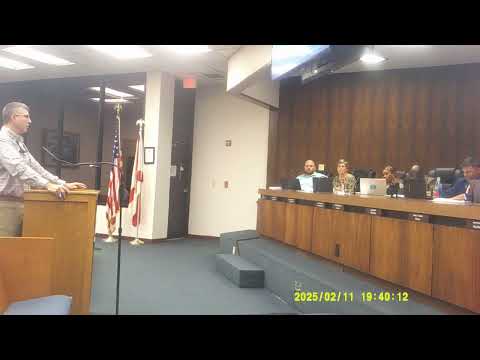
During public comment, an owner of InTouch Consulting Group described similar programs he manages and urged the council to act. He said such projects can reduce energy bills, bring homes up to code, and that homeowners typically do not pay out of pocket under the deferred-payment structure. He described a 10-year forgiveness schedule used elsewhere in which "one tenth is forgiven each year" provided the homeowner continues to occupy the home.
Staff outlined the expected timeline: the program representative said award notifications are anticipated before the end of the calendar year, and that once projects are contracted they run 30 months, allowing the city to reapply when a project closes out. The representative also said Community Advisory Task Force (CATF) meetings are now optional but recommended as an avenue for public participation. Councilmember discussion focused on outreach, whether the city had missed previous funding cycles and the need for a workshop to allow detailed questions.
The council approved the motion to schedule the workshop by voice vote. No application decision was made at the meeting; the workshop will present the application materials, allow public input and, if the council decides to proceed, authorize the required public hearings and application submission.
Next steps: Staff will prepare materials for the Feb. 18 workshop, and if the council votes to apply it will hold the two required public hearings in advance of the May 2 application deadline.