Get Full Government Meeting Transcripts, Videos, & Alerts Forever!
Get email alerts on the Developmental Disabilities Provider Rates topic
No spam. Unsubscribe anytime.
Supporters urge higher residential provider rates for Snohomish County to match King County rates
Summary
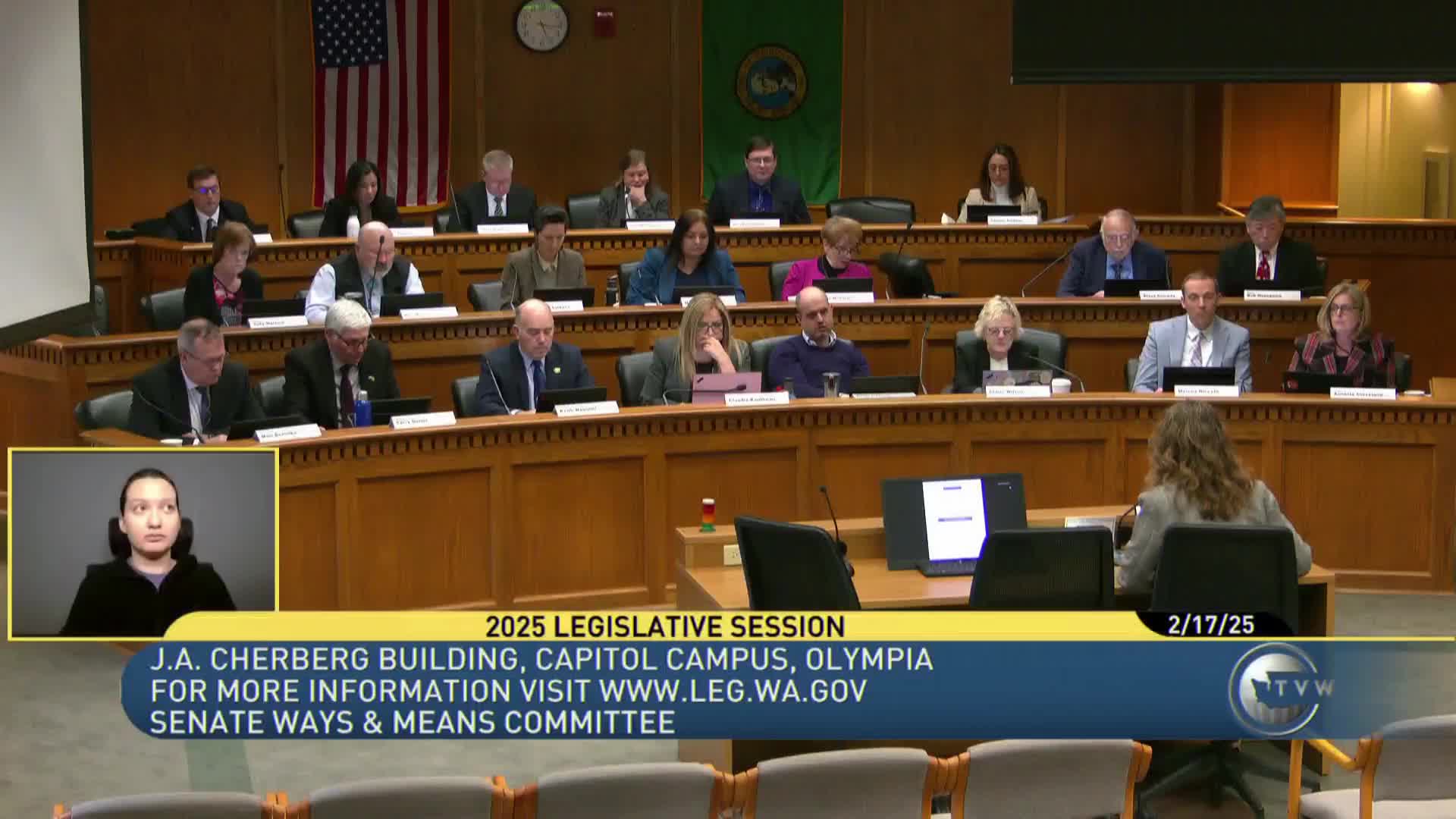
Senate Bill 5,125 would require the Developmental Disabilities Administration to use King County geographic classification for provider rates in Snohomish County; provider representatives said matching rates is necessary to retain staff and serve clients, and staff presented fiscal estimates.
Senate Bill 5,125, which would require the Developmental Disabilities Administration to apply King County geographic rate classifications to provider rates in Snohomish County, drew testimony from residential‑service providers describing workforce pressures and from committee staff presenting fiscal estimates.
Maria Hovde, committee staff, explained the current tiered rate methodology the Developmental Disabilities Administration (DDA) uses, which applies three geographic classifications—King County, Metropolitan Statistical Area (MSA) counties and non‑MSA counties—to nine service tiers. "This bill would require DSHS to use the King County classification for determining community residential provider rates in Snohomish County," Hovde said, noting an estimated cost of $2.6 million to the general fund in the 2027 biennium and $5.2 million in total funds, with a four‑year general‑fund outlook of $5.2 million.
Multiple witnesses from Sunrise Services in Everett described workforce and retention impacts if Snohomish County rates remain lower than neighboring King County, which shares an MSA with Snohomish. Lee Phillips said the difference in rates has widened and that cost of living measures show Snohomish County at parity or higher on some metrics. Melissa Eaton, Sunrise Services director, described difficulty recruiting and retaining direct‑support professionals as King County providers can offer higher pay, and Kara Marth, a behavioral specialist, described a recent client success story and the need for stable, skilled staff to support clients with high behavioral and medical needs.
Staff and providers emphasized proximity to King County and rising local minimum wages as factors making rate parity urgent to maintain provider capacity. The hearing concluded with testimony from multiple provider representatives; no committee vote was recorded in the transcript.