Get Full Government Meeting Transcripts, Videos, & Alerts Forever!
Get email alerts on the Land Use Governance topic
No spam. Unsubscribe anytime.
Bill would require hearing examiners to issue final quasi‑judicial land‑use decisions; cities and counties debate a statewide mandate
Summary
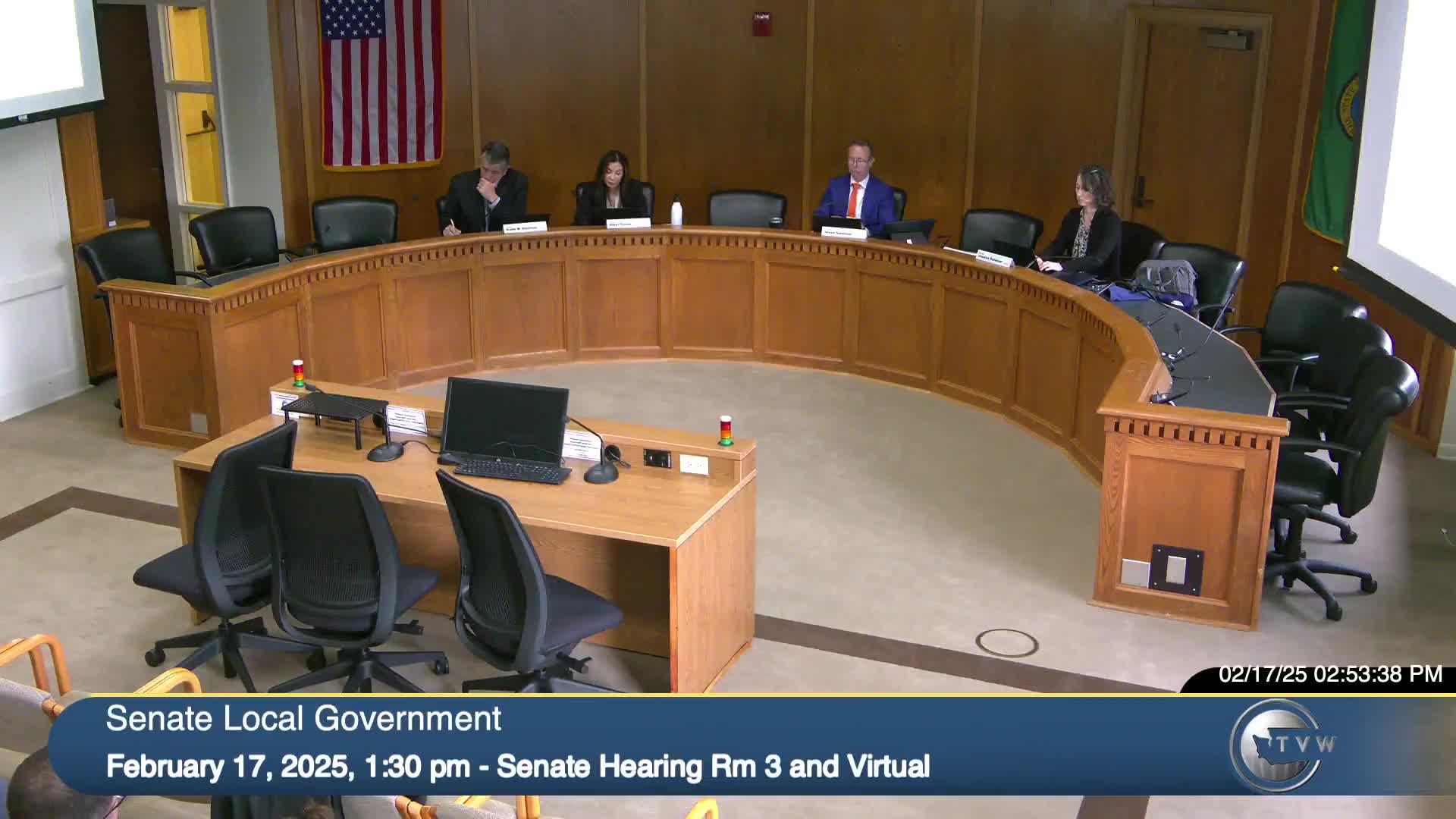
Senate Bill 5719 would require cities and counties to adopt hearing‑examiner systems that issue final written decisions for certain quasi‑judicial land‑use actions, subject to appeal under the Land Use Petition Act.
Senate Bill 5719 would require local legislative authorities to adopt hearing‑examiner systems under which examiners hear and issue final decisions for quasi‑judicial land‑use applications, including preliminary plats, planned unit developments, variances and conditional uses. The bill would make those final decisions subject to appeal under the Land Use Petition Act (LUPA) and would require examiners’ written findings to demonstrate consistency with comprehensive plan future land use maps and clear and objective development regulations.
Proponents — largely homebuilders and housing industry representatives — said hearing examiners are trained land‑use professionals who reduce political pressure on elected officials who otherwise may be asked to act in quasi‑judicial roles. Deborah Flagan of Hayden Homes told the committee that hearing examiners provide consistent, predictable legal process and help separate legislative decision‑making from adjudicative functions.
Opponents and some local government groups urged caution. Curtis Steinhauer of the Washington State Association of Counties said the bill replaces local discretion with a one‑size‑fits‑all requirement; counties presently choose systems that fit their community contexts and some rely on hearing examiners to hear administrative appeals, a role the bill appears to remove. Helen Lehner and other residents described personal experiences with hearing‑examiner processes and said the public can be disadvantaged by a system that makes decisions final at the examiner level, noting appeals can be costly.
Association of Washington Cities staff noted workforce and capacity constraints, particularly in some counties that rely on outside examiners, and said a statewide mandate could require new hiring or cross‑jurisdictional contracting. The committee discussed whether the bill would change substantive policy authority or only the decision‑making process; staff said the bill focuses on process and requires examiners to implement local policy rather than change it.
No formal vote was taken. Committee members and stakeholders signaled interest in further refinements, including addressing the availability of examiners, preserving the ability to hear administrative appeals, and clarifying the statutory standard examiners should apply to comprehensive plans and development regulations.