Get Full Government Meeting Transcripts, Videos, & Alerts Forever!
Get email alerts on the Permitting topic
No spam. Unsubscribe anytime.
Bill would clarify binding site plan eligibility and add limited 'builder's remedy' for lapsed land‑use permit timelines
Summary
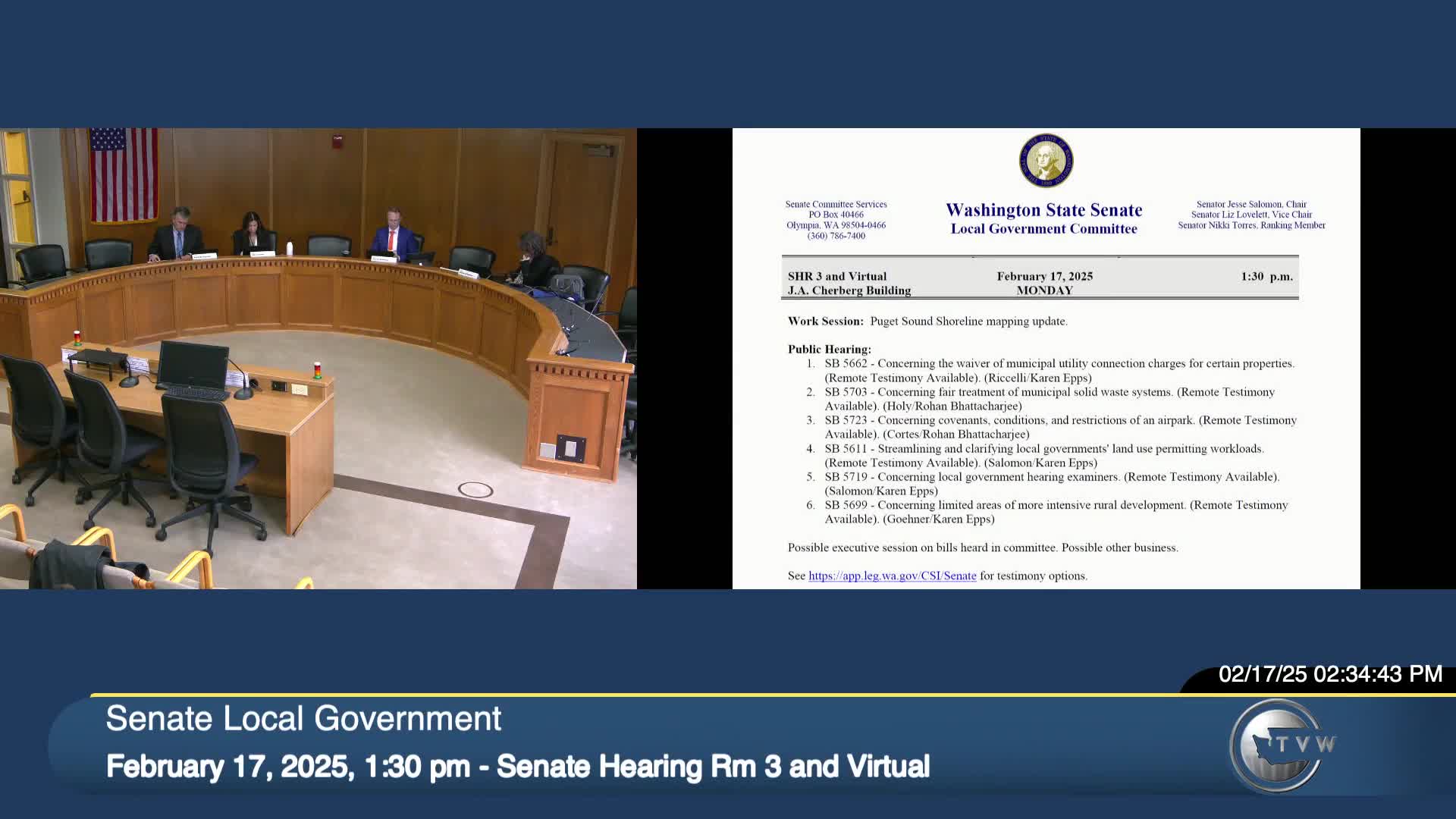
Senate Bill 5611 would clarify that binding site plans may be used for developments in commercial zones that permit multifamily housing, require written extensions for permit timelines, and establish a limited remedy when statutory review deadlines lapse without a decision.
Senate Bill 5611 drew contested testimony about how to speed land‑use permitting for residential projects while protecting local review of environmental and shoreline issues. The bill contains three major elements: clarification that binding site plans may be used on commercially zoned properties that permit multifamily residential uses; a requirement that project‑permit extension agreements be documented in writing; and a narrowly drawn provision that limits a local government’s ability to deny or condition a project after statutorily prescribed review timelines lapse.
Committee staff described existing procedures: local governments must determine within 28 days whether a project permit application is complete and, after completeness, must issue a final decision by statutory deadlines that vary by permit type (with a cap of 170 days in most cases and discrete exclusions). The bill would also prevent local governments from requesting or requiring applicants to sign away timeline rights at initial submission and would include exemptions so the limited ‘‘builder’s remedy’’ does not apply where an applicant has failed to respond to requested information, where approvals are required to comply with state or federal law, or where shorelines or critical areas are implicated.
Supporters from the building and real‑estate sector told the committee the bill would reduce uncertainty at intake desks and allow multifamily projects to use binding site plans rather than more cumbersome subdivision procedures. Riley Benge of Washington Realtors said the change clarifies existing modern practice and would promote uniform intake across jurisdictions. Builders’ groups and the Master Builders Association argued the measure would protect developers’ timeline rights and reduce requests for applicants to waive statutory review timelines.
County associations and some planners expressed concern about the builder’s remedy. Curtis Steinhauer of the Washington State Association of Counties said the association supports many clarifying provisions in the bill but urged caution, noting that recent statutory penalties for timeline violations (from earlier legislation) are still being implemented and that adding a new statutory remedy could have unintended consequences for local permitting systems. Ecology staff also commented that section 5 may conflict with shoreline master program requirements and recommended excluding projects subject to the shoreline master program to avoid statutory conflicts; Ecology suggested defining the bill’s undefined terms, such as “substantial impact on viability,” if the committee advances the bill.
No formal action was taken; testimony indicated a mix of support for the bill’s intake and timeline clarifications and concern about creating a broad, statutory remedy that could disrupt local permitting practice without careful drafting.