Get Full Government Meeting Transcripts, Videos, & Alerts Forever!
Get email alerts on the Corrections Health Accreditation topic
No spam. Unsubscribe anytime.
Committee reviews proposal to shift DOC behavioral health certification to NCCHC accreditation
Summary
Senate Bill 5,388 would require the Department of Corrections to seek National Commission on Correctional Health Care accreditation for substance use disorder services rather than licensure by the Department of Health; DOC testified in support citing cost and suitability, while Disability Rights Washington urged preserved DOH oversight.
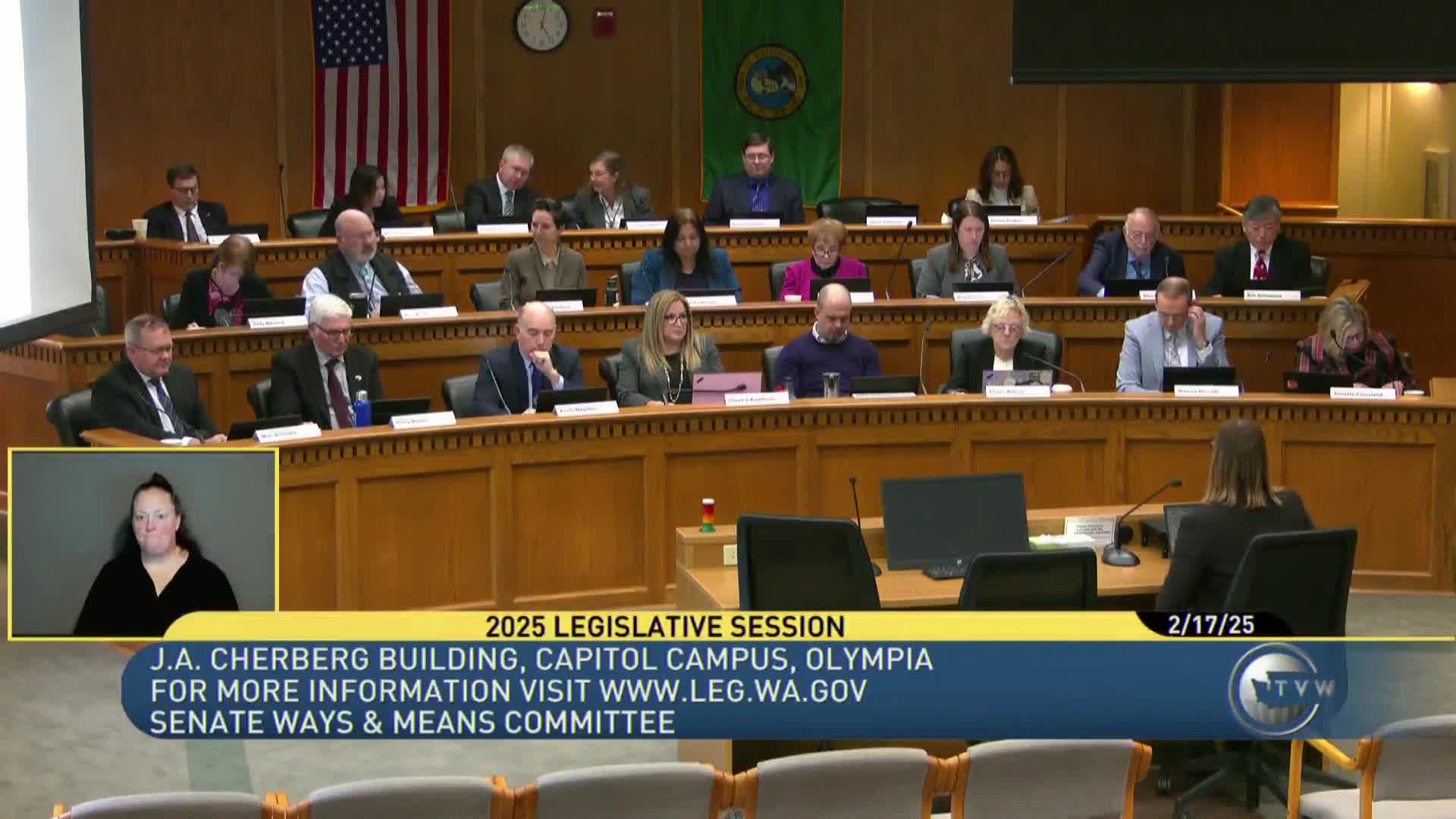
Senate Bill 5,388, which would require the Department of Corrections to seek National Commission on Correctional Healthcare (NCCHC) accreditation for substance use disorder services in correctional settings rather than Department of Health licensure, drew agency support and advocacy opposition during the committee hearing.
Monica Fontaine, committee staff, summarized the bill and the agencies involved. She noted that DOC operates substance abuse recovery units across 25 facilities and that NCCHC offers a voluntary accreditation program using external peer review. "The bill before you requires the Department of Corrections to seek accreditation from the National Commission on Correctional Health Care for Substance Use Disorder Services instead of through the Department of Health," Fontaine said, adding a compliance deadline of July 1, 2028.
Kellit Saer, Assistant Secretary for Budget Strategy and Technology at DOC, and Dave Flynn, Assistant Secretary for Health Services, testified in support. Saer said DOC believes NCCHC standards better account for correctional settings and described the fiscal contrast in staff materials: an estimated $20.5 million cost if DOC pursues DOH licensure versus approximately $11.7 million implementing NCCHC accreditation. DOC provided estimates it said would include staffing increases and accreditation fees phased in over multiple years.
Rachel Sievers, an attorney with Disability Rights Washington, testified in opposition. She argued DOH oversight focuses on patient care and cited audits raising patient‑safety concerns at DOC facilities; she said NCCHC accreditation emphasizes policy and process and cited examples where accredited systems still faced constitutional failures. Sievers offered a draft compromise amendment directing DOC and DOH to jointly identify standards targeted to correctional settings.
The hearing record shows no committee vote; staff and multiple stakeholders exchanged clarifying questions and cost estimates. The committee moved to the next agenda item after public testimony concluded.