Get Full Government Meeting Transcripts, Videos, & Alerts Forever!
Get email alerts on the Vital Records Education Access topic
No spam. Unsubscribe anytime.
Panel considers waiving birth certificate fees and accepting alternative documents for school enrollment
Summary
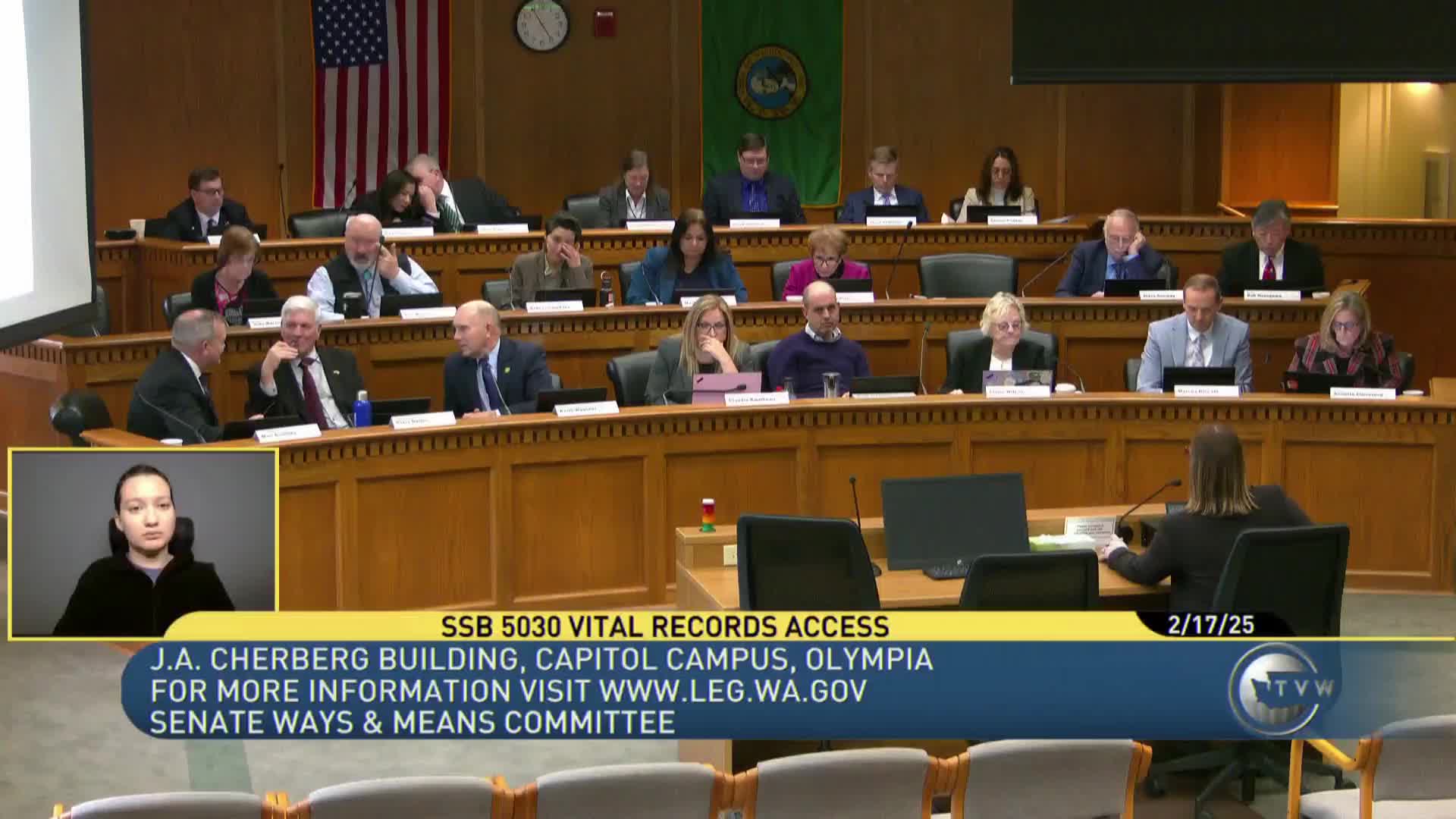
Substitute Senate Bill 5,030 would prohibit charging a $25 fee for birth certificates in certain circumstances and require agencies to accept alternative documentation for early learning and K–12 enrollment; staff presented fiscal estimates and sponsor and agency testimony followed.
Substitute Senate Bill 5,030, which would prohibit charging a $25 fee for birth certificates in specific enrollment situations and require acceptance of alternative documentation for early learning and K–12 enrollment, was presented to the committee with staff and sponsor testimony and a fiscal note; no committee vote was recorded.
Monica Fontaine, committee staff, summarized that the bill would prohibit the Department of Health and local registrars from charging a fee for birth certificates when parents or guardians request the record for enrollment in early learning or school programs, when the child is in a household receiving basic food benefits, or when the requester is a member of an assistance unit. "Parents and guardians may prove eligibility through a benefits letter or other documentation as specified in the bill," Fontaine said during her staff report.
Fontaine outlined fiscal impacts the staff fiscal note associates with the substitute: an estimated $246,000 general‑fund impact in the 2025‑27 biennium, a four‑year impact of $386,000 to the general fund, one‑time costs for rule making and IT updates, and an estimated ongoing revenue loss to the Department of Health the staff described as $200,000 to $300,000 per year due to reduced fees. She also noted DOH identified an indeterminate staffing impact to verify benefit eligibility documents when a birth certificate is requested.
Senator Claire Wilson, the prime sponsor, told the committee the bill responds to barriers families face when obtaining documents for program enrollment, including homelessness, disasters and domestic violence, and that federal regulations already provide broader alternative documentation for such purposes. "This would be a way to expand an individual's ability to determine a young person's eligibility for a program," Wilson said.
No motion or vote is recorded in the hearing. The record shows staff report, sponsor remarks, and no public testimony signed up for the bill during this hearing. The committee then proceeded to the next agenda item.