Get Full Government Meeting Transcripts, Videos, & Alerts Forever!
Get email alerts on the Education College Scholarship topic
No spam. Unsubscribe anytime.
Committee hears bill to allow high school equivalency recipients to qualify for College Bound Scholarship
Summary
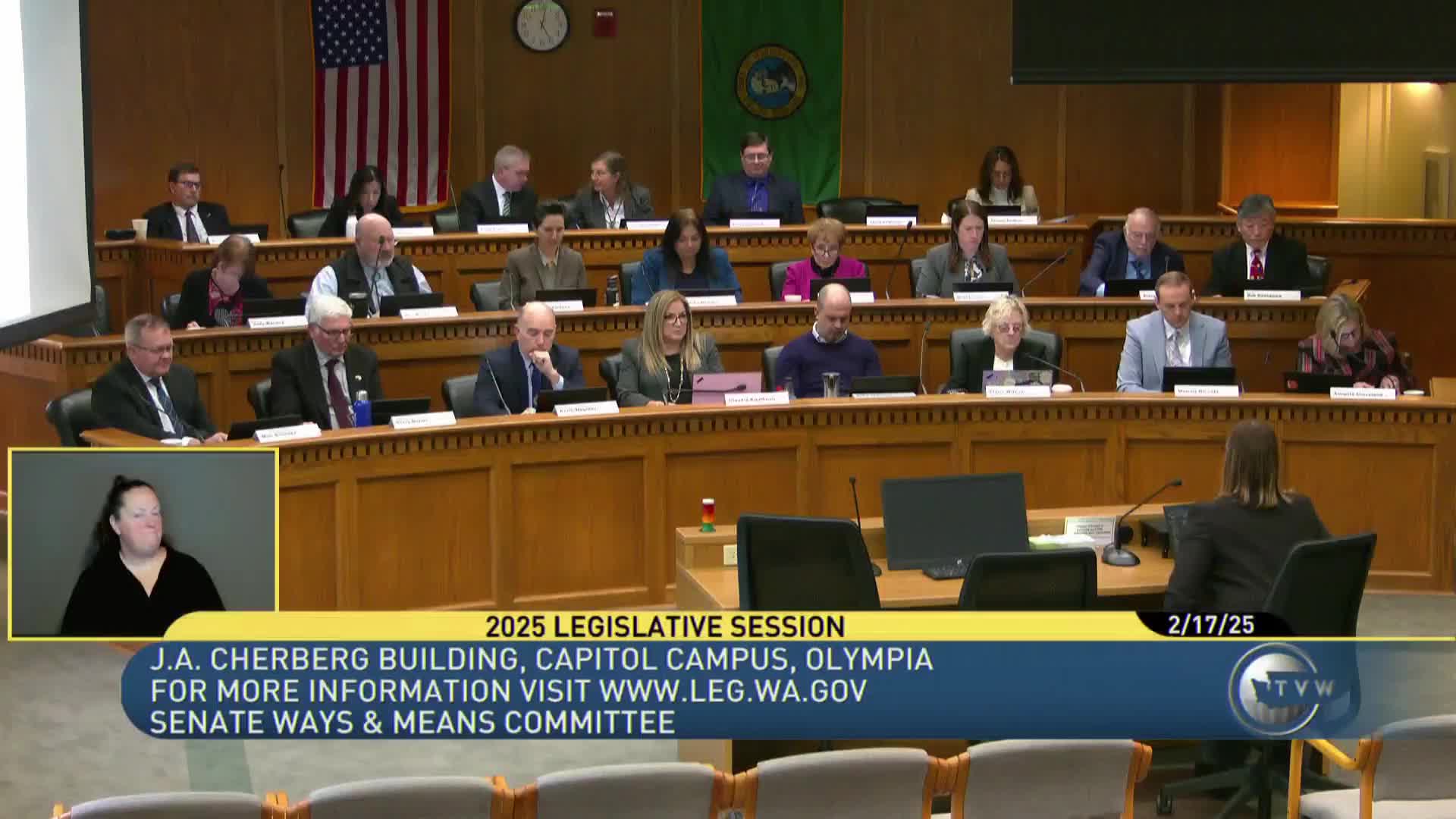
A Ways & Means committee hearing on Senate Bill 5,543 reviewed staff analysis, fiscal notes and public testimony on expanding College Bound Scholarship eligibility to students with high school equivalency certificates; no vote was taken.
Senate Bill 5,543, which would expand eligibility for the College Bound Scholarship to students who hold a high school equivalency certificate, was presented to the Ways & Means committee with staff and public testimony but no formal committee action was recorded.
Michelle Ali Shahi, staff to the committee, told members the bill would add students who have received a high school equivalency certificate to those eligible for the College Bound Scholarship, which covers tuition and fees for students who attend two‑ or four‑year public institutions and provides $500 for books and materials for recipients at public institutions. "The bill before you is Senate Bill 5,543, providing equity in eligibility for the College Bound Scholarship," she said during the staff report.
The current program requires a high school diploma with at least a C grade‑point average, no felony convictions and a family income at or below 65% of the state median income, Ali Shahi said. She noted that community and technical colleges already accept equivalency certificates in some contexts and that the bill aligns the scholarship eligibility with that practice. The staff fiscal note, she said, shows one‑time information‑technology costs of about $40,000 to update the system that administers the scholarship and lists the fiscal impact on award costs as indeterminate pending enrollment behavior.
Arlen Harris of the State Board for Community and Technical Colleges testified in support, saying community colleges frequently serve students who obtain GEDs and other equivalency credentials. "This is another opportunity to make a commitment to students who have otherwise taken a different path to finishing their high school diploma," Harris said, adding the colleges issued about 4,000 GEDs in 2024. John Axtell, offering remote testimony, urged the committee to approve the bill and suggested academic performance standards could be applied after enrollment rather than as prerequisites.
No motion or vote was recorded in the hearing. The record reflects staff presentation, two public witnesses and committee discussion limited to clarifying questions. The committee moved to the next bill after public testimony concluded.