Get Full Government Meeting Transcripts, Videos, & Alerts Forever!
Get email alerts on the Workers' Compensation Correctional Staff Mental Health topic
No spam. Unsubscribe anytime.
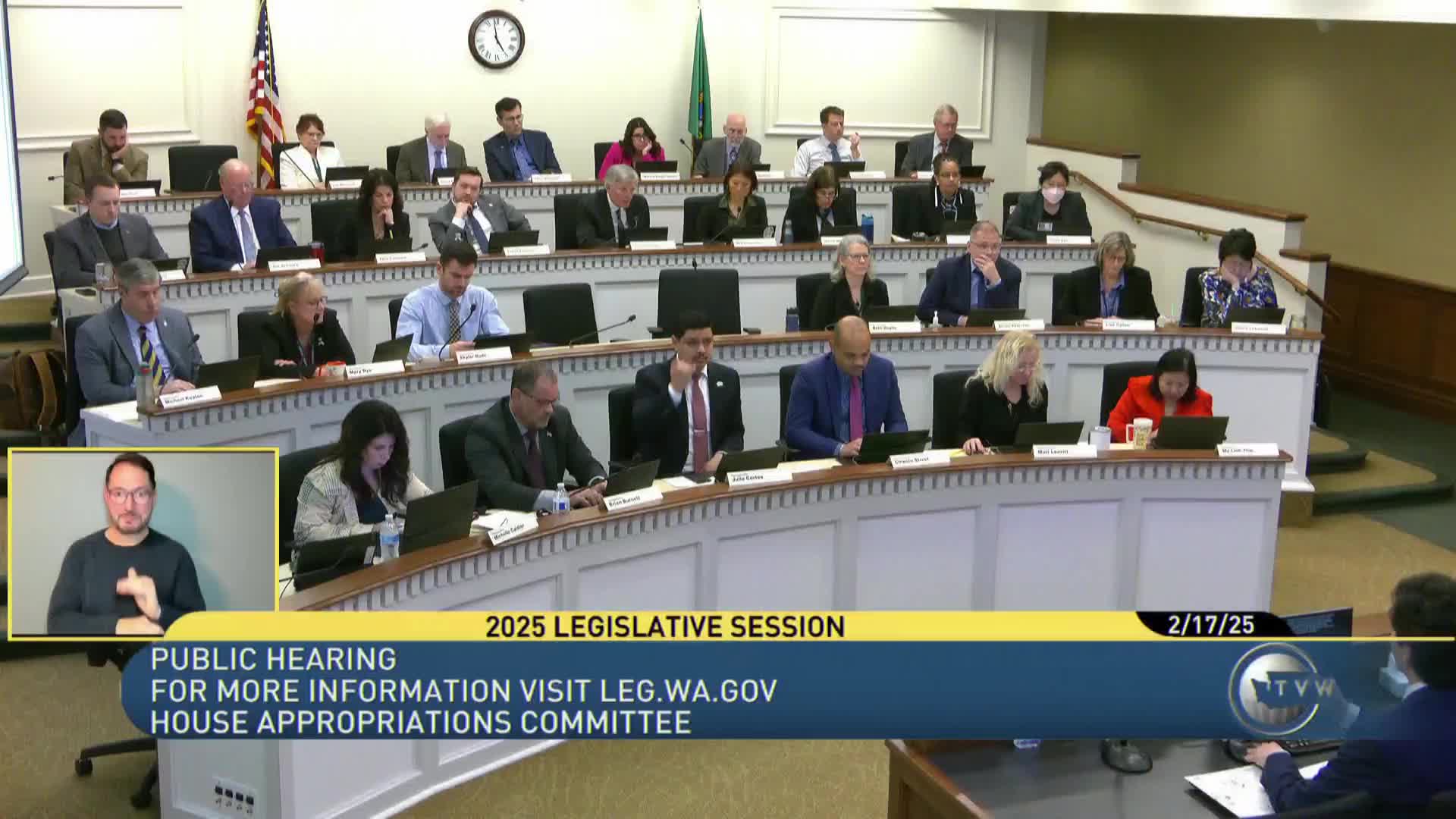
Committee hears competing fiscal and worker-support arguments on PTSD presumption for correctional staff
Summary
The committee received a briefing and extensive public testimony on substitute House Bill 10-70, which would expand workers— compensation occupational disease coverage to include post-traumatic stress disorder for correctional facility workers and create a presumption tied to years of service.
The committee received a briefing and extensive public testimony on substitute House Bill 10-70, which would expand workers— compensation occupational disease coverage to include post-traumatic stress disorder for correctional facility workers and create a presumption tied to years of service.
Ben McCarthy, staff to the committee, told members the substitute bill permits occupational-disease claims for post-traumatic stress disorder for correctional facility staff, community corrections officers who work in facilities, juvenile facility staff and staff at city or county jails. The bill would also create a presumption that PTSD is an occupational disease for workers who have been employed on a fully compensated basis in Washington for at least 90 days; that presumption would extend for three calendar years for each year worked, up to a maximum of five years from the last day of employment, as described in the staff briefing.
Committee staff provided fiscal estimates and administrative assumptions. The Department of Labor & Industry (L&I) fiscal note in committee materials includes staffing and operating costs and projects additional FTE needs to manage new claims. Staff cited estimated needs of roughly 1.9 FTE in the 2025-27 biennium, 3.2 FTE in 2027-29 and 4.3 FTE in 2029-31 for L&I administration. Local-government estimates in the materials assumed about 30 PTSD self-insurance claims annually for counties and 25 for cities with an assumed allowance rate of about 81 percent. The Office of the State Actuary was reported to estimate a small increase in contribution rates for the Public Safety Employees' Retirement System.
Supporters, including corrections staff and unions, urged the committee to adopt the presumption, saying corrections work produces cumulative trauma and that many employees do not seek help promptly. James McMahon of the Association of Sheriffs and Police Chiefs recounted hiring a retired corrections officer who later died by suicide and urged passage. Lieutenants and deputies from Thurston County told the committee about assaults, repeated exposure to severe incidents and the difficulty of proving cumulative PTSD under current rules.
Opponents, including trade groups and municipal officials, argued the fiscal note underestimates long-term costs and cautioned that extending the presumption to city jails would create an unfunded mandate for cities. Rose Gunderson of the Washington Retail Association and Patrick Connor of NFIB said L&I and other analyses suggest allowed PTSD claims have high average costs and that the substitute could drive significant rate pressure for state fund participants and for self-insured local entities. Candace Bach of the Association of Washington Cities asked the committee to exclude city-operated jails from the presumption or delay action until a review process concludes.
Union and employee groups including AFSCME Council 2 and Teamsters Local 117 supported the bill, emphasizing the cumulative nature of trauma in correctional settings and urging prevention alongside benefit access.
No final vote was recorded in the hearing. Committee members asked staff to provide additional fiscal detail and follow-up materials; some representatives requested L&I—s post-2018 data on PTSD claims for firefighters and law enforcement to inform debate.