Get Full Government Meeting Transcripts, Videos, & Alerts Forever!
Get email alerts on the Social Media Minor Age Verification topic
No spam. Unsubscribe anytime.
Committee reports substitute for SB 854 requiring age checks, limits for minors on social platforms
Summary
The Communications, Technology and Innovation Committee voted 19-0 to report a substitute for Senate Bill 854 that removes a ban on "addictive feeds" and instead requires commercial "age-detection" methods and a one-hour daily cap for social media users under 16, with enforcement through the Consumer Protection Act.
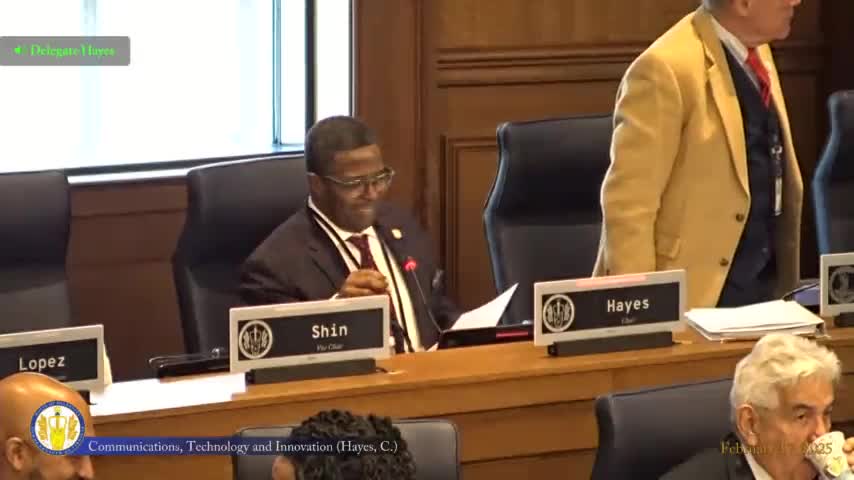
The Communications, Technology and Innovation Committee on Feb. 17 reported a substitute for Senate Bill 854 that removes language banning so-called "addictive feeds" and instead requires controllers or processors of social media platforms to use "commercially reasonable methods" to determine whether a user is a minor and to limit a minor's use of the platform. The committee voted 19-0 to report the substitute as amended.
Senator Van Valkenburg, sponsor of SB 854, described the evolution of the measure from an outright ban on addictive feeds for minors to the substitute now before the committee. "This bill started off as an addictive feeds bill, banning addictive fees for minors, which is a bill I brought last year," Van Valkenburg said. He said the substitute is "not everything I want, but I think it's a good — I think it hits a good sweet spot." The substitute sets a one-hour daily cap for users under age 16, with parents able to increase or decrease that allotment, and states that age-verification information must be kept private and used only for age determination and age-appropriate experiences.
The substitute removes the prior language that would have prohibited controllers or processors from providing addictive feeds to minors and instead focuses on verification and time limits. "The substitute no longer includes language related to addictive feeds," the committee attorney said during the meeting, noting the posted substitute and a minor line-edit needed in the PDF.
Committee members asked how platforms would reliably determine age and who would bear liability if a minor misstates their age. "It's not gonna be perfect," Van Valkenburg said, adding that platforms already use tools — including AI and cross-checking signals — to detect inconsistent age claims. Representative for Meta, Patrick Cushing, said the company can support the draft and described a likely "menu of options" for verification while warning against over-collection of personally identifiable information such as driver's licenses. "This was our best effort to provide a similar level of protection," Cushing said, and added that companies are sensitive about collecting and storing personal information.
Members also questioned enforcement and penalties. The substitute places enforcement with the attorney general under the Consumer Protection Act. "Once I would just point back to this — the enforcement under this is with the AG, with the Consumer Protection Act," Van Valkenburg said when asked how violations would be handled. Committee members repeatedly raised concerns about enforceability, parental involvement, and free-speech implications on social platforms.
Delegate Hodges urged the committee to act, citing harms to children and a need for compromise. "Because every day that we wait, a child is harmed," Hodges said.
Procedure and votes: The committee first adopted an amendment to the substitute during the session; that amendment was moved and seconded on the record and adopted. Later, Delegate Maldonado moved to report SB 854 with the substitute and as amended; the motion was seconded and the clerk opened the roll. The clerk recorded that the bill "reports, with 19 yeas and no nays." The committee chair then adjourned the meeting.
What the substitute does and does not do: The substitute (as reported) no longer bans "addictive feeds" specifically but requires platforms to implement commercially reasonable age-detection measures and to limit use for minors under 16 to one hour per day unless a parent alters that limit. It explicitly states that information collected for age determination "shall not be used for any purpose other than age determination and provision of age-appropriate experiences." Enforcement is through the attorney general's authority under the Consumer Protection Act; the text does not create a private right of action for individuals.
Next steps: SB 854 was reported out of the committee to the next step in the legislative process on a unanimous committee vote. Further amendments or floor action could change the bill's substance or enforcement before enactment.
Votes at a glance
- SB 854 (substitute, as amended) — Motion to report with substitute as amended carried by recorded vote: 19 yeas, 0 nays. Mover: Delegate Maldonado; second: not specified. Notes: Committee also adopted a separate amendment to the substitute during the hearing (mover/second not specified on the record).