Get Full Government Meeting Transcripts, Videos, & Alerts Forever!
Get email alerts on the Competency Restoration topic
No spam. Unsubscribe anytime.
Public defenders tell committee more than 400 Missourians wait months for competency restoration; advocates push community treatment
Summary
Missouri State Public Defender officials told the House Committee on Health and Mental Health that people found incompetent to proceed face an average 14-month wait for placement with the Department of Mental Health and urged statutory and funding changes to expand community-based restoration and shorten timelines.
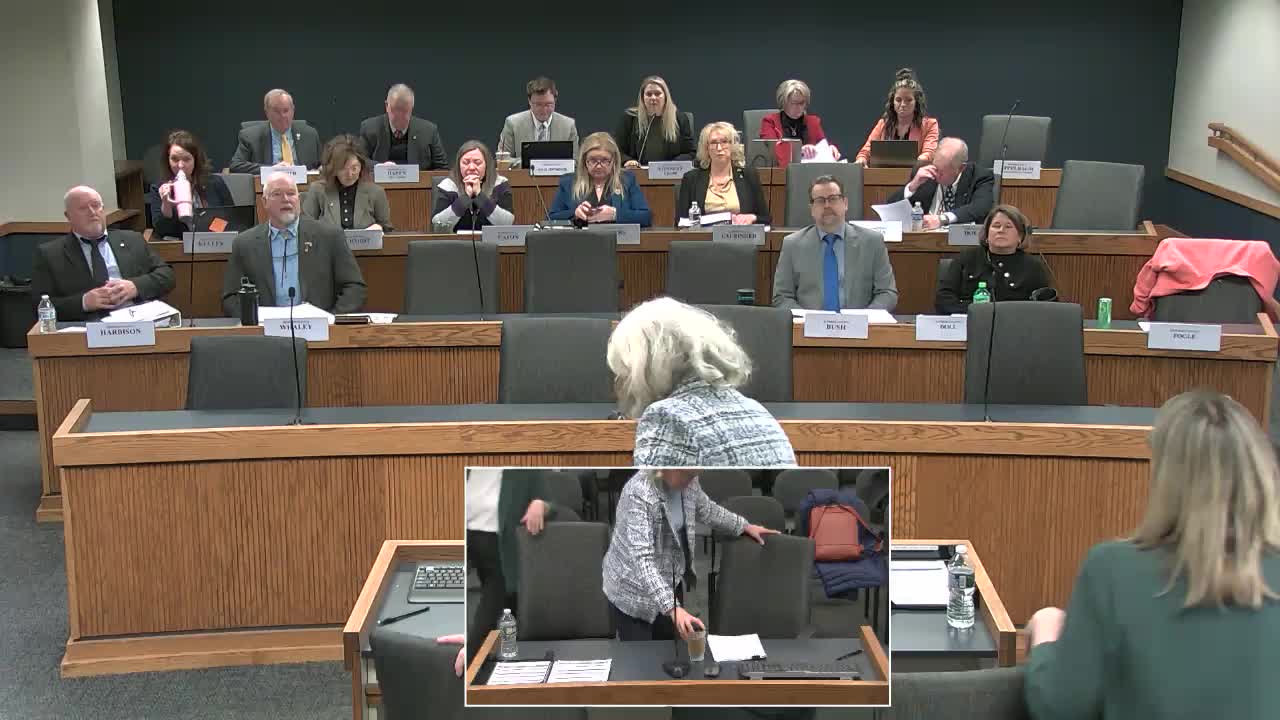
Mary Fox, director of the Missouri State Public Defender, and Annie Legomsky, the public defender office's holistic defense services leader, told the Missouri House Committee on Health and Mental Health that people found incompetent to stand trial are waiting far longer than statute anticipates and that those delays are filling county jails and harming vulnerable defendants.
"On average, individuals who've been found incompetent to proceed are waiting 14 months before they're brought to the Department of Mental Health for their treatment," Legomsky told the committee. She said Department of Mental Health reports show about 420 people on the wait list as of last month and that the number has been growing since the COVID period.
The competence restoration process in Missouri begins when a judge orders a psychiatric evaluation after a party or the court identifies concerns about a defendant's ability to understand proceedings and assist in a defense. Fox told the committee that the relevant statutory procedures are set out in the courts' rules and in "section 5 5 2.02," and that a judge signs the order for the evaluation. The statute requires evaluations to be completed within 60 days, but committee testimony said there is no firm statutory deadline for how quickly the Department of Mental Health must bring a person into custody for restoration once a court finds them incompetent.
Why it matters: defendants who cannot participate in their defense cannot proceed to trial, and prolonged waits for restoration mean many people remain detained, often in county jails, while treatment and evaluation are postponed. "The vast majority of these individuals are in the jails," Legomsky said. Committee members and witnesses repeatedly described cases of older adults and people with dementia, as well as many misdemeanor and low-level felony defendants, who have spent months or longer awaiting restoration services.
Legomsky and Fox outlined several drivers and possible fixes. They said increased awareness of mental health among court actors and a general rise in mental health symptoms after the COVID era have contributed to more competency evaluations. They also pointed to capacity limits within the Department of Mental Health's forensic facilities and to the lack of widespread community-based restoration programs.
Committee members were given a breakdown of bed counts at Department of Mental Health facilities and related units: CBM was reported as having 65 beds (8 offline for repairs at one point); Farmington Treatment North 75 beds; Fulton State Hospital (FSH) about 292 of 300 beds in use; FTCS 174 of 180; NMPRC 108 of 108; and SMMHC 170 of 170. Witnesses told the committee that on a recent Thursday DMH reported 439 judicial orders for competency restoration pending statewide.
Other states' experience was cited as evidence that statutory timelines and community programs can reduce waits. Legomsky told the committee that Washington state set a model requiring rapid placement and substantial investment after litigation, reporting billions of dollars in total costs to come into compliance, including contempt fines that were directed toward programs. She said Colorado recently made outpatient community-based restoration the default in new law and that it has shortened placement timelines; she also said Washington and Colorado use much shorter placement timelines than Missouri's current practice (noting a 14-day evaluation target and seven-day placement metric used in those states).
Witnesses urged a mix of immediate and longer-term reforms: clearer statutory timelines for courts and the Department of Mental Health, presumptions in favor of community-based restoration for low-level nonviolent charges, funding for certified community behavioral health organizations (CCBHO) and forensic navigator positions to arrange housing and services, and increased case review so people are not forgotten on dockets. Fox also proposed procedural changes such as allowing certain case management tasks (discovery sharing, bond motions) to proceed while a defendant's criminal case is suspended for competency reasons.
Committee members noted pilot programs for jail-based restoration had begun in a few counties and that DMH had targeted several jails for pilot pods staffed by community providers. Witnesses described jail-based restoration as "hit and miss," emphasizing that medication management, a therapeutic environment and wraparound services are essential for successful restoration and long-term stability.
Representative Dolan, who described monitoring practices in his jurisdiction, told the committee that courts commonly docket restoration cases for review periodically but that the Department of Mental Health frequently requests extensions beyond the 60-day evaluation period. "When we send those orders, we docket the same case back on the docket for 60 days to see if anything has been done," Dolan said, adding that delays often persist and that Zoom evaluations have sped some parts of the process but not solved the placement shortage.
The public defenders and committee members emphasized that most people on the wait list are charged with low-level felonies or misdemeanors. Legomsky said, "I would estimate around 80 to 90 percent of the folks on the list are low level felonies or misdemeanors." They argued that community-based restoration and diversion for low-level offenses could reduce the number of people languishing in jail and the costs borne by counties and the state.
The committee did not take formal action during the hearing. Members asked witnesses for materials and lists of other states' reforms; Fox and Legomsky said they would provide statutory language and examples of statutory fixes that have been implemented elsewhere.
Committee leaders indicated they would follow up with witnesses and that the issue would likely continue to be examined in subsequent work sessions.